
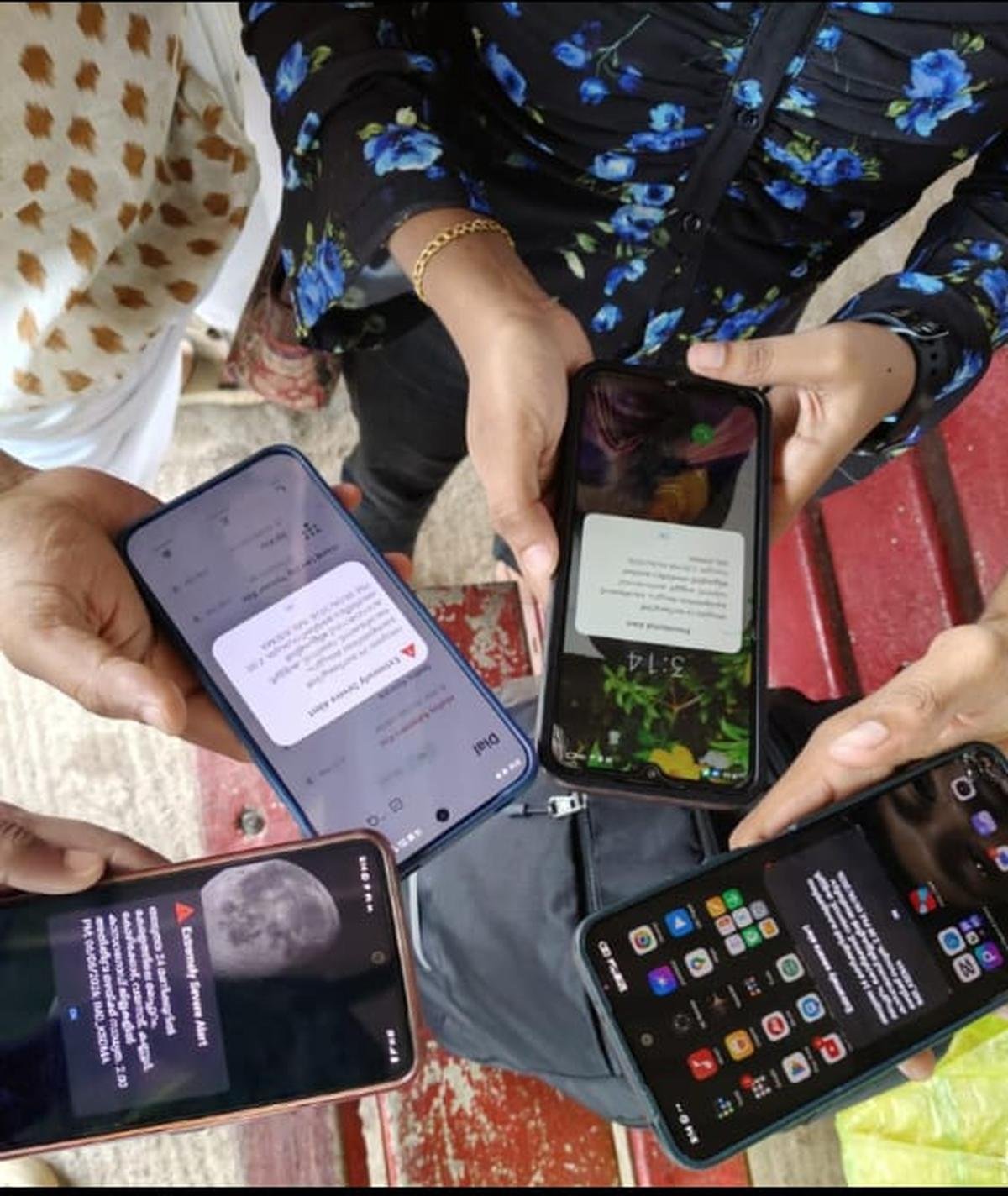
The Central government has temporarily suspended the recently launched Cell Broadcast Service (CBS), a nationwide mobile-based disaster warning platform designed to deliver emergency alerts directly to citizens’ phones. The suspension came into effect on June 12 after certain technical and operational concerns were flagged by competent authorities, raising questions about the system’s reliability and safeguards during large-scale emergency communications.
The decision was communicated through an order issued by the National Disaster Management Authority (NDMA), which stated that the service would remain on hold until further instructions. While the order did not specify the exact nature of the concerns, sources familiar with the developments indicated that an emergency alert allegedly sent around midnight to the Prime Minister’s contact number prompted authorities to examine the system’s functioning more closely.
Registration Begins for FutureCrime Summit 2026, India’s Largest Cybercrime Conference
The Midnight Prime Minister Contact Link
According to sources, the alert originated from disaster management units and triggered mobile devices to emit a loud emergency notification sound. The Cell Broadcast mechanism is designed to override several user settings, ensuring that critical warnings reach citizens even when phones are on silent mode.
Reports suggest that alerts issued from disaster management channels in northern states—specifically Haryana and Uttar Pradesh—may have inadvertently reached restricted or exempted contact numbers. Because cell broadcast technology completely passes ordinary device volume states, it caused phones to ring loudly at midnight. Normally, the contact numbers of highly critical state dignitaries and important personalities are entirely excluded from such localized broadcast loops.
How the Rigged Broadcast Tech Differs From SMS
The Cell Broadcast Service was officially rolled out by the Centre on May 2, 2026, following a highly successful nationwide testing drill managed by Union Home Minister Amit Shah and Communications Minister Jyotiraditya Scindia. Developed by the Department of Telecommunications (DoT) in collaboration with the NDMA, the platform was intended to provide near real-time dissemination of warnings during natural disasters, severe weather events, and other emergencies.
Unlike conventional SMS-based alerts, which get heavily bottlenecked during emergencies due to network congestion, the system sends messages directly through mobile radio network architecture. It broadcasts simultaneously to all compatible devices within a specified geographical area through hardware integration, meaning it works even if network towers are overloaded or if a phone is turned off.
Extensive Rollout and Language Formats
Since its rollout, the platform has been used extensively across several states. Authorities have employed it to distribute warnings in more than 19 Indian languages, helping improve accessibility and public awareness during periods of adverse weather and disaster risk.
In Kerala, the service became operational on June 6 and was used to send location-based alerts in Malayalam directly to mobile phones. The alerts were issued during periods of heightened weather risk, including red-alert and consecutive orange-alert situations. Disaster management officials in the state had described the technology as an important tool for strengthening preparedness and ensuring timely communication with residents.
Concerns Over Crippling Disaster Readiness
However, the temporary suspension has triggered concern among disaster management professionals, who warn that interruptions in such systems can affect public confidence. Officials associated with emergency response mechanisms believe that once citizens begin to rely on a warning platform, its sudden withdrawal could create uncertainty during future crises. One official noted:
“Discontinuing a service after its successful launch could often cripple its effectiveness, as people may come to regard it as a reliable source of timely warnings, and wait for them during emergencies.”
Authorities are now expected to review the operational and technical aspects of the service before deciding on its restoration. The focus is likely to be on ensuring proper authentication, message-routing controls, and exemption protocols for sensitive contacts, while preserving the system’s ability to deliver rapid alerts during genuine emergencies.
