

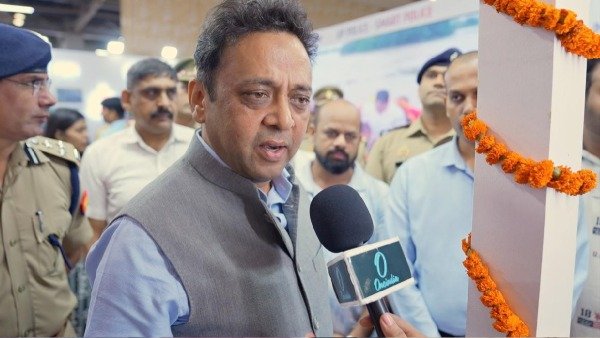

The Allahabad High Court has delivered a stern rebuke to Sanjay Prasad, Uttar Pradesh’s Additional Chief Secretary (Home), questioning his role in the State’s failure to implement judicial directions aimed at improving police investigations and accountability.
In unusually pointed observations, Justice Vinod Diwakar said that administrative resistance to court-directed reforms could not be allowed to render constitutional court orders meaningless. The Court directed that a copy of its order, along with its earlier judgment in Subhash Chandra, be sent to the Department of Personnel and Training, the cadre-controlling authority for IAS officers, for record, reference and consideration in assessing Prasad’s suitability for future assignments.
The order arose from a habeas corpus petition filed by a woman seeking the recovery and custody of her minor daughter, who was allegedly enticed away by a man. Dissatisfied with the quality of the investigation, the Court widened its scrutiny to examine whether earlier directions on police reforms and investigative safeguards were being implemented by the State.
A Habeas Petition Opens a Wider Question on Police Reform
The immediate proceedings concerned the alleged failure of law enforcement authorities to trace and recover a minor girl. But as the matter progressed, the Court found what it described as serious shortcomings in the investigation conducted by the concerned police officials.
Justice Diwakar noted that the investigating officer had failed to conduct a fair, impartial and effective investigation. That failure prompted the Court to revisit its earlier judgment in Subhash Chandra & Others v. State of Uttar Pradesh & Another, delivered in May 2025, in which it had issued a series of directions intended to improve the quality, transparency and accountability of criminal investigations across the State.
Those directions were not abstract procedural suggestions. They were aimed at correcting a recurring weakness in criminal justice: poor investigations that damage both victims’ rights and accused persons’ rights. A weak investigation can delay recovery of missing persons, undermine prosecution, expose citizens to arbitrary police action and reduce public confidence in the rule of law.
The Court found that, despite the passage of considerable time, implementation of those directions had remained inadequate.
Court Says Judicial Orders Cannot Be Frustrated by Officers
The Court expressed concern that judicial initiatives intended to strengthen the fairness and accountability of criminal investigations had not received the institutional support expected from civil administration.
It noted that measures designed to improve investigative standards and ensure adherence to constitutional principles appeared to have faced persistent resistance from sections of the State administration.
Particular attention was drawn to Sanjay Prasad, a senior IAS officer of the 1995 batch and Additional Chief Secretary (Home). The Court observed that there appeared to be an “apparent reluctance” on his part to facilitate the effective implementation of judicial directives concerning police reforms and investigative safeguards.
In one of its strongest observations, the Bench said such conduct, if left unaddressed, would make the orders of constitutional courts “nugatory” at the hands of recalcitrant administrative officers. It warned that this would set a dangerous precedent in how executive authorities treat judicial directions concerning accountability and police reforms.
“This Court cannot be a silent spectator to such conduct,” the Bench observed.
The State’s SLP Explanation Fails to Satisfy the Court
During the proceedings, the Court sought an explanation from the Additional Chief Secretary (Home) about the continued failure to implement the directions issued in Subhash Chandra.
In response, the State informed the Court that it had decided to challenge the earlier judgment before the Supreme Court and requested that no further directions be issued for its implementation.
The High Court was not persuaded.
Justice Diwakar noted that the Subhash Chandra judgment had remained unchallenged for nearly a year after it was delivered. According to the Court, the decision to approach the Supreme Court appeared to have been taken only after questions were raised regarding non-compliance by the Home Department.
The Court also observed that despite granting time and awaiting information about the proposed Special Leave Petition, no Supreme Court order had been placed on record even after three months. While the State has a legitimate right to challenge judicial decisions before higher courts, the Court said such decisions must be guided by institutional considerations rather than personal motivations of individual officers.
The Bench made a significant observation on the conduct of senior bureaucrats, noting that when approval for litigation is motivated not by a genuine assessment of institutional grievance but by a desire to vindicate a personal position, settle a personal score or continue an adversarial proceeding regardless of merit, the character of the litigation changes.
The Court said the sequence of events raised concerns about the bona fides behind the decision to challenge the earlier judgment.
DoPT Asked to Consider Officer’s Suitability for Future Assignments
The Court clarified that its directions on police reforms were not intended to interfere with executive control over law enforcement agencies. Instead, it said, the reforms were meant to ensure fairness, professionalism and accountability in criminal investigations.
The Bench reiterated that effective investigations form the backbone of a functioning criminal justice system and are essential for protecting citizens’ rights. It also made broader observations about the role and accountability of bureaucrats in governance.
Justice Diwakar observed that excessive discretion vested in administrative officers can sometimes weaken institutional accountability and adversely affect implementation of government policies and judicial directions. The Court emphasised that senior officers must bear responsibility for the actions and performance of their subordinates.
Going further, the Bench suggested that in certain circumstances administrative failures could potentially attract legal consequences, particularly where failure to prevent or punish subordinate misconduct leads to criminal acts such as corruption, fraud, wilful suppression, contempt of government orders or deliberate non-implementation of State policy and programmes.
Taking serious note of the matter, the High Court directed that a certified copy of the order and the earlier Subhash Chandra judgment be transmitted to the Secretary, Department of Personnel and Training, Government of India. The order specifically noted that the DoPT is the cadre-controlling authority for Sanjay Prasad, IAS (DR 1995).
The Court said the material should be placed before the DoPT for record, reference and such consideration as may be deemed appropriate in the context of assessing the officer’s suitability for future assignments by the Appointment Committee of the Cabinet.
The order is one of the strongest recent judicial observations against a senior serving bureaucrat in Uttar Pradesh. It also marks a broader assertion by the High Court that police reforms and investigative accountability cannot remain dependent on administrative convenience.
At its core, the judgment is not only about one officer or one habeas corpus petition. It is about whether judicial directions meant to improve criminal investigations can be delayed, resisted or neutralised within the executive system. The Court’s answer was clear: constitutional courts cannot issue directions and then remain silent when those directions are frustrated by those entrusted with implementing them.
Follow for daily updates on cybercrime, corporate fraud, DFIR, hacking, investigations, and digital forensics
