

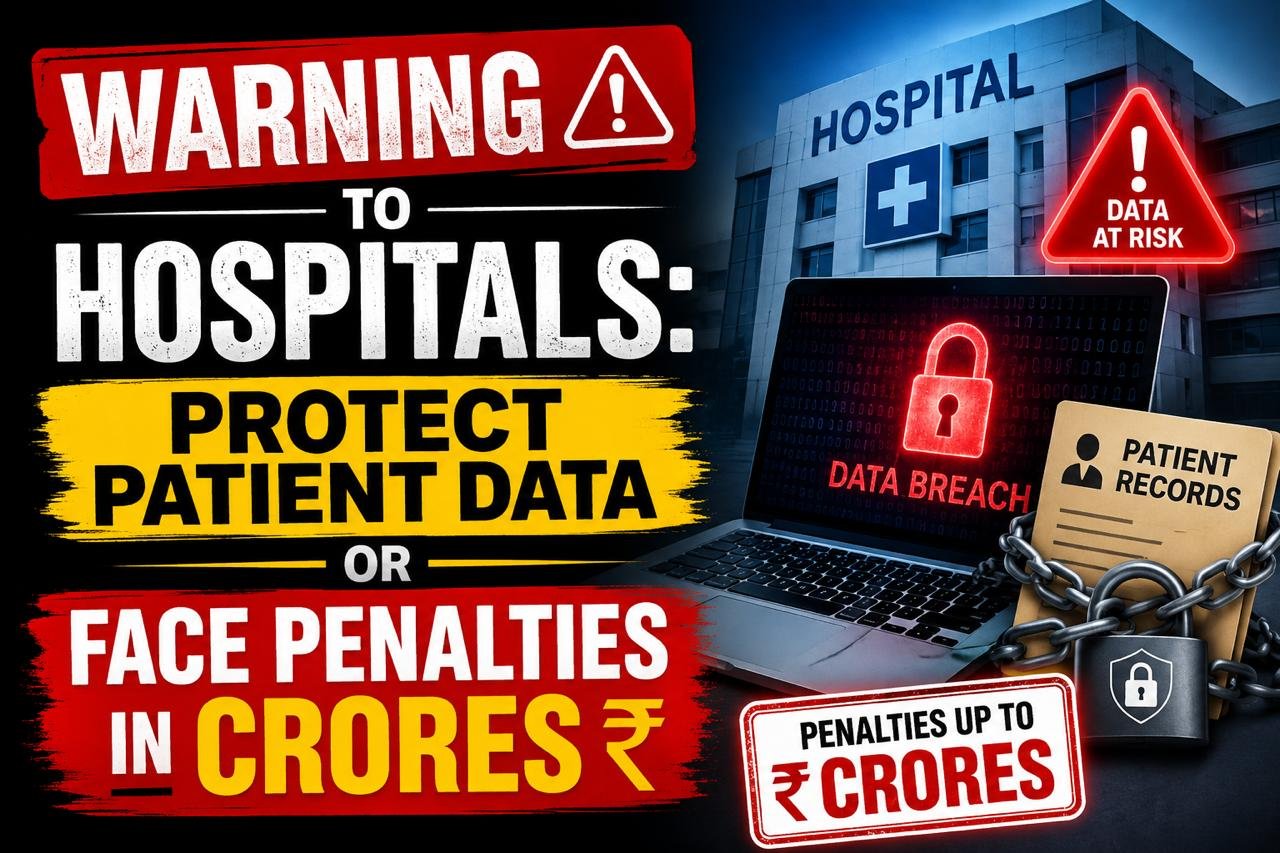
As India’s healthcare sector rapidly digitizes under the Ayushman Bharat Digital Mission (ABDM), the absence of a single, formally notified standalone “Healthcare Cybersecurity Framework” poses both challenges and opportunities. Instead of one mandatory document, the sector relies on a layered approach: the Health Data Management Policy (HDMP) under ABDM, the Digital Personal Data Protection (DPDP) Act, 2023, CERT-In Directions (2022), and general IT Act provisions. These emphasize data minimization, encryption, consent frameworks, breach notification, and security audits for digital health ecosystems like ABHA IDs.
While not as prescriptive as the U.S. HIPAA Security Rule, these guidelines promote “privacy and security by design.” Hospitals and health tech firms participating in ABDM must implement robust measures, including vulnerability assessments and incident reporting within tight timelines (e.g., CERT-In’s 6-hour cyber incident mandate). Non-compliance with DPDP Act obligations, particularly failure to implement reasonable security safeguards, can attract penalties of up to ₹250 crore, while failure to notify the Data Protection Board and affected individuals about a breach may result in fines up to ₹200 crore.
High-Profile Incidents in India
Real-world attacks underscore the urgency. In November 2022, AIIMS Delhi suffered a major ransomware attack attributed to groups like LockBit. Attackers encrypted servers, disrupting e-hospital services for over two weeks and potentially exposing millions of patient records. A second malware incident hit AIIMS in 2023. Other notable cases include data exposures at Apollo Hospitals, Fortis Healthcare, and Star Health Insurance, along with the 2020 COVID-19 test data leak due to misconfigured databases. These incidents reveal common weaknesses: outdated systems, poor third-party oversight, and weak access controls.
Global Lessons and Best Practices
Globally, healthcare remains a prime target. The 2024 Change Healthcare ransomware attack impacted nearly 193 million individuals. Earlier breaches like Anthem Inc. (2015) highlight the massive risks. Recommended best practices adaptable to India include Zero Trust Architecture, regular penetration testing, employee training, encryption of data at rest and in transit, robust incident response plans, and frameworks like NIST Cybersecurity Framework.
The Way Forward
For healthcare leaders in India, the message is clear: Invest in proactive defense. Prioritize ABDM compliance, conduct regular risk assessments, and foster a security-first culture to mitigate hefty DPDP penalties and protect patient trust.
Policymakers may eventually evolve toward a more sector-specific notified framework, but organizations cannot wait. Cybersecurity is now core to ethical, sustainable healthcare delivery.
Healthcare organizations seeking specialized support can turn to Algoritha Security, which offers comprehensive cybersecurity solutions and privacy protection fully compliant with India’s DPDP Act, CERT-In directives, and ABDM guidelines. Their tailored expertise helps hospitals and healthtech firms build resilient defenses. For customized solutions, contact Triveni at Triveni@algoritha.in.
Follow for daily updates on cybercrime, corporate fraud, DFIR, hacking, investigations, and digital forensics
