
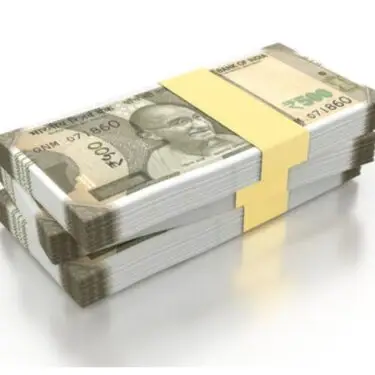
Gorakhpur: Uttar Pradesh Police has uncovered an organised counterfeit currency racket operating from the Padri Bazar area of Gorakhpur and arrested five accused allegedly involved in printing fake Indian currency notes.
The racket was being run from a shuttered shop in the Saraswatipuram Colony area, where police recovered counterfeit notes, printers, security-thread material, computers and several tools allegedly used for producing fake currency.
Financial Loss and Chemical Note Inversion
According to investigators, the accused themselves were initially victims of a so-called “chemical note” fraud allegedly linked to Bihar. Police said the group was convinced by fraudsters that black-coloured sheets resembling currency notes could be converted into genuine Indian notes by applying a special chemical solution.
Officials stated that the accused collectively arranged nearly ₹10 lakh and handed the money over to suspected fraudsters in Bihar. In return, they reportedly received black-coloured paper bundles shaped like ₹500 currency notes, allegedly worth around ₹40 lakh. However, the promised chemical was never delivered and the accused later realised they had been cheated.
Police believe that after suffering financial losses in the scam, the accused decided to start manufacturing counterfeit currency on their own. Investigators said the group rented a small premises in Padri Bazar and gradually set up equipment for designing and printing fake notes.
Registration Begins for FutureCrime Summit 2026, India’s Largest Cybercrime Conference
Local Circulation Ratios and Joint Tactical Raids
According to police sources, the accused allegedly attempted to circulate counterfeit currency in the local market by offering four fake ₹500 notes in exchange for one genuine ₹500 note. Officials suspect the group was trying to expand its network and introduce fake currency into nearby districts as well.
The operation came to light after Gulriha police received intelligence inputs regarding suspicious activities in the Shahpur police station area. Acting on the information, police teams along with Special Operations Group (SOG) personnel and surveillance units conducted a joint raid at the location.
During the raid, five individuals were allegedly caught red-handed while printing and preparing counterfeit notes. The arrested accused have been identified as Karan Singh, Mohit Kumar, Vishal Sharma, Ashish Sharma and Akash Singh. Four of the accused are residents of Gorakhpur, while one belongs to Kushinagar district.
Demographics and Professional Press Profiles
Investigators revealed that some members of the group came from educated and technically skilled backgrounds. One accused reportedly works as an advocate in a civil court, while another runs a medical store. Two others were associated with printing press operations and allegedly used their technical knowledge to design and print counterfeit currency notes with greater precision.
Police recovered ₹500 denomination fake notes, one counterfeit ₹100 note, double-sided printed note sheets, security-thread material, printed images of Mahatma Gandhi, A4-sized specialised papers, ink containers and multiple electronic devices including monitors, CPUs, keyboards, printers and computer accessories.
One of the most significant recoveries included 39 bundles of black-coloured sheets cut in the shape of ₹500 notes. According to investigators, these were the same “chemical notes” allegedly brought from Bihar during the earlier fraud.
Interstate Link Inquiries and High-Resolution Editing Threats
Officials suspect that the racket may have wider interstate links. During questioning, the names of two additional suspects from Bihar reportedly surfaced, and efforts are underway to trace them. Police are also examining mobile phones, digital records and financial transactions to identify possible buyers, suppliers and distribution channels connected to the fake currency network.
Security experts say the increasing availability of high-resolution printers, digital editing software and specialised paper has made counterfeit currency operations more sophisticated in recent years. However, law enforcement agencies have also intensified surveillance on illegal printing and fake currency circulation networks.
Investigators are now trying to determine whether the accused had already circulated counterfeit notes in local markets before the raid. Authorities believe further arrests are possible as the investigation progresses and more links connected to the racket emerge.
