
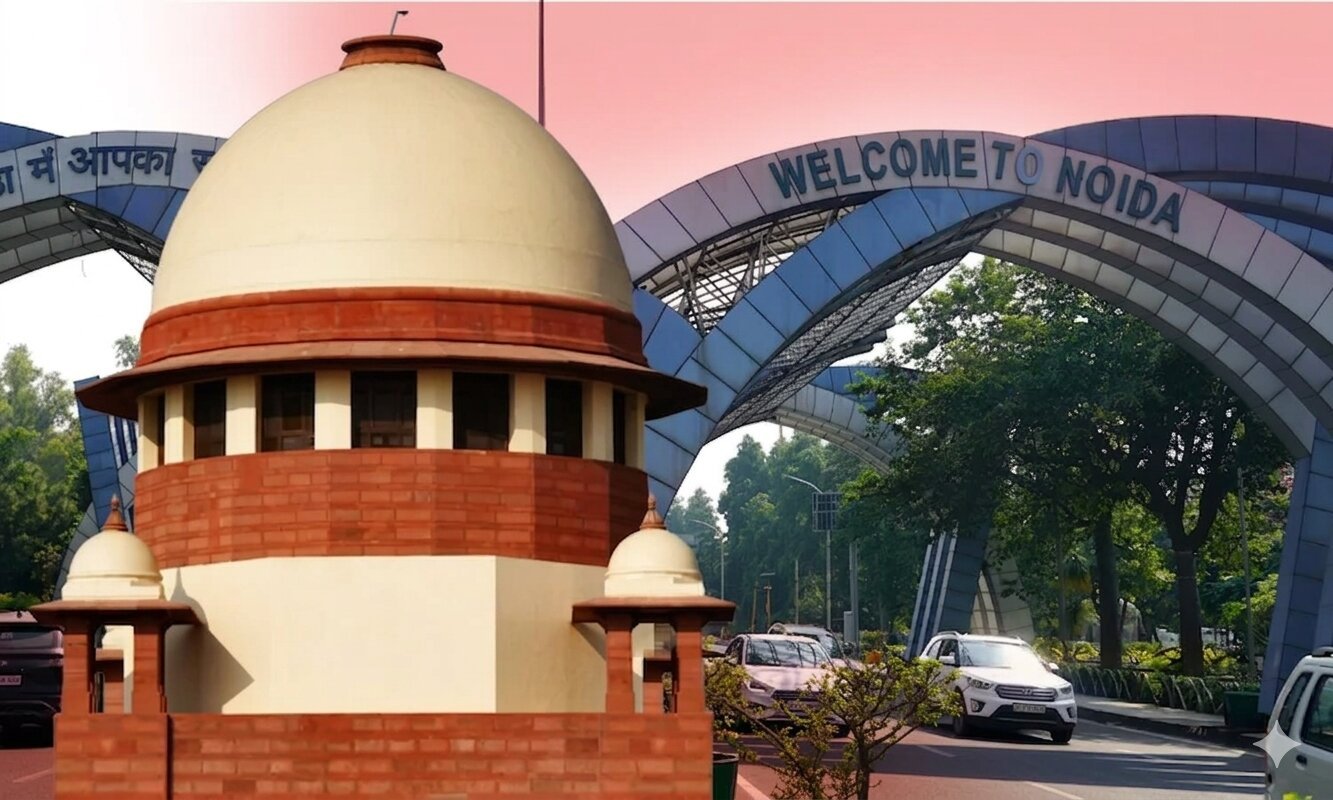
New Delhi: The Supreme Court of India has come down heavily on the Ghaziabad police and administrative authorities in the brutal case involving the sexual assault and murder of a four-year-old girl in the Nandgram area, describing their conduct as “shameful and insensitive” and raising serious concerns over the handling of the investigation.
Supreme Court’s blistering remarks have put Ghaziabad police and top officers under direct judicial spotlight
A bench comprising Justice Surya Kant, Justice Joymalya Bagchi, and Justice Vipul M. Pancholi directed the Commissioner of Police (CP), the Investigating Officer, and the Station House Officer (SHO) of Nandgram police station to personally appear before the court on April 13, along with all original case records related to the investigation.
The court observed that the initial response of the police raised serious questions, noting that in such a heinous crime involving a minor, strict adherence to legal procedure was expected, but early investigation steps appeared inadequate and questionable.
The Uttar Pradesh government has also been issued a notice seeking its response on the sequence of events and the manner in which the investigation was conducted after the incident.
According to details presented before the court, the accused allegedly lured the child with chocolate and took her to a secluded location in Nandgram, where she was sexually assaulted and brutally murdered by striking her head with a brick.
Questions over delayed response, disputed timeline, and medical refusal have shaken the entire investigation
A major concern raised during the hearing was conflicting information regarding whether the child was alive at the time of the police response. While police claimed she had already died, senior counsel informed the court that video evidence suggests she was still alive, raising serious questions about the timeline of the investigation.
The Supreme Court also questioned the alleged refusal of treatment by two private hospitals, identifying them in submissions, and noted that denial of emergency medical care in such circumstances raises serious legal and ethical concerns.
It further observed concerns regarding a police encounter linked to the case and indicated that the matter may require transfer to a Special Investigation Team (SIT) or a central agency for a more impartial probe.
The petition was filed by the victim’s father, a daily wage labourer, who approached the Supreme Court seeking justice and a fair investigation into the incident.
The bench emphasized that any negligence or procedural lapse in cases involving minors will not be tolerated and stressed the need for accountability at every level of investigation.
FCRF Launches Premier CISO Certification Amid Rising Demand for Cybersecurity Leadership
From hospital conduct to encounter claims, every layer of the case is now under intense scrutiny
The case is now under close judicial scrutiny, and the upcoming hearing on April 13 is expected to be crucial as senior police officials are required to justify their actions before the bench.
Legal experts observing the matter stated that the Supreme Court’s remarks reflect growing judicial concern over delays and procedural lapses in sensitive crimes involving minors, especially where initial police response may affect evidence preservation and victim survival chances.
Officials also noted that the possibility of transferring the investigation to a central agency underscores the seriousness of the allegations, as courts typically consider such steps only in cases involving systemic failure or lack of confidence in the state-led probe.
With the matter now scheduled for further hearing on April 13, the focus remains on the accountability of senior police officials and the need for a transparent investigation that withstands judicial scrutiny.
Public reaction to the case has been intense, with widespread concern over child safety and institutional accountability, as the incident has once again raised questions about emergency response systems, hospital ethics, and policing standards in high-pressure criminal situations.
As proceedings continue, the Supreme Court’s strong observations are expected to influence future investigative standards in similar cases, reinforcing the principle that lapses in handling crimes against minors will face strict judicial scrutiny and possible transfer to independent agencies.
The April 13 hearing could become a turning point as the court weighs a wider or independent probe
The April 13 appearance is being viewed as a critical moment in the case, where senior officers are expected to clarify discrepancies and defend the investigative decisions taken at the earliest stages of the probe.
This development highlights the increasing judicial insistence on accountability in cases involving vulnerable victims, particularly children, where delays or negligence in investigation can have irreversible consequences on justice delivery.
