
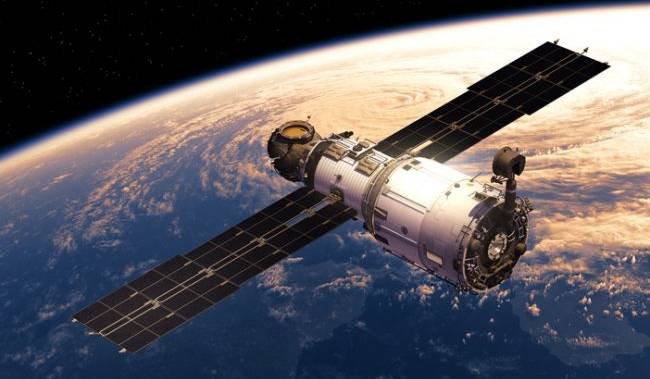
Modern warfare is no longer confined to borders; it has now expanded into space. Rising tensions between Iran, Israel, and the United States have made it clear that satellites and space technology have become the most critical assets in war. From surveillance and communication disruption to precision strikes, space is now playing a decisive role on every front.
U.S. defense officials have confirmed that before initiating conventional bombings, they targeted Iran’s Military Space Command. This approach, known as the “first-mover” strategy, aimed to jam Iran’s communication and intelligence networks, preventing effective coordination of any counteraction. As a result, many international satellite companies suspended live imagery of sensitive regions to prevent misuse.
Iran possesses satellites like Noor and Khayyam, but their capabilities are limited compared to powers such as the U.S. and Israel. Defense experts say Iran is compensating for these limitations by acquiring satellite data from allies such as Russia. Meanwhile, U.S. intelligence agencies claim that Chinese satellite services in certain Middle East locations are also assisting Iran technically.
FCRF Launches Premier CISO Certification Amid Rising Demand for Cybersecurity Leadership
Israel’s Focus: Blinding Iran Through Space Infrastructure
Israel has made it clear that its targets include not only Iran’s missile programs but also its space infrastructure. Israeli officials believe that destroying intelligence gathered from space is akin to blinding the enemy. This strategy has made space control a decisive factor in warfare.
Experts note that in modern conflicts, satellites have become the backbone. They are no longer merely tools for surveillance or communication; they are essential for espionage, precision air and missile strikes, and secure command networks. The country that maintains control over space now gains a significant strategic advantage in conflict.
Satellites: Backbone of Espionage, Strikes, and Comms
International defense analysts state that the current struggle indicates that future wars will move far beyond traditional battlefields. The outcome of any conflict will increasingly depend on a nation’s space capabilities and satellite control. Satellite-based surveillance provides critical intelligence on enemy strategy, enables disruption of communications, and supplies data for precision attacks.
U.S. and Israeli experts emphasize that space technology is no longer just an auxiliary asset in war but a strategic priority. In any military operation, the security of satellite networks, the availability of their data, and timely information are determining factors in the direction and outcome of conflict.
Iran, despite its limited technology, is steadily working to strengthen its space network. Satellites such as Noor and Khayyam are part of this effort. Meanwhile, the U.S. and Israel are using their satellite capabilities to disrupt adversaries’ communications and surveillance networks in the region.
Space Warfare: Measure of Future Military Power
Experts conclude that the importance of space in modern warfare is growing day by day. From espionage and precision strikes to secure communication and technological dominance, satellites and space technology have become the most decisive components of any country’s military capability.
This trend makes it clear that in the coming years, space warfare and satellite-based strategy will not only be a technical consideration but also a primary measure of political and military power.
