

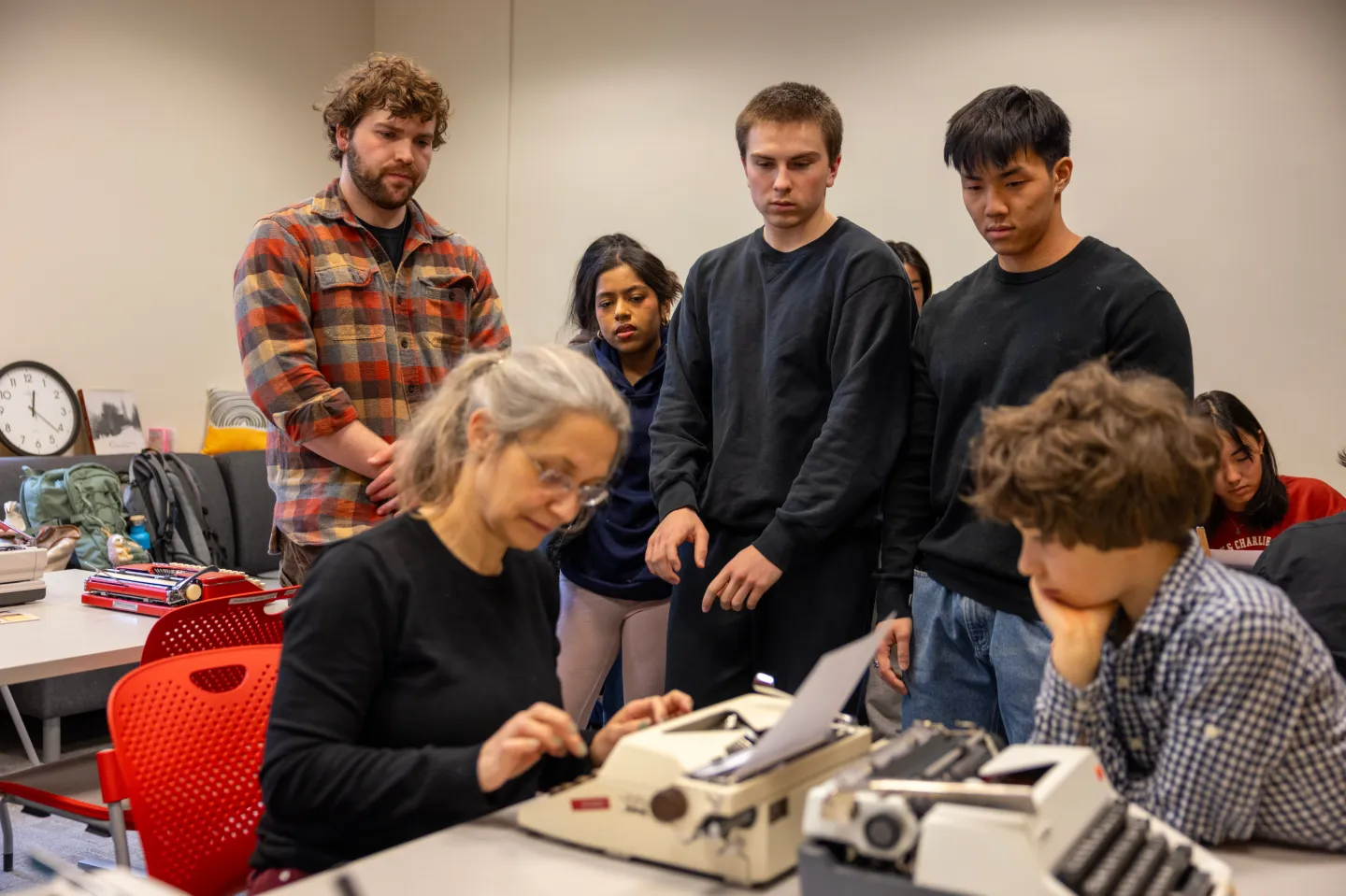

At a time when artificial intelligence tools are increasingly shaping classrooms, a language instructor at Cornell University has introduced a markedly different approach by requiring students to use typewriters instead of computers for certain assignments. The exercise, conducted once each semester, aims to shift students away from screens and automated assistance, encouraging direct engagement with writing and peers.
The initiative was introduced by Grit Matthias Phelps, a German language instructor, who began the practice in the spring of 2023 after growing frustrated with students relying on AI and online translation tools. She questioned the value of evaluating work that students may not have written themselves and challenged them to produce assignments without digital support.
A deliberate return to analog learning
Phelps gathered typewriters, many sourced secondhand, and incorporated an “analog” assignment into her course syllabus. The objective was to give students a sense of how learning functioned before the widespread use of digital technology. During these sessions, students rely on their own thinking and interactions rather than digital prompts or corrections.
Students described the experience as a shift in both pace and engagement. Without notifications or online tools, the process becomes more deliberate. The sound of the typewriter bell signals the end of a line, replacing the constant interruptions typical of digital devices. One student noted that the experience changed not only how they interacted with the machine but also how they related to their surroundings.
FCRF Launches Premier CISO Certification Amid Rising Demand for Cybersecurity Leadership
Students reflect on focus and interaction
Some students reported that the exercise encouraged more conversation and collaboration. A sophomore said the process required more discussion and social interaction than typical classroom work, contrasting it with modern habits of working individually on laptops or phones. Another student described being compelled to think independently rather than relying on search engines or AI tools.
For others, the assignment offered a creative opportunity. A freshman in the course experimented with writing fragmented poetry inspired by mid 20th century styles, calling the experience both challenging and enjoyable. She expressed enthusiasm for the tactile process and the novelty of completing an academic task on a typewriter.
Part of a wider shift in classrooms
The approach reflects a broader trend in education, where some institutions are revisiting analog methods to counter the influence of AI. Instructors are increasingly turning to oral examinations, handwritten assignments, and in class essays in place of digital submissions. Some schools are also experimenting with restricting phone use during school hours.
While not presented as a universal solution, such measures indicate a growing effort to preserve independent thinking and academic integrity. The typewriter exercise, though limited in scope, highlights how educators are adapting to technological change by reintroducing older methods into modern classrooms.
Students also encountered practical challenges during the exercise. Many found that the physical effort required to type on mechanical machines was demanding, with some struggling to maintain speed and accuracy on the stiff keys.
Follow for daily updates on cybercrime, corporate fraud, DFIR, hacking, investigations, and digital forensics
