

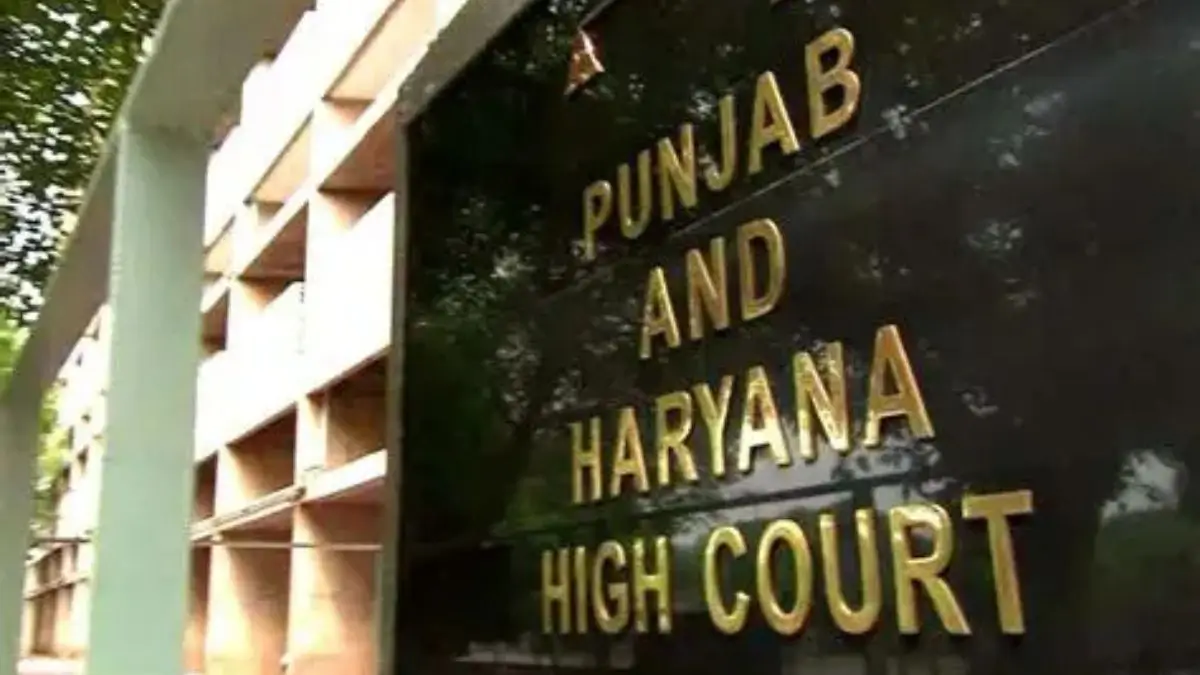
The Punjab and Haryana High Court has rejected the bail plea of a bank employee allegedly involved in a ₹3.3 crore “digital arrest” cyber fraud case. The scam targeted Dr. Anita, a retired principal, who was coerced into transferring substantial sums from her bank accounts under threats delivered via phone and video calls.
Digital Arrest Scam: How the ₹3.3 Crore Fraud Unfolded
Justice Manisha Batra, hearing the matter, observed in her order that the allegations indicate the accused’s active participation in the execution of a well-organised cyber fraud operation. It was alleged that the bank official facilitated fraudulent transfers by providing access to his branch account and cheque book to co-accused individuals.
According to the FIR filed in February 2025, the victim was falsely informed through calls that she was involved in illegal advertising and money laundering, and that she could face a 14-year prison term. She was then kept under “digital arrest” at her residence, with threats that her family’s bank accounts would be frozen and that she could be subjected to physical and mental harassment. Under these threats, she transferred a total of ₹3.3 crore.
FCRF Launches Premier CISO Certification Amid Rising Demand for Cybersecurity Leadership
Investigations revealed that ₹62 lakh was transferred to M/s Param Enterprise, while ₹9.9 lakh was transferred to an account operated by co-accused Yogesh Sharma.
Bank Official’s Role: Kotak Mahindra Employee’s Key Involvement
Court records further indicate that the accused, Jasvinder, employed at Kotak Mahindra Bank, Ladwa branch, played a pivotal role in facilitating cheque clearances and receiving commissions from the fraudulent proceeds. Specifically, he coordinated the encashment of a ₹5 lakh cheque at the Shahabad branch.
Bail Arguments: Defence vs Prosecution in Cyber Fraud Case
Defence counsel argued that Jasvinder’s name did not appear in the original FIR and that he was implicated solely based on disclosure statements of co-accused persons. They maintained that he was performing his official duties, had no prior criminal record, and that continued detention would serve little purpose given the likely length of the trial.
Representing the state, Deputy Attorney General Himani Arora contended that the accused held a “serious and specific” role in the conspiracy. She highlighted that as a bank official, Jasvinder had facilitated the fraudulent operations and that his release could pose a risk of absconding or witness intimidation.
High Court Ruling: Reasons for Bail Denial in Digital Arrest Fraud
The court emphasised that the allegations disclosed active and prima facie participation of the accused in the fraud. Though not initially named in the FIR, he was identified during the investigation based on disclosure statements and other evidence collected. His role in presenting the ₹5 lakh cheque for encashment, and in receiving part of the fraudulent proceeds, reflected the seriousness of the offence.
Justice Batra also noted the growing prevalence of such crimes, warning that ordinary citizens are increasingly targeted and deprived of their hard-earned savings through sophisticated tactics. The court held that the nature and magnitude of the fraud, combined with the accused’s involvement, rendered granting bail inappropriate.
In conclusion, the High Court’s decision underscores the gravity of bank officials’ complicity in cyber fraud and highlights the judiciary’s prioritisation of the scale and organised nature of the crime when assessing bail. The ruling serves as a caution to financial institutions and citizens regarding the facilitation and risks of sophisticated cyber scams.
About the author – Ayesha Aayat is a law student and contributor covering cybercrime, online frauds, and digital safety concerns. Her writing aims to raise awareness about evolving cyber threats and legal responses.
Follow for daily updates on cybercrime, corporate fraud, DFIR, hacking, investigations, and digital forensics
