

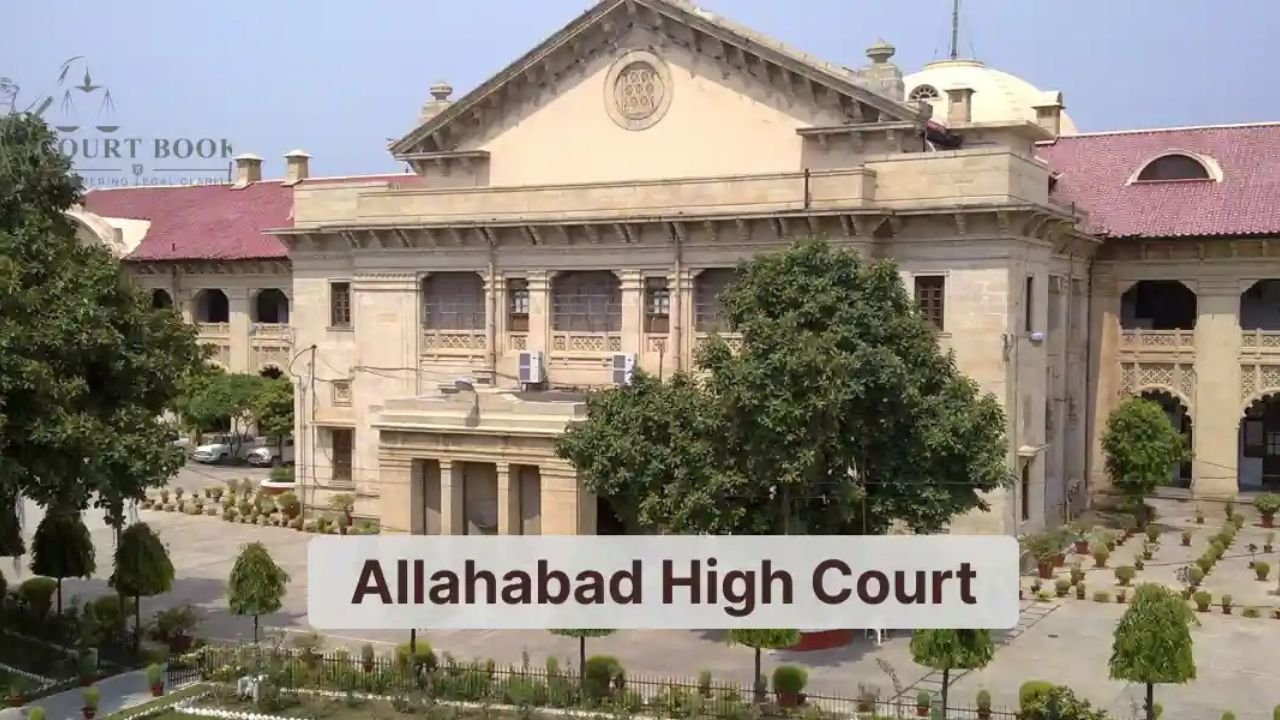

The case before Justice Vikram D. Chauhan turned on the employment history of Kafi Ahmed Khan, who was first engaged as a daily wage computer operator in the Construction Department of Bareilly Nagar Nigam on November 1, 2011. His services were formally terminated in August 2012 under a government directive, but the work did not end. Instead, he continued in the same institutional setting through a registered contractor, effectively shifting from daily wage status to outsourced contractual labor while continuing to discharge departmental functions.
That trajectory is central to the court’s reasoning. The judgment did not treat Khan’s case as an isolated service dispute or a narrow contest over technical eligibility. It treated his long tenure as evidence of something broader: that the work he performed was not temporary in any meaningful sense. If a municipal body continues to require a person’s labor for more than a decade, the court suggested, the issue is no longer merely whether the employee fits within an existing regularization rule, but whether the employer has used outsourcing to postpone the obligations that regular public employment entails.
Khan had already approached the High Court once before. In 2019, his plea for regularization was disposed of with a direction that the authorities consider his claim. But in December 2020, the Nagar Ayukt rejected it, relying on a February 2016 government order that limited regularization to daily wage employees appointed on or before December 31, 2001. That cutoff point formed the state’s legal shield. The court, however, chose to look past the administrative closure suggested by that rule and examine the larger fairness of the arrangement itself.
FCRF Launches Premier CISO Certification Amid Rising Demand for Cybersecurity Leadership
Outsourcing as Convenience, and as Avoidance
What gave the ruling its force was the distinction Justice Chauhan drew between outsourcing a service and outsourcing the human beings needed to carry out the internal work of a department. In theory, outsourcing can be defended as efficiency: a way of obtaining specific services without expanding the payroll or navigating lengthy appointment procedures. But the court said the picture changes when departments use outsourcing agencies not for peripheral services, but to continuously supply manpower for indispensable and ongoing functions.
That practice, the court observed, creates “room for exploitation and unfairness.” Its concern was not abstract. Long-term outsourced workers often do the same work as regular employees while lacking the security, advancement and legal protection of regular service. They remain easy to terminate, outside the ordinary promotional structure and perpetually uncertain about their future. In Khan’s case, the court noted that continuous long-term engagement on outsourcing or daily wages, where duties are indispensable in nature, may indicate exploitative employment practices, particularly when the department uses outsourced human resources in place of sanctioned appointments.
The judgment also pointed to a structural consequence that rarely appears in official defenses of outsourcing: time itself can become punitive. Workers retained for years in contingent arrangements often age out of eligibility for regular recruitment. In effect, the state benefits from their labor during their employable years while preserving the legal fiction that they remain temporary. By the time a regular vacancy is advertised, the worker who kept the system running may no longer be able to compete for it. The court described this as a loss of future prospects and stable employment, a feature of the arrangement rather than a side effect.
The Supreme Court’s Expanding View of the “Model Employer”
The High Court’s reasoning did not emerge in isolation. Counsel for Khan relied in part on the Supreme Court’s 2024 decision in Jaggo v. Union of India, in which the top court criticized the prolonged use of temporary labor in government institutions and warned against public bodies mirroring gig-economy trends through misuse of temporary contracts. LiveLaw’s reporting on the High Court case and subsequent commentary on Jaggo both describe that ruling as a significant judicial intervention against long-term precarious employment in the public sector.
Justice Chauhan also leaned on the Supreme Court’s January 2026 decision in Bhola Nath v. State of Jharkhand, where the court reaffirmed that the state, as a “model employer,” carries a heightened obligation of fairness, candor and social responsibility toward its employees. In that ruling, the Supreme Court said the state cannot be permitted to exploit workers or take advantage of their vulnerability and unequal bargaining position. The Allahabad High Court imported that language into the outsourcing context, effectively placing the municipal employer’s conduct within a broader constitutional ethic rather than a narrow service-law framework.
That matters because the phrase “model employer” has long appeared in Indian labor and service jurisprudence, but courts have often used it more as aspiration than command. Here, it carried operational weight. Justice Chauhan suggested that when a department’s workload has permanently increased, the proper institutional response is to revisit sanctioned strength and expand regular staffing accordingly, not to rely indefinitely on contractor-supplied labor. Outsourcing, in other words, cannot become a permanent substitute for the state’s obligation to organize its workforce lawfully and fairly.
A Narrow Order With Broader Meaning
The court did not directly regularize Khan. Instead, it set aside the Nagar Ayukt’s 2020 order and directed the respondents to reconsider his claim in light of the law laid down by the Supreme Court, completing the exercise within four months. That makes the immediate relief procedural rather than final. But the judgment’s language reaches well beyond one employee in Bareilly.
Its broader significance lies in the way it reframes a common administrative practice. For years, public bodies have defended outsourcing as flexibility and budget discipline. The Allahabad High Court did not deny those institutional pressures. What it questioned was the fairness of using them to sustain a shadow workforce performing perennial functions without the protection of regular service. In doing so, it linked outsourcing not only to service insecurity, but to a wider moral and legal failure: the state’s willingness to benefit from continuous labor while withholding the stability that labor ordinarily warrants.
That is why the case may resonate beyond Bareilly Nagar Nigam. Across public institutions in India, outsourced workers now handle clerical, technical and operational tasks that are central to how departments function. Many do so for years, sometimes decades, under contracts that are formally temporary but practically permanent. The High Court’s ruling does not dismantle that system. But it does place it under sharper judicial scrutiny, suggesting that when outsourcing becomes a long-term substitute for regular appointments, it begins to look less like governance and more like avoidance.
About the author — Suvedita Nath is a science student with a growing interest in cybercrime and digital safety. She writes on online activity, cyber threats, and technology-driven risks. Her work focuses on clarity, accuracy, and public awareness.
