
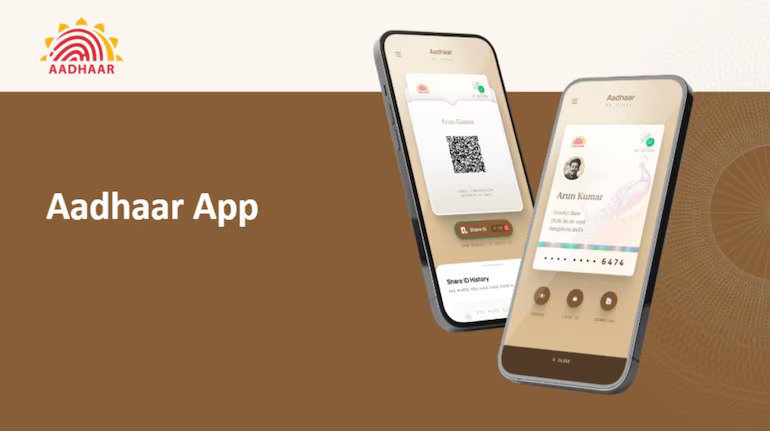
The Indian government’s proposal to pre-install the Aadhaar app on all new smartphones has triggered a fresh confrontation with global tech companies, raising critical questions around privacy, user choice, and regulatory overreach.
The move, reportedly initiated earlier this year, aims to expand access to Aadhaar-linked services. However, companies including Apple, Samsung, and Google have pushed back, citing security risks, logistical challenges, and lack of global precedent.
Government’s push for wider Aadhaar access
The proposal originated from the Unique Identification Authority of India (UIDAI), which asked the IT Ministry to engage smartphone manufacturers in discussions on preloading the Aadhaar app during device manufacturing. The idea is simple: just like pre-installed apps such as the clock or calculator, every smartphone sold in India would come with Aadhaar already available at setup. Officials believe this would make identity verification faster and more accessible, especially as Aadhaar is widely used across banking, telecom, and public services.
The newly launched Aadhaar app also includes features such as biometric locking, QR-based verification, and selective sharing of personal data, positioning it as a privacy-focused digital identity tool.
FutureCrime Summit 2026 Calls for Speakers From Government, Industry and Academia
Strong pushback from Apple, Samsung, and industry bodies
Despite the government’s intent, the proposal has faced resistance from the Manufacturers’ Association for Information Technology (MAIT), which represents major smartphone makers.
Industry players have raised multiple concerns. At the core is user privacy, especially since Aadhaar is linked to biometric data such as fingerprints and iris scans. Companies have also flagged security vulnerabilities, warning that pre-installing a government app on all devices could increase risks if exploited.
Additionally, manufacturers pointed out that implementing such a requirement would mean maintaining separate production lines for India, increasing costs and operational complexity.
Another major concern is the lack of international precedent—most democratic countries do not mandate pre-installation of government apps on personal devices.
Echoes of the Sanchar Saathi controversy
The Aadhaar app proposal comes shortly after a similar controversy involving the government’s Sanchar Saathi app, which was initially planned to be mandatorily pre-installed on smartphones.
That move faced significant backlash over surveillance and privacy concerns and was eventually rolled back.
The current proposal, though not a formal mandate, has revived fears that such policies could blur the line between public service delivery and state control over personal devices.
Larger debate on digital governance and user autonomy
The issue highlights a broader and evolving debate: how far can governments go in embedding digital infrastructure into personal technology?
While authorities argue that pre-installation improves accessibility and convenience, critics—including digital rights advocates—warn that it may signal increasing state influence over user devices from the point of purchase.
Concerns have also been raised about past instances of Aadhaar-related data exposure, which add another layer of sensitivity to the proposal.
What lies ahead
At present, the proposal remains under discussion and is not a binding directive. However, the strong industry resistance suggests that any move toward mandatory implementation could face significant legal, technical, and public scrutiny.
The outcome of this debate is likely to shape the future of India’s digital governance model, particularly at the intersection of convenience, security, and individual privacy.
About the author – Rehan Khan is a law student and legal journalist with a keen interest in cybercrime, digital fraud, and emerging technology laws. He writes on the intersection of law, cybersecurity, and online safety, focusing on developments that impact individuals and institutions in India.
