
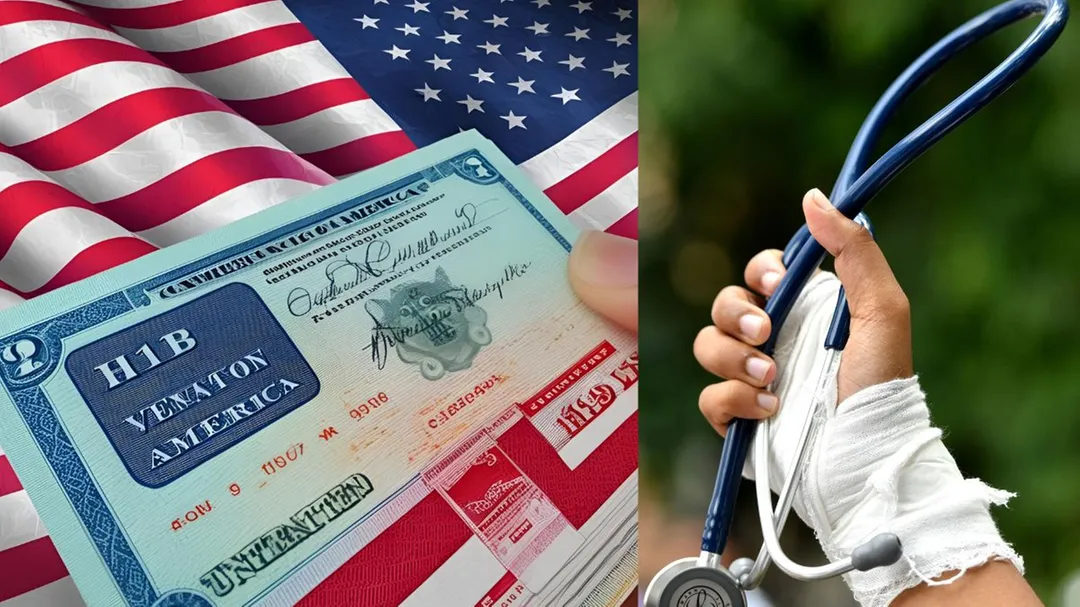
Amid a growing shortage of doctors and nurses, the US healthcare system appears to be shifting into “emergency mode.” In a significant move, a key bill has been introduced in the US House of Representatives proposing to waive the $100,000 (around ₹82 lakh) H-1B visa fee for foreign healthcare professionals.
Titled “H-1Bs for Physicians and the Healthcare Workforce Act,” the bipartisan proposal aims to ease hiring for hospitals that rely heavily on international doctors and nurses—especially in rural and underserved regions.
2025 Fee Triggered Industry Backlash
The $100,000 visa fee was introduced in September 2025, sparking widespread concern across the healthcare industry. Hospitals and medical groups argue that such a steep cost has made hiring foreign professionals significantly more expensive and complicated.
The policy is also facing legal challenges from nursing unions, several states, and industry bodies. Critics contend that the fee is not only excessive but also counterproductive, as it worsens access to healthcare services.
FutureCrime Summit 2026 Calls for Speakers From Government, Industry and Academia
Severe Doctor Shortage Looming
According to the American Medical Association, the US could face a shortage of up to 86,000 physicians by 2036. The projection highlights the growing pressure on the healthcare system.
The nursing workforce is also under strain. Data from 2022 shows that over 500,000 of the country’s roughly 3 million registered nurses were immigrants—underscoring the sector’s reliance on foreign talent.
Rural Areas Hit the Hardest
Experts say rural America is bearing the brunt of the crisis. With fewer domestic doctors willing to work in remote or underserved areas, foreign professionals have become the backbone of healthcare delivery in these regions.
If the H-1B fee remains in place, smaller hospitals could face even greater staffing shortages, potentially affecting basic medical services and increasing wait times for patients.
Why the H-1B Visa Matters
The H-1B visa is a key pathway that allows skilled foreign professionals to work in the United States. Sectors like technology, education, and healthcare depend heavily on this program.
In healthcare, the visa is particularly crucial because many American professionals are reluctant to work in rural or low-resource settings. Foreign doctors and nurses help bridge this critical gap.
Balancing Politics and Practical Needs
The H-1B program has long been a contentious political issue in the US. While some policymakers argue it affects local employment, industries—especially healthcare—view it as essential.
The new bill is being seen as an attempt to strike a balance: addressing urgent staffing needs while maintaining oversight of the visa system.
What Lies Ahead
If passed, the bill could significantly reduce the cost and complexity of hiring foreign doctors and nurses, offering relief to hospitals and improving patient care access.
However, ongoing legal disputes and political divisions mean the proposal’s future remains uncertain. What is clear, though, is that the US healthcare system may struggle to function effectively without continued support from international medical professionals.
About the author – Rehan Khan is a law student and legal journalist with a keen interest in cybercrime, digital fraud, and emerging technology laws. He writes on the intersection of law, cybersecurity, and online safety, focusing on developments that impact individuals and institutions in India.
