

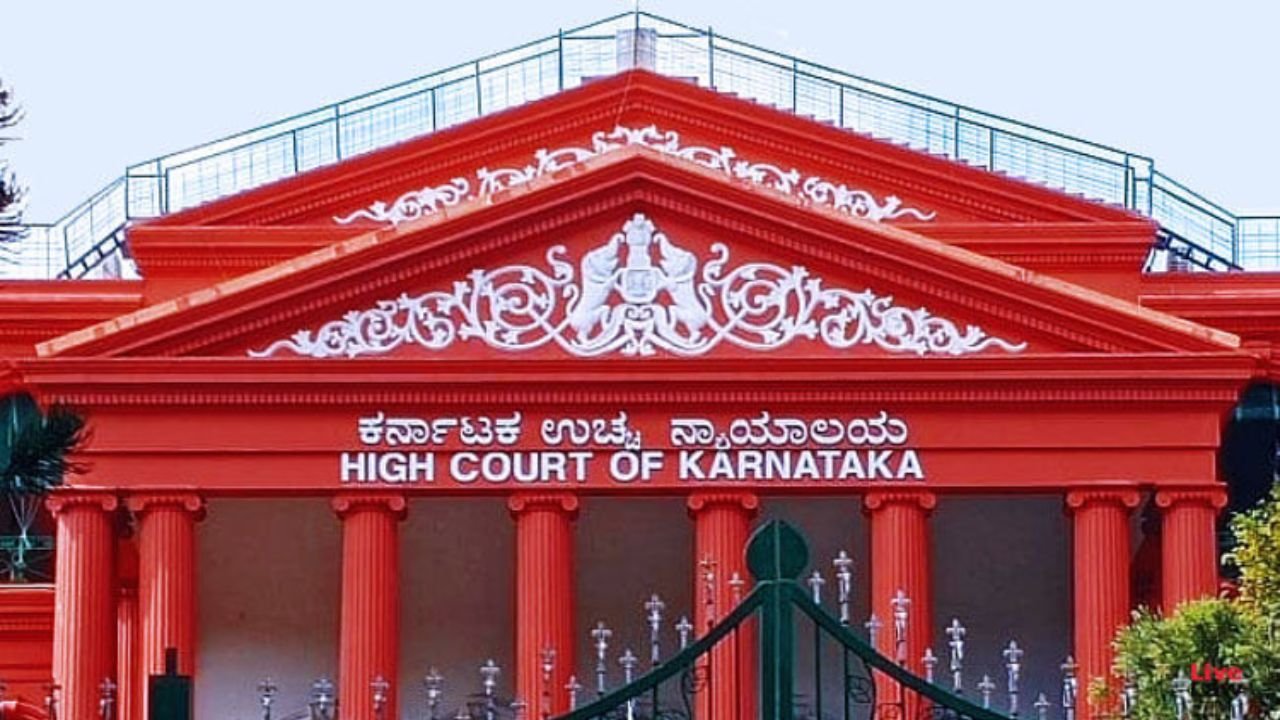

Bengaluru | A significant legal debate unfolded in the Karnataka High Court during the hearing of a petition filed by a sitting judge of the Sri Lankan Supreme Court seeking removal of certain online articles allegedly published against him. During the proceedings, both Google and the Union Government raised objections regarding whether the Karnataka High Court has the territorial jurisdiction to entertain such a petition.
The petition has been filed by Justice A.H.M.D. Nawaz, a sitting judge of the Supreme Court of Sri Lanka. He has approached the court seeking directions to remove what he claims to be defamatory content available on the internet concerning him. The plea also seeks a directive to block the related links and search results associated with the alleged defamatory material.
During the hearing, counsel appearing for Google argued that the maintainability of the petition itself is questionable. According to the argument presented before the court, the petitioner is a judge based in Sri Lanka, and the content in question reportedly originated from Sri Lanka. At the same time, Google operates as a company incorporated in the United States. In such circumstances, the counsel contended, it remains unclear how the jurisdiction of the Karnataka High Court can be invoked in the present case.
Google further submitted that if petitions of this nature are entertained, it could potentially open the floodgates for litigants from across the world to approach courts in India for similar relief, thereby placing an unnecessary burden on the judicial system.
The counsel representing the Union Ministry of Electronics and Information Technology also raised similar objections. It was argued that the petitioner has not convincingly demonstrated how the Karnataka High Court is the appropriate forum to hear the matter.
Responding to these objections, counsel for the petitioner argued that Article 14 of the Constitution of India, which guarantees equality before law, applies not only to citizens but also to non-citizens. Therefore, if defamatory material affecting an individual’s reputation is accessible in India through online platforms, the affected person should have the right to seek appropriate legal remedies.
The petitioner’s counsel further argued that judges anywhere in the world should not be subjected to intimidation or reputational harm through defamatory online content. It was contended that Google, acting as an intermediary platform, has facilitated the dissemination of such material in multiple jurisdictions, including India. According to the petitioner’s legal team, once such content is brought to the notice of the intermediary and a reasonable period has passed without its removal, the platform could be held responsible.
During the hearing, the petitioner’s counsel also attempted to draw the court’s attention to certain social media posts allegedly made by the journalist who had authored the contentious articles. The counsel argued that publishing such remarks while the matter is pending before a court may amount to contempt of court.
It was also submitted that the journalists who allegedly published the defamatory material have since moved out of Sri Lanka and are now based in other countries, including the United Kingdom.
Hearing the matter, a single-judge bench of Justice Sachin Shanker Magadum adjourned the case for further consideration. The court directed the petitioner’s counsel to correct certain technical errors related to the address for service of summons issued to Google. It also instructed that Google India be removed from the list of respondents in the party array.
The court has now posted the matter for a preliminary hearing on April 6, 2026.
Earlier, on March 5, the Karnataka High Court had issued notices to the Union Government and Google in response to the petition. In his plea, the petitioner has claimed that certain online publications contain false and defamatory allegations against him and has requested the court to direct the removal of those links and restrict their appearance in search results.
The petitioner has also stated that he chose not to initiate legal proceedings in Sri Lanka due to ethical considerations. As a sitting judge of the country’s apex court, filing a case in domestic courts could potentially give rise to apprehensions of bias. Consequently, he approached the Indian court seeking judicial relief.
The upcoming hearing is expected to address the crucial question of whether such a petition can be entertained by an Indian court and under what circumstances directions can be issued for the removal of allegedly defamatory online content.
