

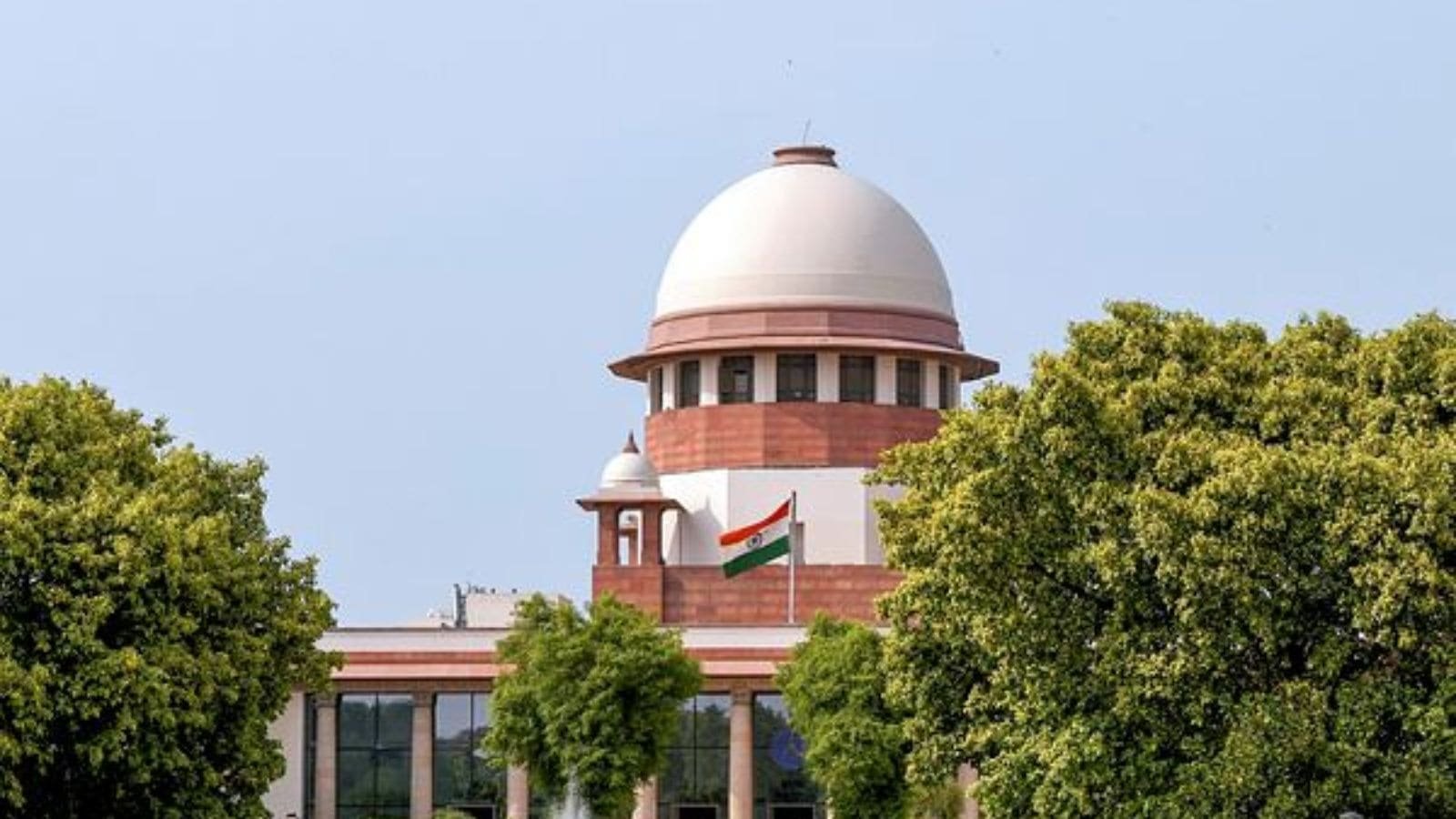

NEW DELHI — In a hearing that underscored both judicial frustration and the scale of India’s stalled housing crisis, the Supreme Court pulled up the Central Bureau of Investigation over what it saw as an unacceptably slow investigation into the alleged “unholy nexus” between banks and developers in the National Capital Region.
A bench led by Chief Justice Surya Kant, and comprising Justices Joymalya Bagchi and N. Kotiswar Singh, made clear that it was unwilling to tolerate indefinite delays. The court refused a suggestion that some cases be transferred to state agencies and instead directed the CBI to continue probing all matters itself, converting preliminary enquiries into regular cases where necessary.
The bench’s concern was not abstract. It was hearing a batch of pleas brought by more than 1,200 homebuyers, many of whom had booked flats under subvention schemes in Noida, Greater Noida and Gurugram, only to find themselves paying equated monthly instalments without receiving possession of their homes.
“This court cannot wait for an indefinite period for the conclusion of the investigation,” the bench said, adding that any prolonging of the probe would only add to the agony of buyers who, in the court’s telling, had already been harassed by builders and developers “apparently in collusion and connivance with financial institutions and banks.”
Final Call: Certified Fraud Investigator (CFI) Program by FCRF Academy Begins March 14
The Subvention Model and the Burden Shifted to Buyers
At the center of the dispute lies the subvention scheme, once marketed as a convenient financing arrangement for homebuyers in large residential projects across NCR.
Under that model, banks disbursed the sanctioned loan amount directly to builders. Builders, in turn, were supposed to service the EMI burden until possession was handed over. But when several developers allegedly defaulted on those obligations, banks began demanding EMIs from homebuyers — the third party in the tripartite agreement — even though construction had stalled and possession remained elusive.
The result was a form of double injury familiar to thousands in NCR’s real estate market: families continued paying rent while simultaneously servicing loans on apartments that existed only on paper or as unfinished concrete shells.
The Supreme Court had earlier ordered a CBI probe into this alleged nexus, seeing the matter not merely as a set of private contractual disputes, but as a possible structure of organized financial and housing fraud. Wednesday’s hearing suggested that the court believes the investigation has not moved with the seriousness such a characterization demands.
The bench also expressed displeasure that bank officials were not being investigated with sufficient vigor. One of the sharper threads running through the hearing was the court’s insistence that the probe must examine institutional conduct, not simply isolate developers as the sole actors in a larger scheme.
Beyond Builders and Banks, a Wider Net Around NCR Authorities
The hearing also carried a broader institutional implication. The investigation, the court indicated, cannot remain confined to developers and lenders alone.
There was a pointed emphasis on the role of public authorities in NCR’s real estate ecosystem, particularly bodies in Noida, Greater Noida and the Yamuna Expressway region. The suggestion, both in court and in the wider reporting around the matter, is that the CBI has also been asked to examine the conduct of development authorities connected to these projects.
That is a significant expansion in focus.
For years, NCR’s housing crisis has been narrated largely as a story of errant builders and overleveraged buyers. But the projects at issue were not built in a regulatory vacuum. Land allotments, project approvals, development permissions, compliance enforcement and oversight of delivery schedules all passed through administrative systems shaped by state-backed authorities.
A fuller probe into Noida, Greater Noida and Yamuna-linked bodies would therefore widen the inquiry from a commercial scandal into a governance question: whether the failure of these housing projects reflected not only private misconduct, but also regulatory permissiveness, administrative negligence or deeper institutional complicity.
That possibility seemed to hover over the courtroom proceedings. The court’s concern was not simply about the pace of the CBI probe, but about whether it was adequately matching the complexity of the ecosystem it was meant to unravel.
A Court Demanding Timelines, Accountability and Structure
The bench went beyond criticism and began sketching the outline of a more supervised investigative process.
It warned that if the current approach continued, the court might consider constituting a committee to oversee the probe. It also said that if the CBI lacked manpower to investigate the cases, it could seek assistance from state police leadership and Economic Offences Wings. A “responsible officer” from the agency was directed to file an affidavit by the next date of hearing, setting out the pace of the investigation across all matters.
The court further instructed the agency to consult a report earlier filed by amicus curiae Rajiv Jain and to indicate a probable timeline for completing the investigation.
At the same time, the bench attempted to impose some order on the flood of competing claims surrounding the case. It said that affected parties — including homebuyers, banks and builders — should place their claims, suggestions and recommendations before the amicus curiae, who would then examine the material and put the relevant record before the court. No such claims, the bench clarified, would be directly entertained unless screened through that process.
That procedural move reflected the sheer scale of the dispute. This is no longer a matter of one failed project or one defaulting developer. It is a sprawling NCR housing crisis, one that touches not only private contracts but banking norms, regulatory oversight, urban development policy and the everyday financial survival of middle-class homebuyers.
In that sense, Wednesday’s hearing was about more than an investigation. It was about whether India’s institutions — judicial, financial, investigative and administrative — are willing to confront the full architecture of a housing breakdown that has lingered for years in the shadow of unfinished towers across Noida, Greater Noida and beyond.
