

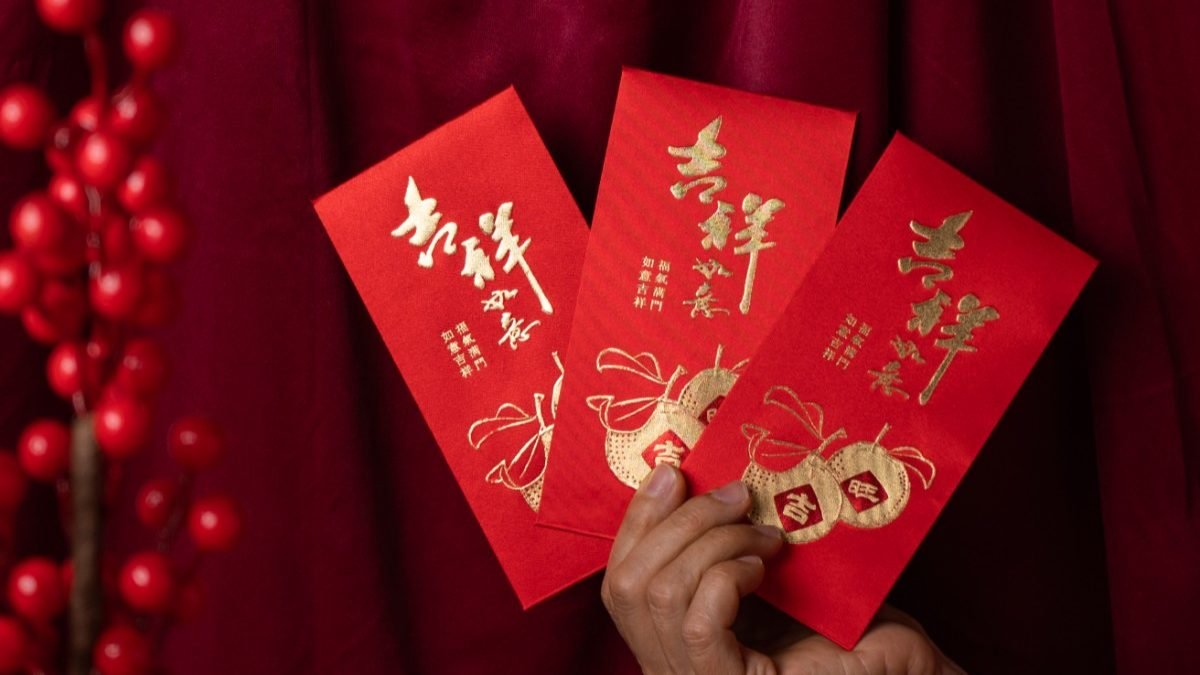

Beijing: In a case that has sparked nationwide debate on parental responsibility and children’s financial rights, a Chinese court has ordered a father to repay 82,750 yuan (approximately ₹10 lakh) to his 10-year-old son after spending the boy’s Lunar New Year gift savings on his remarriage ceremony.
The minor, identified in court documents as Xiaohui, had accumulated the amount over several years through traditional “red packets” — cash-filled envelopes gifted by relatives and family friends during the Lunar New Year festivities. In Chinese culture, these envelopes symbolize blessings and good fortune for children. According to local media reports, the father had previously opened a dedicated bank account in his son’s name to deposit the festive gifts.
FCRF Launches Flagship Certified Fraud Investigator (CFI) Program
The dispute surfaced after Xiaohui’s parents divorced. Following the separation, the father withdrew the entire balance from the account, including accrued interest, and used the funds to finance expenses related to his new wedding. When Xiaohui later moved in with his mother, she discovered that the savings had been completely depleted.
On being confronted, the father reportedly refused to return the money. He argued before the court that the red packet cash primarily came from his own social circle and was intended to be handed over to the child only upon reaching adulthood. According to his defense, as the parent and guardian, he retained authority over how and when the funds would be used.
With no resolution through family discussions, Xiaohui — represented by his legal guardian — filed a lawsuit seeking full repayment.
During the proceedings, the court examined the legal nature of red packet money under Chinese civil law. Judges ruled that monetary gifts presented directly to children during festivals are legally regarded as the child’s personal property, irrespective of which parent’s acquaintances provided the money. The bench clarified that while parents are permitted to manage their children’s assets to safeguard their interests, they are not entitled to divert those funds for personal use.
In its order, the court directed the father to repay the full 82,750 yuan, including both the principal amount and the accumulated interest. The judgment underscored that guardianship does not grant unrestricted control over a minor’s property and must always align with the child’s best interests.
Legal observers said the verdict reinforces existing protections under Chinese civil legislation, which recognizes that children aged eight and above possess limited capacity to exercise control over their personal assets. While guardians can supervise financial matters, they are legally bound to preserve the child’s property rather than treat it as family income.
The case quickly gained traction on Chinese social media platforms, where public reaction was sharply critical of the father’s actions. Many users described the move as a breach of trust, arguing that savings meant for a child’s future should never be diverted for adult obligations. Some questioned the father’s decision to fund his remarriage with the child’s money, while others pointed out that if the gifts came from extended family networks, they were clearly intended for the boy alone.
The ruling is being seen as a reminder that cultural traditions, even those rooted in family customs, carry clear legal implications when financial rights are involved. By affirming that red packet money belongs unequivocally to the child recipient, the court has sent a broader signal about accountability within families and the limits of parental authority.
For Xiaohui, the decision restores not only his savings but also establishes a precedent that children’s property rights are enforceable — even within the confines of domestic disputes.
