


WASHINGTON: The Trump administration has moved to freeze $259 million in federal Medicaid payments to Minnesota, escalating a confrontation over immigration enforcement and allegations of public benefits fraud that officials have linked to the state’s Somali community.
A Funding Freeze Amid Political Crosscurrents
The Trump administration said it would temporarily halt $259 million in federal Medicaid payments to Minnesota, intensifying a dispute with the state that has unfolded alongside a broader immigration crackdown.
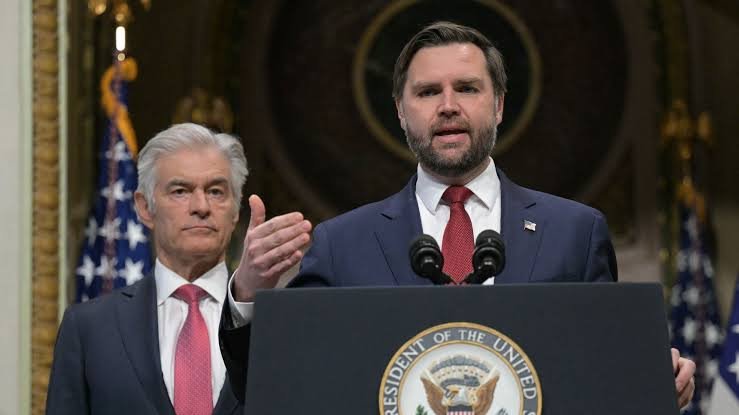
“We have decided to temporarily halt certain amounts of Medicaid funding that are going to the state of Minnesota,” Vice President J.D. Vance said at a news conference, referring to the federal health insurance program for low-income Americans.
The announcement came as Mehmet Oz, now the administrator for the Centers for Medicare and Medicaid Services, confirmed that the federal government would freeze the payments. The move follows repeated claims by the administration that public benefits fraud is widespread in Minnesota — allegations that officials have linked to the state’s Somali community.
The decision is almost certain to face legal challenges, as have previous efforts by the Trump administration to withhold federal funds from states. It also places Minnesota at the center of a mounting clash between federal authorities and state leaders over immigration enforcement and the administration’s approach to public assistance programs.
The funding halt comes at a politically charged moment. In January, federal agents shot and killed two Americans during an immigration crackdown in the state, an episode that reverberated nationally and sharpened scrutiny of federal tactics.
FCRF Launches Flagship Certified Fraud Investigator (CFI) Program
The Vice President’s Expanding Portfolio
Mr. Vance’s role in announcing the funding freeze reflects his expanding portfolio within the administration. He has been appointed to lead the federal government’s anti-fraud effort, an assignment that arrives amid speculation that the 41-year-old vice president could emerge as a frontrunner for the 2028 Republican presidential nomination.
The position places him in a line of vice presidents tasked with politically sensitive responsibilities. His predecessor, Kamala Harris, faced challenges after then-President Joseph R. Biden Jr. asked her to address the root causes of migration from Central America — a mandate that drew criticism from Republicans and exposed her to sustained political attacks.
Mr. Vance’s new oversight role similarly intersects with one of the most combustible issues in American politics: immigration and its perceived connections to public spending. By tying allegations of Medicaid fraud to a specific state and community, the administration has framed the funding freeze as both a fiscal and enforcement measure.
The vice president’s announcement followed President Trump’s State of the Union address on Tuesday, during which he criticized Somali immigrants and declared that Mr. Vance would take on the new fraud oversight role. The remarks underscored how closely the administration’s anti-fraud initiative is intertwined with its immigration agenda.
Minnesota at the Center of the Dispute
Minnesota has the largest Somali community in the United States, a fact that has increasingly drawn the state into national political debates. The administration’s claims of widespread public benefits fraud have been explicitly linked to that community, intensifying concerns among advocacy groups and state officials about stigmatization.
The federal government and Minnesota have already clashed over immigration enforcement. The administration has criticized the state’s policies, while Minnesota officials have defended their approach as consistent with state law and public safety priorities.
The January shooting of two Americans during an immigration operation deepened tensions. Details of the episode have been the subject of scrutiny and public debate, particularly as federal enforcement actions have become more aggressive.
Against this backdrop, the decision to freeze Medicaid funding adds a financial dimension to the dispute. Medicaid plays a central role in Minnesota’s health care system, supporting hospitals, clinics and beneficiaries across the state. Any disruption in payments could have immediate administrative and political consequences, even if the freeze proves temporary.
Legal and Political Implications
Efforts by the Trump administration to withhold federal funds from states have previously met resistance in the courts. Legal scholars say that attempts to condition or suspend congressionally appropriated funding often trigger challenges over executive authority and the limits of federal power.
The funding freeze in Minnesota is expected to prompt similar litigation. State officials have not yet detailed their legal strategy, but the near certainty of court involvement reflects the high stakes of the confrontation.
The administration maintains that the action is necessary to address alleged fraud within public benefits programs. By placing the vice president at the forefront of the announcement, the White House has signaled that the issue will remain a central priority.
For Mr. Vance, the assignment offers both opportunity and risk. Oversight of anti-fraud efforts aligns him closely with the administration’s law-and-order message. At the same time, the role ties his political standing to a contentious battle involving immigration, federal authority and the rights of states.
Follow for daily updates on cybercrime, corporate fraud, DFIR, hacking, investigations, and digital forensics
