
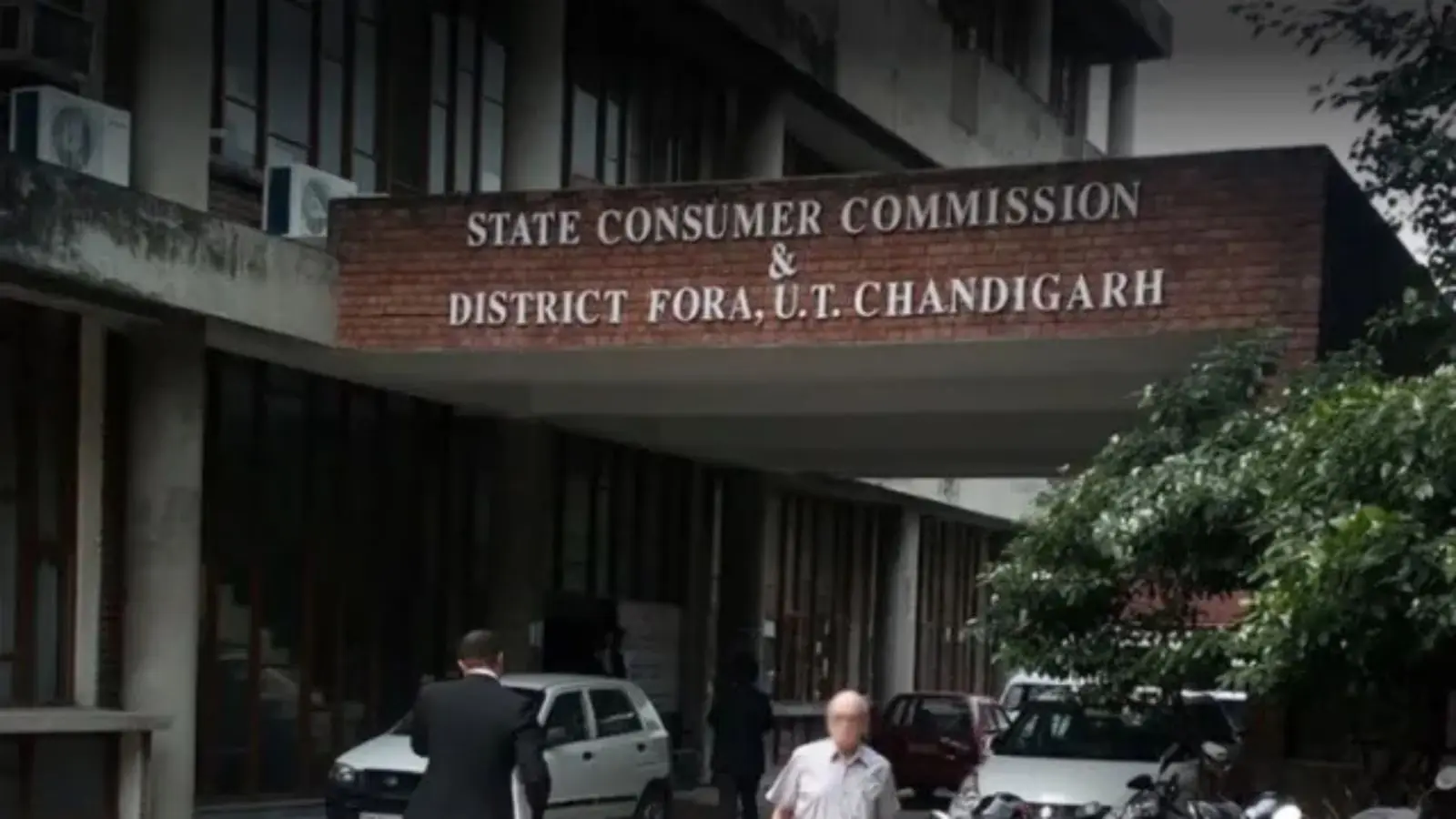
The District Consumer Commission, Chandigarh has held State Bank of India (SBI) guilty of deficiency in service and unfair trade practice in a case involving excess recovery during closure of a home loan account. The commission found that the bank failed to follow the banking ombudsman’s re-calculation instructions and collected more than the actual outstanding amount from the borrower.
The case was filed by a customer named Dilbar Singh, who had taken a home loan of ₹5,00,000 from SBI in 2009 at a floating interest rate for a tenure of 15 years. The complainant regularly paid EMIs through the ECS payment system and continued repayments for nearly ten years.
FCRF Launches Flagship Certified Fraud Investigator (CFI) Program
Ombudsman Order Ignored, Excess Amount Collected
In 2019, the bank informed him that ₹4,57,325 was still outstanding in his loan account. The complainant later obtained detailed account statements and raised objections regarding the interest calculation, alleging that the bank had charged excess interest. After repeated complaints failed to resolve the issue, he approached the banking ombudsman.
Following a review of the matter, the ombudsman directed the bank to recalculate the loan account using the base rate and MCLR system. In compliance, the bank credited ₹96,922 to the complainant’s account and issued a revised statement showing a reduced outstanding balance.
However, on July 11, 2019, when the complainant closed his loan account, the bank collected ₹2,01,728 and issued a “No Due Certificate”. The complainant alleged that the amount was higher than the actual outstanding balance and that the bank failed to maintain transparency.
Commission Calculates ₹41,949 Excess Recovery
In its defence, the bank stated that interest was calculated according to regulatory norms and that errors in the initial statement were due to manual entry mistakes, which were later corrected. The bank also argued that since ₹96,922 had already been refunded as per the ombudsman’s order, there was no additional liability.
During the examination of account records, the commission found that the outstanding balance on June 27, 2019 was ₹59,155, which increased to ₹62,857 by July 11, 2019. Despite this, the bank recovered ₹2,01,728 while closing the loan account.
After reviewing financial calculations and account statements, the commission concluded that SBI had collected ₹41,949 in excess from the complainant. The commission held this to be a case of deficiency in service and unfair trade practice.
Refund with Interest and Compensation Ordered
The commission directed the bank to refund the excess amount of ₹41,949 along with 9% annual interest from July 11, 2019 until the date of payment. The bank was also ordered to pay ₹10,000 as compensation for mental and financial distress along with litigation costs.
The commission emphasized that financial institutions must ensure complete transparency during loan settlement and should recover only the actual outstanding amount from customers. Protection of consumer rights was described as an important responsibility of the banking system.
Experts believe that this ruling may help improve accountability in loan closure procedures within the banking sector. They also stressed the need for stronger internal control and audit mechanisms to reduce calculation errors in both digital and manual accounting systems.
The bank has been given 60 days to comply with the order, failing which further legal action may be initiated.
About the author – Ayesha Aayat is a law student and contributor covering cybercrime, online frauds, and digital safety concerns. Her writing aims to raise awareness about evolving cyber threats and legal responses.
