

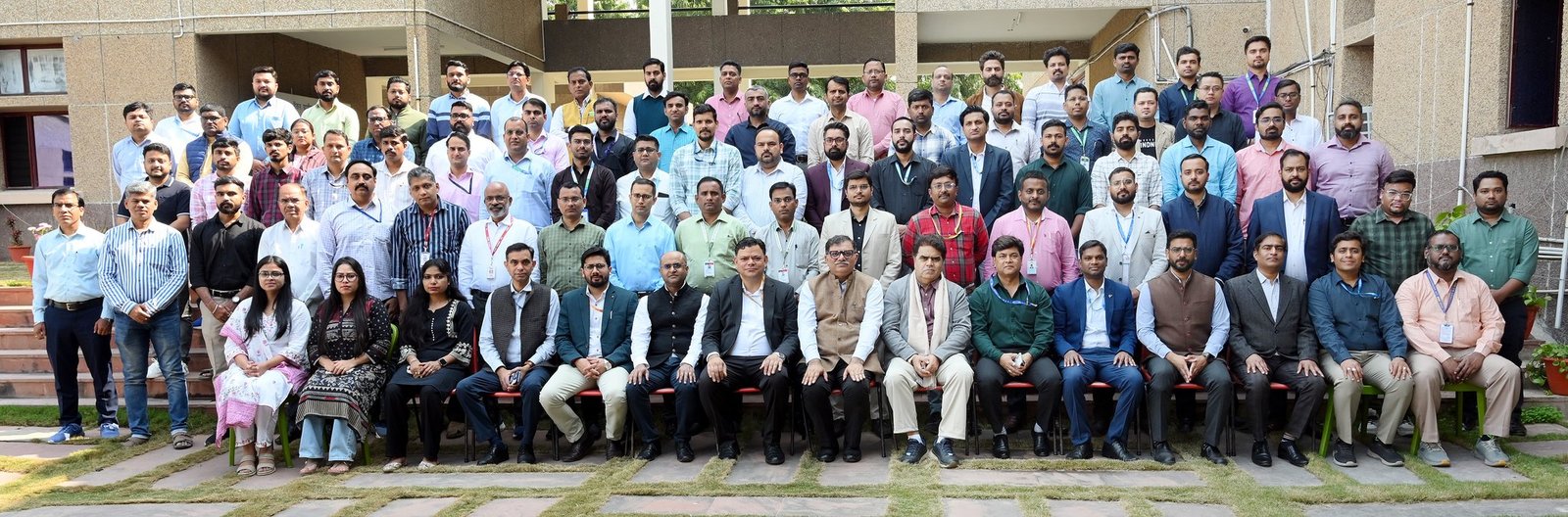

LUCKNOW: Nearly 100 officials from 42 rural financial institutions gathered in Lucknow this week for a first-of-its-kind cybersecurity drill, an effort by India’s top rural banking and cyber agencies to confront a fast-evolving digital threat landscape.
A Coordinated Response to a Growing Threat
In a training hall at the Bankers Institute of Rural Development here, senior officials on 23rd and 24th February at its Lucknow campus under the guidance of Dr. Nirupam Mehrotra, Director BIRD , Lucknow and Dr Sanjay Bahl, Director General, CERT-In organised a cyber drill. On large screens, hypothetical cyberattacks unfolded in real time: servers compromised, internal communications disrupted, digital payment channels frozen.
The exercise, titled “Building Cyber Resilience in Regional Rural Banks and Rural Cooperative Banks,” marked a coordinated effort between the Bankers Institute of Rural Development (BIRD), Lucknow, the Indian Computer Emergency Response Team (CERT-In), and the Department of Supervision at the National Bank for Agriculture and Rural Development (NABARD). Over two days, from February 23 to 24, 2026, nearly 100 officials representing 42 rural financial institutions participated in what organizers described as a milestone initiative.
The program was conceived as a structured intervention aimed at strengthening cyber preparedness across Regional Rural Banks and Rural Cooperative Banks. NABARD officials said a roadmap is being implemented to ensure that all such institutions are eventually covered under the cyber drill framework, signaling an institutional push toward uniform standards of resilience.
The initiative reflects a strategic shift within India’s rural financial ecosystem, where digital services have expanded rapidly, bringing new efficiencies — and new vulnerabilities.
FCRF Launches Flagship Certified Fraud Investigator (CFI) Program
From Conventional Security to Cyber Resilience
In his inaugural address, Dr. Nirupam Mehrotra, Director of BIRD Lucknow, underscored what he described as the critical importance of cyber resilience in safeguarding financial institutions. He emphasized that preparedness must go beyond static compliance and periodic audits, calling instead for continuous capacity building, structured cyber readiness initiatives and practical drills that mirror real-world conditions.
The key note address was delivered by Shri Ashutosh Bahuguna, Scientist and Additional Director at CERT-In, who outlined national cybersecurity priorities and emerging threat dynamics. He spoke of the need to transition from conventional cybersecurity approaches often reactive and compliance-driven toward comprehensive resilience frameworks capable of anticipating, absorbing and recovering from attacks.
Senior CERT-In officials led technical sessions focused on Cyber Crisis Management Planning, defense controls, awareness protocols and incident response capabilities. Among them were Shri Shashank Gupta, Scientist and Joint Director, and Shri Abhishek Solanki, Scientist and Joint Director. The sessions combined technical briefings with scenario-based exercises, allowing participants to engage directly with simulated disruptions.
Organizers described the approach as interactive and problem-driven. Participants presented operational challenges and institution-specific concerns, which were addressed by CERT-In officials and BIRD faculty members. These deliberations, officials said, were intended to provide actionable guidance that institutions could adapt to their internal systems.
Hands-On Drills and Supervisory Oversight
At the center of the program was a Cybersecurity Threat Simulation and Technical Drill, designed to provide hands-on exposure to simulated cyber incidents. Participants worked through staged attack scenarios that required coordinated decision-making and technical troubleshooting.
The drills emphasized incident response coordination, with teams tasked to identify breaches, contain damage and restore systems within controlled time frames. The exercises also focused on improving decision-making effectiveness under pressure and augmenting technical capabilities within individual institutions.
The program was conducted under the overall guidance of Dr. Sriram Appulingam, Joint Director at BIRD Lucknow. It was coordinated by the program directors, Shri Ravi Chandra Yadav and Shri Anuj Kumar Singh, faculty members at BIRD, who oversaw the conceptualization and execution of the initiative.
Officials from NABARD’s Department of Supervision participated actively. Shri Sanjeev Kumar, Deputy General Manager, and Dr. Nalin Rai, Assistant General Manager, contributed supervisory perspectives during the sessions, linking technical preparedness to regulatory expectations. Their presence underscored the alignment between training initiatives and oversight frameworks.
Organizers said the supervisory engagement was designed to ensure that lessons from the drill translate into institutional policy adjustments and internal governance improvements.
A Rural Banking System in Digital Transition
The cyber drill comes at a time when rural financial institutions are navigating an increasingly complex digital environment. As Regional Rural Banks and Cooperative Banks expand digital payment services and adopt new technologies, exposure to cyber risks has grown proportionately.
The two-day exercise was framed as part of NABARD’s broader strategic focus on reinforcing cyber resilience while promoting secure and responsible digital transformation within the rural financial ecosystem. Officials described the initiative as the first collaborative effort of its kind between CERT-In, BIRD Lucknow and NABARD’s Department of Supervision.
Nearly 100 officials attended the program, representing institutions from across the country. According to organizers, the goal is to move toward saturation coverage, ensuring that all rural cooperative and regional rural banks undergo similar preparedness exercises.
Participants engaged directly with domain experts, raising operational queries and implementation challenges specific to their institutions. CERT-In officials and BIRD faculty members addressed these issues during interactive sessions, aiming to bridge the gap between national cybersecurity guidance and local operational realities.
Throughout the program, emphasis was placed on institutional readiness rather than isolated technical fixes. Organizers highlighted the importance of coordinated response mechanisms, structured crisis management planning and a culture of cyber awareness across all levels of banking operations.
By the close of the second day, the simulation exercises had moved from initial breach detection to containment and system recovery — a compressed version of what officials described as the lifecycle of a cyber incident.
For many of the participating institutions, the drill offered an opportunity to test existing protocols against simulated threats. For NABARD and CERT-In, it represented a step toward embedding resilience as a foundational principle in rural banking governance.
As India’s financial infrastructure continues to digitize, initiatives like the Lucknow cyber drill suggest a recognition among regulators and training institutions that the stability of rural banking now depends not only on credit flows and agricultural cycles, but also on the integrity of digital systems operating quietly behind the scenes.
“Cyber crisis drills are no longer optional—they are essential survival tools for modern digital enterprises. In an era of evolving cyber threats, preparedness through realistic simulations is critical. At the Future Crime Research Foundation (FCRF), we actively conduct such specialised drills on demand for the BFSI sector to strengthen resilience and response capabilities,” said Prof. Triveni Singh, Ex-IPS officer and Chief Mentor, FCRF.
Follow for daily updates on cybercrime, corporate fraud, DFIR, hacking, investigations, and digital forensics
