

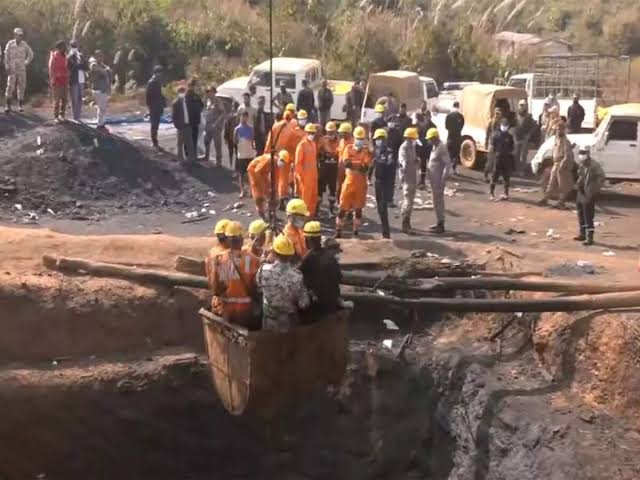

Shillong/Guwahati: In a major enforcement drive against illegal coal mining and transportation, Meghalaya Police have seized more than 17,000 metric tonnes of illegally extracted coal along with 25.5 kg of explosive material from abandoned mines in East Jaintia Hills district. The operation was carried out during a night-long raid on February 20–21 as part of an intensified crackdown following the recent mine blast in the region.
Officials said no arrests were made during this particular operation, but the scale of the seizure indicates the continued presence of an organised illegal mining network. Investigators have launched a follow-up probe to identify those responsible for extraction, storage and transportation.
Action after deadly mine explosion
The enforcement push gained momentum after the February 5 explosion at an illegal rat-hole coal mine in the Thangsku area, which left 34 people dead and several others injured. The incident exposed serious lapses in safety practices and revived concerns over the persistence of banned rat-hole mining in the state.
Since the blast, police have registered 94 FIRs and arrested 22 individuals linked to illegal mining activities. Authorities said the focus is now on dismantling the entire supply chain, including financiers, transporters and storage operators.
Certified Cyber Crime Investigator Course Launched by Centre for Police Technology
Coal hidden in abandoned mines
According to investigators, the seized coal had been stockpiled in abandoned mine shafts, suggesting that illegal extraction continued even after the explosion. The recovery of explosive materials points to the use of hazardous and unauthorised mining methods, significantly increasing the risk of accidents.
Police officials said such explosives are often used to accelerate extraction in narrow rat-hole tunnels, where safety protocols are routinely ignored.
SIT and judicial inquiry
The state government has constituted a Special Investigation Team (SIT) to probe the mine blast and related illegal mining operations. In parallel, a three-member judicial commission headed by a retired High Court judge has been set up to examine the circumstances leading to the explosion and systemic failures that allowed such activities to persist.
The inquiry will also look into regulatory lapses and possible administrative or logistical support that enabled illegal mining to continue.
Enforcement to continue in vulnerable pockets
Authorities said enforcement drives will be intensified in vulnerable areas of East Jaintia Hills, with increased surveillance on transport routes, storage points and suspected mining sites. Officials have warned that strict legal action will be taken against anyone involved in illegal extraction, stockpiling or movement of coal.
The state government has reiterated that no individual or group engaged in unlawful mining will be spared and that the crackdown will continue until the network is dismantled.
Safety and environmental concerns
Experts have long flagged rat-hole mining as one of the most dangerous forms of coal extraction, posing severe risks to workers due to poor ventilation, unstable tunnels and the use of explosives. The practice also leads to significant environmental degradation, including contamination of groundwater and damage to fragile hill ecosystems.
Officials said the seized materials will undergo forensic examination, and the findings are expected to provide leads on supply chains, ownership patterns and operational methods. Further arrests are likely as the investigation progresses, with agencies aiming to dismantle the broader network behind illegal coal mining in the region.
Follow for daily updates on cybercrime, corporate fraud, DFIR, hacking, investigations, and digital forensics
