

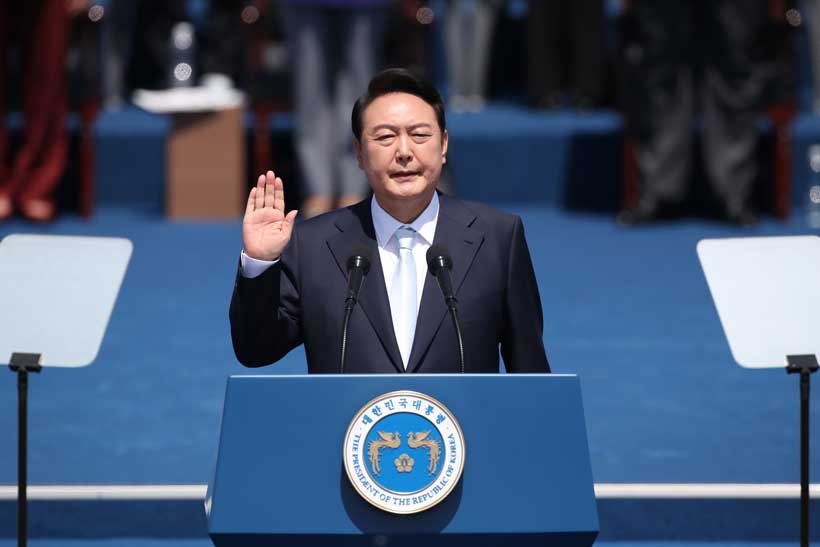

Seoul: Former South Korean President Yoon Suk Yeol has been sentenced to life imprisonment after a court found him guilty of rebellion for imposing martial law during a brief political crisis in December 2024. The ruling marks one of the most dramatic falls from power in the country’s democratic history and underscores the judiciary’s strict stance against attempts to undermine constitutional order.
Delivering the verdict, the court held that Yoon illegally mobilised military and police forces in an attempt to take control of the opposition-led National Assembly, detain political figures and concentrate executive power for a “considerable period.” The judge said the actions amounted to an organised effort to suspend democratic institutions and therefore met the legal threshold for rebellion under South Korean law.
Certified Cyber Crime Investigator Course Launched by Centre for Police Technology
Prosecution and Defence Clash Over “National Emergency”
Prosecutors had argued that the former President’s declaration of martial law was not a legitimate security response but a calculated political move aimed at bypassing legislative resistance. According to the prosecution, the plan involved deploying armed personnel to strategic government locations and restricting the functioning of elected representatives.
Yoon’s defence maintained that the decision was taken amid what he believed to be a grave national emergency and denied any intention to dismantle democratic governance. However, the court rejected this argument, stating that no credible threat existed that could justify such extraordinary measures and that constitutional procedures had been deliberately ignored.
A Severe Sentence in Modern South Korea
The life sentence is particularly significant in South Korea, where the death penalty remains on the statute books but has not been carried out since 1997. As a result, life imprisonment is widely regarded as the harshest punishment likely to be enforced in practice. Legal experts say the judgment sends a strong signal about the limits of presidential authority and the primacy of civilian democratic control over the military.
The case has deeply polarised public opinion. Supporters of the former President have described the ruling as politically motivated, while critics say it reaffirms the resilience of South Korea’s institutions and its commitment to the rule of law. Security was tightened around the courthouse during the sentencing, reflecting concerns over possible protests.
Democratic Safeguards and the Road Ahead
The episode has also triggered broader debate about safeguards against the misuse of emergency powers. Analysts note that South Korea’s history of military rule has made the legal and political system particularly sensitive to any attempt to deploy armed forces in domestic politics. The court’s detailed reasoning emphasised that even a short-lived suspension of democratic processes constitutes a serious constitutional violation.
With the verdict delivered, attention is likely to shift to the appellate process, as Yoon is expected to challenge both the conviction and the severity of the sentence. The appeals could prolong legal proceedings for months, but the immediate political impact is already evident, reinforcing judicial oversight and setting a precedent for accountability at the highest level of government.
Follow for daily updates on cybercrime, corporate fraud, DFIR, hacking, investigations, and digital forensics
