

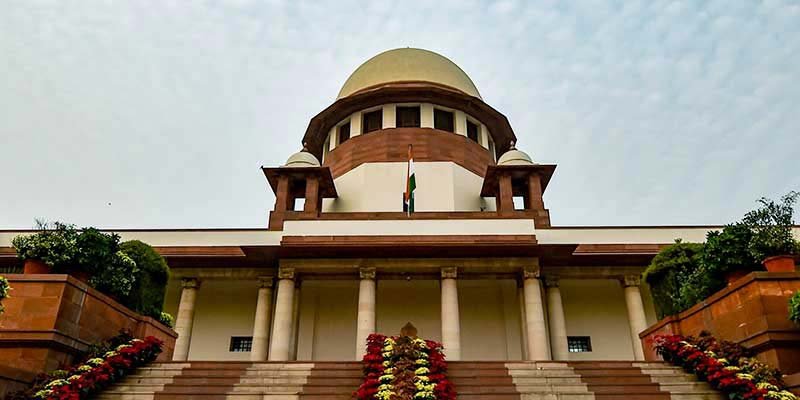
The Supreme Court has issued notice to the Union government on a batch of petitions challenging the constitutional validity of key provisions of the Digital Personal Data Protection (DPDP) Act, 2023. The court made it clear that a parliamentary law cannot be stalled through an interim order without detailed hearings, and therefore the contested provisions will continue to remain in force for now. The matter has been listed for hearing in March.
The bench, headed by the Chief Justice and comprising Justices Joymalya Bagchi and Vipul M. Pancholi, observed that the case raises “complex and sensitive” questions involving the balance between the fundamental right to privacy and the Right to Information. The court directed the Centre to file a detailed response so that the scope, intent and impact of the law can be examined comprehensively.
Certified Cyber Crime Investigator Course Launched by Centre for Police Technology
The petitions specifically challenge Section 44(3) of the DPDP Act, which amends Section 8(1)(j) of the RTI Act by expanding the exemption for disclosure of personal information. Earlier, such information could be released if there was an overriding public interest. Petitioners argue that the removal of this public interest test creates a near-blanket bar on access to personal data held by public authorities, potentially weakening transparency and making it harder to scrutinise corruption, conflicts of interest and administrative decisions.
Journalists, transparency advocates and civil society organisations have contended that the amended framework may restrict access to information relating to public officials, even in cases where disclosure is essential for democratic accountability. They argue that privacy protections should not be used to shield decision-making processes from public scrutiny.
Another major concern relates to the “fiduciary” provisions, which allow the central government to requisition data from any data fiduciary at its discretion. Petitioners claim that this grants excessive executive power without adequate safeguards and could be prone to misuse.
During the hearing, senior counsel referred to earlier Supreme Court rulings that had evolved a balancing test between privacy and transparency. However, the bench noted that the new legislative framework requires a fresh and deeper examination in light of its broader implications.
The court has referred three key petitions—filed by Venkatesh Nayak on behalf of The Reporters’ Collective, journalist Nitin Sethi and the National Campaign for People’s Right to Information (NCPRI)—to a larger bench, signalling the wide constitutional significance of the issues involved.
The case has now set the stage for a larger debate on whether India’s data protection regime adequately reconciles privacy rights with the public’s right to know. The Supreme Court’s eventual ruling is expected to have far-reaching consequences for the RTI framework, governmental transparency and the rules governing disclosure of personal data held by public authorities.
About the author – Ayesha Aayat is a law student and contributor covering cybercrime, online frauds, and digital safety concerns. Her writing aims to raise awareness about evolving cyber threats and legal responses.
