
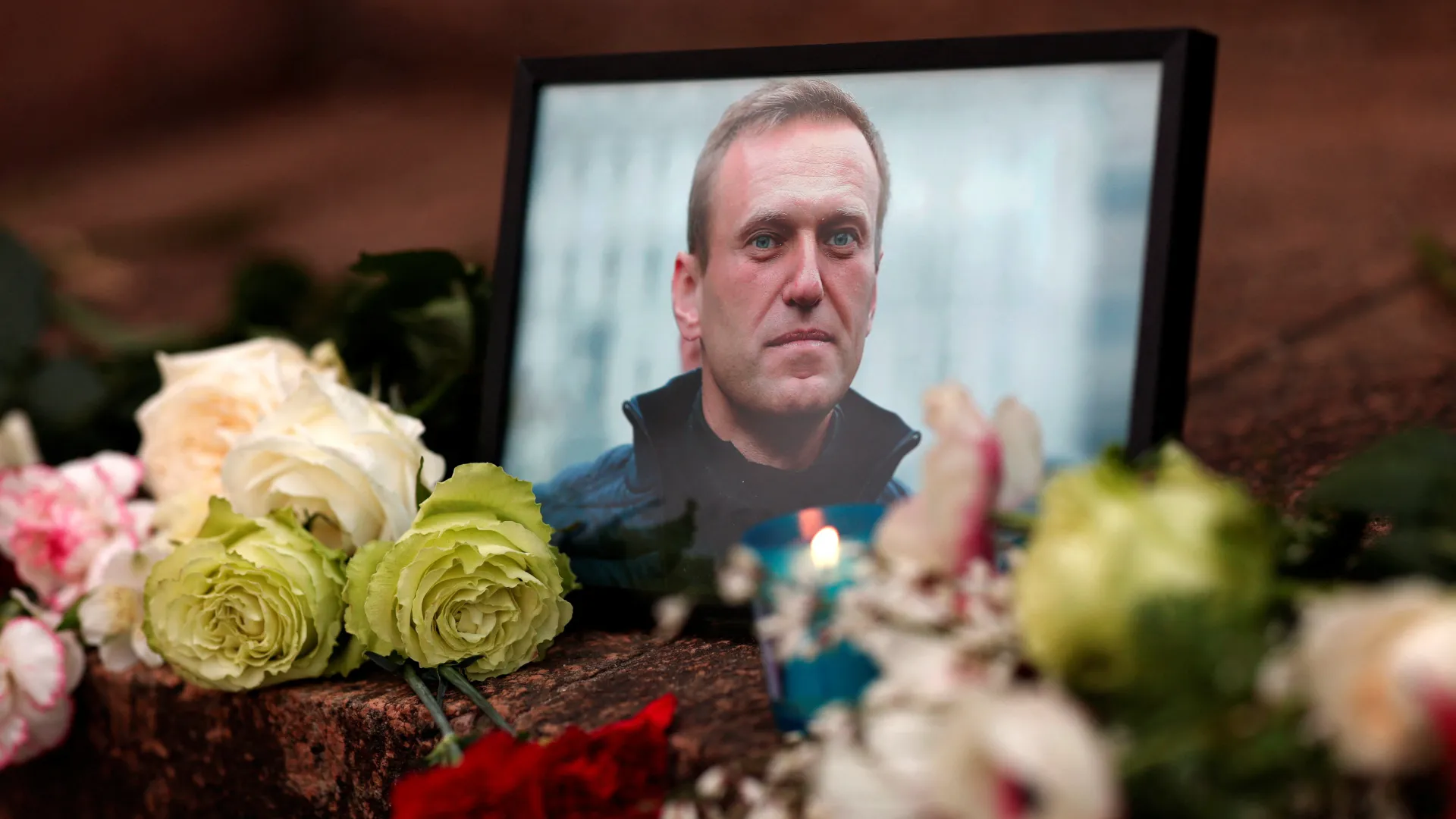
Two years after the mysterious death of Russian opposition leader Alexei Navalny, the United Kingdom and several European allies have formally accused Moscow of killing him using a powerful toxin, escalating diplomatic pressure on the Kremlin.
Western governments say forensic analysis of samples taken from Navalny’s body confirmed the presence of epibatidine — a highly potent chemical associated with South American dart frogs — adding that there is “no innocent explanation” for its appearance.
Certified Cyber Crime Investigator Course Launched by Centre for Police Technology
Speaking on the sidelines of the Munich Security Conference, Britain’s foreign secretary said the investigation had established deliberate poisoning during Navalny’s imprisonment. “Only the Russian state had the means, motive and opportunity to deploy this lethal substance,” she said, as relations between Europe and Russia remain severely strained.
In a joint statement, the UK, Sweden, France, Germany and the Netherlands directly blamed the Russian state for Navalny’s death. The allies noted that epibatidine does not occur naturally in Russia and cannot be produced by dart frogs bred in captivity, concluding that the compound’s presence points to a calculated act of poisoning.
Western capitals have also accused Moscow of violating the Chemical Weapons Convention, arguing that the use of such substances amounts to a prohibited chemical attack.
Navalny — Russia’s most prominent anti-corruption campaigner and a fierce critic of the Kremlin — collapsed during a brief walk inside a Siberian penal colony on February 16, 2024, and was later pronounced dead at the age of 47. Russian authorities initially said he had fallen suddenly ill, offering no indication of foul play. That account has now been firmly rejected by Western governments.
The UK Foreign Office said it has informed international watchdogs and partners, accusing Russia of deploying banned chemical methods against a political opponent. France’s foreign minister paid tribute to Navalny, describing him as a man who died for his fight for a free and democratic Russia.
During the conference, the British foreign secretary also met Navalny’s widow, Yulia Navalnaya, who said she believed from the first day that her husband had been poisoned. Welcoming the findings, she thanked European laboratories for what she called painstaking work over two years to establish the truth.
Navalny had previously survived a 2020 poisoning attack involving a Novichok nerve agent and spent months recovering in Germany. Upon returning to Russia, he was immediately arrested and later sentenced on multiple charges widely dismissed by human rights groups as politically motivated.
By the time of his death, Navalny had spent nearly three years behind bars and had recently been transferred to a remote Arctic facility, further limiting access to lawyers and family.
The Kremlin has not issued an immediate response to the latest allegations. Russian President Vladimir Putin, who largely avoided mentioning Navalny while he was alive, referred to his passing only in general terms weeks later, calling it a “sad event”.
Western officials say epibatidine is not available through civilian channels and its deployment indicates state-level capabilities, reinforcing long-standing accusations that Moscow uses chemical agents to silence political opponents.
The revelations have intensified pressure on Russia at a time of already heightened geopolitical tension. European capitals are calling for accountability and renewed scrutiny of Moscow’s compliance with international conventions, while human rights organisations say Navalny’s death symbolises the broader crackdown on dissent inside Russia.
For European governments, the case has now moved beyond suspicion into formal attribution — a rare step that raises the diplomatic stakes. Allied nations say further measures are under review as they push for consequences over what they describe as a targeted political killing carried out using prohibited chemical methods.
About the author – Ayesha Aayat is a law student and contributor covering cybercrime, online frauds, and digital safety concerns. Her writing aims to raise awareness about evolving cyber threats and legal responses.
