

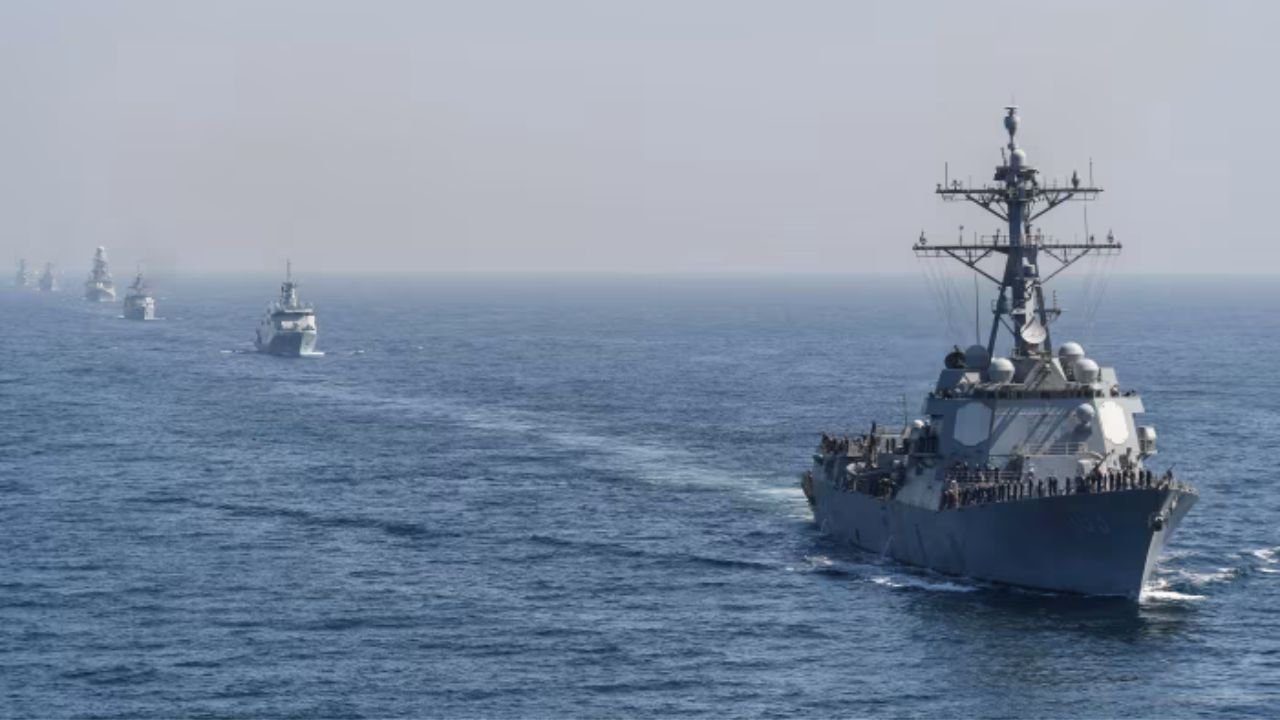

Washington: The military of United States carried out a lethal strike on February 13 against a high-speed vessel allegedly involved in drug trafficking in the Caribbean Sea, killing three traffickers. Video of the operation was shared on social media by the United States Southern Command (SOUTHCOM), showing the boat racing across open waters before erupting into flames within seconds.
According to US Southern Command, the operation was executed under the commander’s directive by Joint Task Force Southern Spear. In a statement, SOUTHCOM said the vessel was targeted based on actionable intelligence from multiple agencies, indicating it was moving along known maritime drug-smuggling routes in the Caribbean region.
Certified Cyber Crime Investigator Course Launched by Centre for Police Technology
The command said the strike was a “lethal kinetic” action aimed at disrupting networks linked to designated terrorist organisations. Three suspected traffickers were killed in the operation, while no US personnel were injured.
Footage released by SOUTHCOM shows the boat advancing rapidly before being hit in a sudden explosion, engulfing it in fire. Officials said the target was verified at multiple levels using surveillance platforms and real-time intelligence to minimise the risk of civilian harm.
Surge in maritime operations under Trump-era policies
US officials said maritime military actions against drug trafficking have intensified significantly under the current administration’s security posture. SOUTHCOM claimed that since early September, at least 38 such operations have been conducted across the Caribbean Sea and the eastern Pacific Ocean.
Following Friday’s strike, the total number of fatalities linked to US military actions against drug-laden vessels has reportedly reached 133. The US military argues that these operations are critical to breaking international drug supply chains, which are seen as the backbone of organised crime syndicates stretching from Latin America to North America.
Defence sources said drug trafficking is no longer viewed solely as a criminal enterprise but increasingly as a funding lifeline for armed and extremist groups in several regions. As a result, such missions are now being framed as matters of national security rather than conventional law enforcement.
Human rights groups raise concerns
Human rights organisations have repeatedly questioned the transparency of such operations. They argue that military strikes in international waters often lack public accountability, with limited information released about the identities of those killed or the legal basis for the use of lethal force.
Critics say clearer oversight mechanisms are needed for strikes carried out in international waters to ensure responsibility and compliance with international law. The US military, however, maintains that every mission follows detailed intelligence assessments and multi-layered verification protocols.
SOUTHCOM: Every strike is intelligence-driven
SOUTHCOM reiterated that all actions are intelligence-led. In this case, officials said the vessel’s movement patterns, routes and network links were confirmed before authorisation was granted.
The US Southern Command has not released the identities of the deceased, nor clarified the country in which the vessel was registered. Officials said further details would be shared after an internal review of the operation is completed.
The latest action in the Caribbean Sea has once again brought Washington’s aggressive maritime strategy into focus—highlighting how the fight against drug trafficking is increasingly shifting from traditional policing to direct military intervention on the high seas.
