
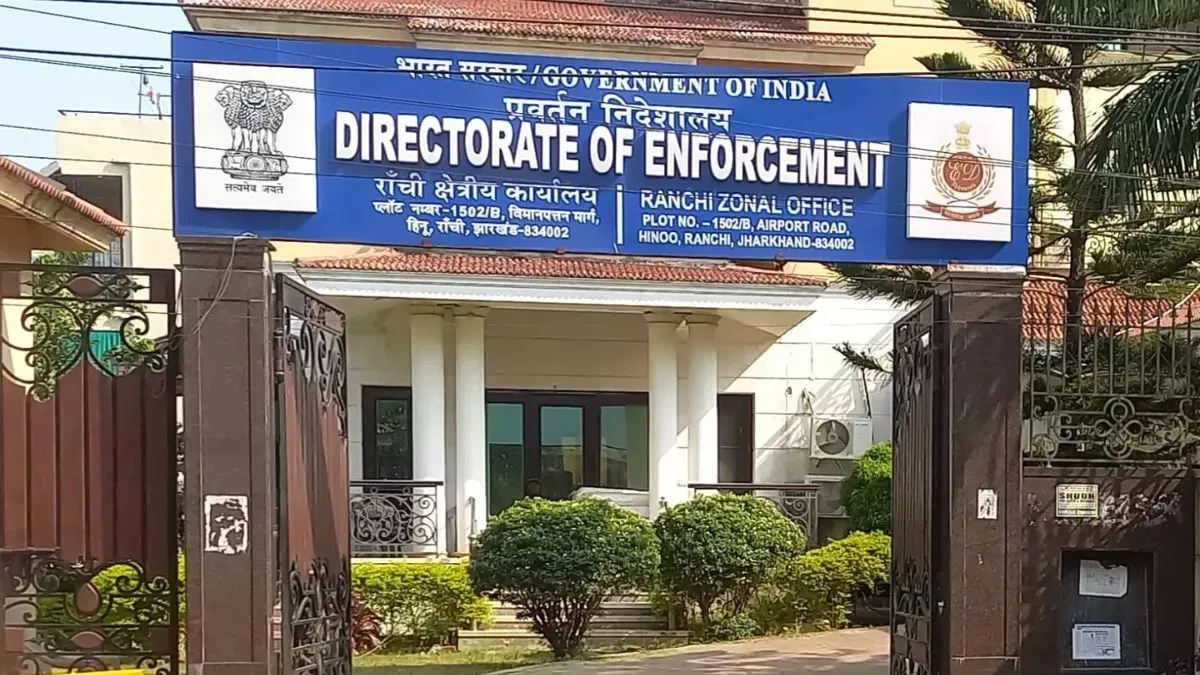
The Enforcement Directorate (ED) has filed a prosecution complaint before a special PMLA court in the high-profile MaxiZone chit fund scam, a case involving ₹308 crore. The agency has named company director Chandrabhushan Singh, his wife Priyanka Singh and MaxiZone Tech Private Limited as accused, alleging large-scale mobilisation of investor funds followed by laundering of the proceeds. The ED has also sought attachment of properties believed to have been acquired from the alleged crime.
According to the agency, the company was not registered as a chit fund but operated as a marketing firm while collecting money from investors by promising unusually high returns. Investigators said the funds were not deployed in legitimate business activities but were routed through multiple bank accounts and investment channels to obscure the money trail.
Certified Cyber Crime Investigator Course Launched by Centre for Police Technology
Network shut offices, fled after investor demands
The ED said that when investors began demanding maturity payouts, the company gradually shut its offices and the directors absconded. During the period on the run, the main accused and his wife frequently changed locations. The probe found that Chandrabhushan Singh had changed his name to Deepak Singh and was living in Noida using forged documents. He was arrested in August 2025.
The money-laundering investigation was initiated on the basis of an FIR registered at Sakchi police station in Jamshedpur on April 22, 2022. In September 2025, the agency conducted searches in Delhi, Ghaziabad, Varanasi, Dehradun and Vaishali, seizing bank records, documents and digital evidence.
Fund flow under lens may reach ₹500 crore
In the chargesheet, the ED has indicated that the total fraudulent mobilisation could be as high as ₹500 crore, with the proceeds allegedly subjected to layering and integration to give them a semblance of legitimacy. Investigators are examining shell entities, benami investments and beneficiary accounts linked to the transactions.
The agency has requested the court to provisionally attach movable and immovable assets of the accused to facilitate possible restitution to investors.
Pattern of interstate fraud
Investigators have identified the main accused as an interstate fraud operator originally from Vaishali. The scheme relied on a network of agents, attractive investment plans and assurances of guaranteed high returns. Most victims belonged to lower- and middle-income groups who were persuaded that the schemes were safe and regulated.
Further action likely
The ED said the probe is ongoing and that the money trail, associated beneficiaries and potential accomplices are being identified. A supplementary chargesheet may be filed as more evidence emerges.
The case underscores the risks posed by unregulated investment schemes that lure investors with unrealistic returns and later siphon off funds through money-laundering channels. Authorities have advised the public to invest only in entities registered with financial regulators and to verify credentials before committing funds.
About the author – Rehan Khan is a law student and legal journalist with a keen interest in cybercrime, digital fraud, and emerging technology laws. He writes on the intersection of law, cybersecurity, and online safety, focusing on developments that impact individuals and institutions in India.
