
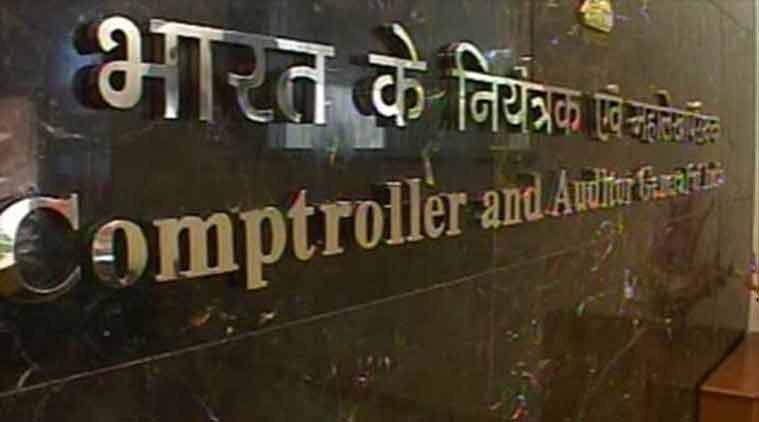
A large-scale financial fraud involving funds meant for sanitation workers has come to light, raising serious questions over the functioning of the municipal corporation. A Comptroller and Auditor General (CAG) audit and subsequent verification have confirmed that eight sanitation agencies and contractors engaged by the civic body misappropriated more than ₹1.14 crore from workers’ Employees’ Provident Fund (EPF) and Employees’ State Insurance (ESI) contributions during 2013–14 and 2014–15.
Certified Cyber Crime Investigator Course Launched by Centre for Police Technology
Despite the gravity of the findings, allegations have emerged that the civic administration selectively proceeded against a few contractors while shielding others. Following the audit, the Public Accounts Committee had issued clear directions for legal action against all defaulting agencies. However, the municipal corporation submitted an FIR request to the Hazratganj police station on January 16, 2026, naming only five agencies.
Sources familiar with the matter said the complaint was vague and incomplete, failing to mention the full amount involved or the detailed nature of the fraud. Three agencies, despite audit confirmation of misappropriation, were left out of the complaint, prompting allegations of deliberate dilution of the case.
The investigation established that in multiple instances, EPF and ESI amounts were regularly deducted from sanitation workers’ salaries but were never deposited into the designated statutory accounts. This directly impacted workers’ access to social security benefits,6 including healthcare and retirement savings. Labour law experts described the act not merely as a financial irregularity but as a grave violation of labour welfare legislation.
The most serious case involves M/s Swachhkar Enterprises. Despite confirmed findings of misappropriation, the firm continues to operate within the municipal corporation. Records show that five notices were served to the agency through speed post and personal delivery, yet none were responded to. Even so, no action has been taken to terminate its contract or remove it from ongoing sanitation work.
Similar findings were recorded against Patwa Associates, Dragon Security, and Aryan Security, where EPF and ESI embezzlement was upheld during verification. Although written complaints against these agencies were submitted over 23 days ago, no FIR has been registered so far. Some of these firms continue to function without restriction, adding to concerns over enforcement failure.
The audit also flagged M/s Rajshree, which was found to have diverted provident fund contributions during the same two-year period. The firm later claimed closure of the matter after depositing a penalty of ₹1,54,651 with the EPFO. However, officials noted a significant mismatch between the years of misappropriation and the period for which the penalty was shown to have been paid.
Amount Misappropriated from Sanitation Workers
- M/s Rajshree – ₹17,88,960
- M/s Swachhkar Enterprises – ₹14,31,168
- Patwa Associates – ₹3,57,792
- Dragon Security – ₹3,57,792
- Lion Security – ₹25,04,544
- Shark Attacking Service – ₹10,73,376
- Eagle Hunting Agency – ₹28,62,336
- Aryan Security – ₹10,73,376
Separately, a civic issue in Zone Three also drew attention recently. In Madhupuram Colony on IIM Road, debris dumped by the municipal corporation in an attempt to address chronic waterlogging ended up blocking the colony’s main road. Following the publication of a local report highlighting residents’ difficulties, the debris was removed, restoring traffic movement. Residents, however, said the waterlogging problem remains unresolved and requires a permanent solution.
Overall, the EPF–ESI fraud involving sanitation workers has triggered sharp criticism from labour groups, who argue that justice will remain incomplete unless strict and uniform action is taken against all defaulting agencies. The case continues to cast a shadow over the civic body’s commitment to safeguarding the rights and welfare of its most vulnerable workforce.
About the author – Ayesha Aayat is a law student and contributor covering cybercrime, online frauds, and digital safety concerns. Her writing aims to raise awareness about evolving cyber threats and legal responses.
