

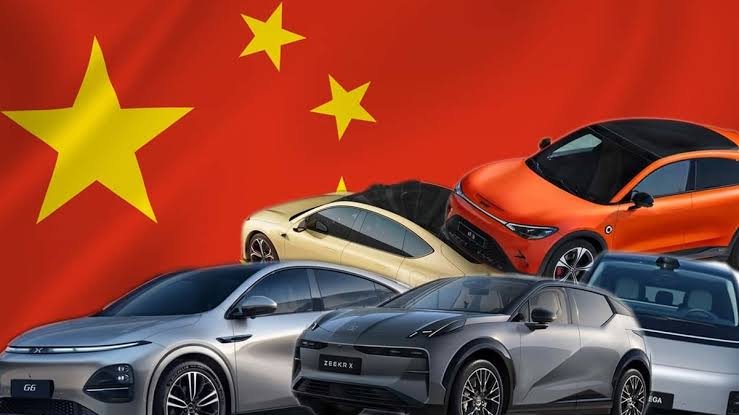

New Delhi/Washington: The United States is preparing to ban Chinese automotive technology from connected vehicles starting March 17, escalating its push to ring-fence sensitive data amid growing fears of digital espionage.
Under the proposed rules, automakers operating in the US will be required to certify that software used in their vehicles has no links to China. The move, aimed at protecting national security, is expected to have wide-ranging implications for carmakers, suppliers and the global auto-tech supply chain.
Modern cars have increasingly become rolling smart devices, equipped with cameras, microphones, GPS modules and cloud-connected systems that continuously collect and transmit data. US authorities believe these features could potentially be exploited to access sensitive information on American citizens, infrastructure and movement patterns.
Officials argue that foreign-linked software embedded in connected vehicles poses an unacceptable risk, particularly when it originates from jurisdictions viewed as strategic rivals.
Certified Cyber Crime Investigator Course Launched by Centre for Police Technology
Companies asked to prove software origin
As part of the draft framework, manufacturers will have to demonstrate that vehicle software is neither developed in China nor associated with Chinese firms. Any China-linked systems will need to be removed or transferred to non-Chinese entities before the deadline.
While the initial phase focuses on software, hardware-related restrictions are expected to follow from 2030, according to people familiar with the proposal. The rules may eventually extend beyond passenger cars to commercial vehicles and even products such as drones, reflecting Washington’s broader concerns over connected technologies.
Several US automakers have already begun reviewing their digital stacks and supplier contracts to ensure compliance. Industry executives say the transition could be complex, given the deep integration of Chinese components and code in global automotive ecosystems.
“This is not just about vehicles—it’s about the entire connected mobility framework,” said an industry consultant. “Automakers will need to audit everything from infotainment systems to telematics and driver-assistance software.”
Pressure mounts on global supply chains
The planned ban adds to mounting pressure on carmakers to rethink sourcing strategies, particularly in electric and software-defined vehicles where China plays a dominant role. Even companies with US manufacturing footprints rely heavily on Chinese suppliers for software modules, sensors and electronic components.
Tesla and other major manufacturers are already working to reduce dependence on China-origin parts for vehicles sold in the US, executives said, though replacing established suppliers is proving costly and time-consuming.
Analysts warn that compliance could raise production costs in the short term and slow rollout of new digital features, especially for budget and mid-range models.
Part of a wider decoupling push
The move comes amid a broader effort by Washington to reduce reliance on Chinese supply chains following disruptions exposed during the Covid-19 pandemic. Data privacy and cybersecurity have emerged as key battlegrounds, alongside semiconductors, rare earth materials and advanced manufacturing.
The US is not alone in tightening scrutiny. Several countries are reassessing the security implications of connected devices, while India has already banned multiple Chinese apps and products over data protection concerns.
China, however, continues to dominate critical segments of the global auto-tech ecosystem, including rare earth processing and EV component manufacturing. Beijing has consistently rejected allegations that its technology is used for surveillance, calling such claims politically motivated.
Industry braces for transition
Tax and compliance experts expect automakers, suppliers and tech vendors to face an intense transition phase as systems are redesigned and contracts renegotiated. Software platforms, cloud integrations and vehicle operating systems will need rapid revalidation to meet the new standards.
Despite the challenges, policymakers argue the measures are necessary to safeguard digital sovereignty in an era where vehicles are increasingly intertwined with personal and national data networks.
With the March 17 deadline approaching, companies are racing to realign their technology stacks—marking another significant step in the ongoing decoupling of US and Chinese tech ecosystems.
