

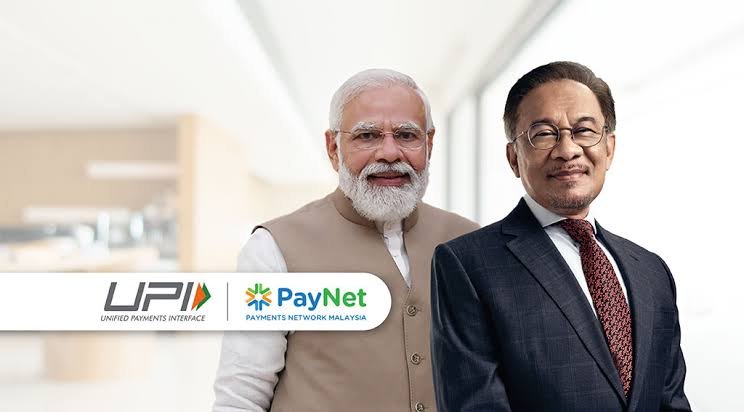

New Delhi/Kuala Lumpur: India and Malaysia have taken a major step towards reshaping cross-border digital payments by backing a linkage between their domestic payment systems, paving the way for low-cost, real-time international transactions similar to India’s UPI model. The move is expected to significantly ease remittances, tourism spending and small-business payments between the two countries.
The initiative was announced in a joint statement following high-level bilateral talks, alongside the formal launch of the Malaysia–India Digital Council (MIDC), a new institutional platform aimed at deepening cooperation in digital and emerging technologies.
At the centre of the push is the proposed linkage between NPCI International Limited and PayNet Malaysia, which would allow users in both countries to make seamless mobile-based payments without relying on expensive and time-consuming traditional banking channels.
What the UPI-style linkage will change
According to the joint statement, the NPCI–PayNet connection is designed to reduce transaction costs and settlement time for cross-border payments. Once operational, individuals and businesses would be able to make instant digital payments using familiar domestic platforms, eliminating multiple intermediaries and high foreign exchange charges.
Certified Cyber Crime Investigator Course Launched by Centre for Police Technology
Officials said the arrangement would be particularly beneficial for tourists, students, migrant workers and micro, small and medium enterprises (MSMEs), segments that currently face friction in international payments. Remittances from the Indian diaspora in Malaysia and spending by travellers are expected to become faster and cheaper.
For MSMEs engaged in cross-border trade, the linkage could simplify payments for goods and services, improving cash flows and reducing dependence on correspondent banking networks.
Push for rupee–ringgit trade settlement
Alongside digital payments, both countries agreed to promote trade settlement in local currencies, encouraging invoicing and payments in the Indian rupee and the Malaysian ringgit. The move builds on ongoing cooperation between the two central banks and is aimed at lowering reliance on the US dollar.
Government sources said local-currency settlement would help reduce foreign exchange risks and transaction costs, making bilateral trade more resilient. Improved air and maritime connectivity was also highlighted as a key enabler for expanding trade and investment ties.
Digital Council to anchor long-term tech cooperation
The newly established Malaysia–India Digital Council (MIDC) is expected to provide an institutional backbone to the digital partnership. The council will focus on cooperation in fintech, e-governance, cybersecurity, artificial intelligence and digital public infrastructure.
Policy coordination, startup collaboration, skill development and technology standards are among the areas identified for deeper engagement. Experts believe the council will help convert political intent into sustained, long-term cooperation rather than one-off initiatives.
“The Digital Council gives structure to the relationship and ensures continuity in fast-moving technology sectors,” said a senior official familiar with the discussions.
Semiconductors, energy and food security on agenda
Beyond payments and digital infrastructure, the two sides agreed to widen economic cooperation into semiconductors and advanced manufacturing, calling the chip sector strategically important. The joint statement emphasised collaboration across value chains, workforce development and supply-chain resilience.
Energy and climate cooperation also featured prominently. Renewable energy, green hydrogen and large-scale solar projects were identified as key areas of collaboration, aligned with both countries’ net-zero ambitions.
On food security, Malaysia reiterated its commitment to remain a reliable supplier of sustainably produced palm oil, while both sides agreed to pursue structured dialogue on market access and value-added palm-based products.
Strategic and global coordination
The joint statement also reaffirmed cooperation in defence, maritime security and counter-terrorism. Both countries reiterated zero tolerance for terrorism and pledged to strengthen cooperation against terror financing, radicalisation and misuse of emerging technologies.
At the multilateral level, the leaders discussed reforms of international institutions, support for a rules-based order and freedom of navigation consistent with international law. Malaysia welcomed India’s upcoming BRICS chairmanship, while India acknowledged Malaysia’s growing role in the grouping.
Analysts see the India–Malaysia digital payments push as part of India’s broader effort to export its digital public infrastructure model globally. If successfully implemented, the NPCI–PayNet linkage could serve as a template for similar arrangements with other countries, reinforcing India’s position as a leader in low-cost digital payments.
For businesses and consumers alike, the partnership promises to make cross-border transactions simpler, faster and more affordable — turning a diplomatic initiative into a practical, everyday benefit.
