

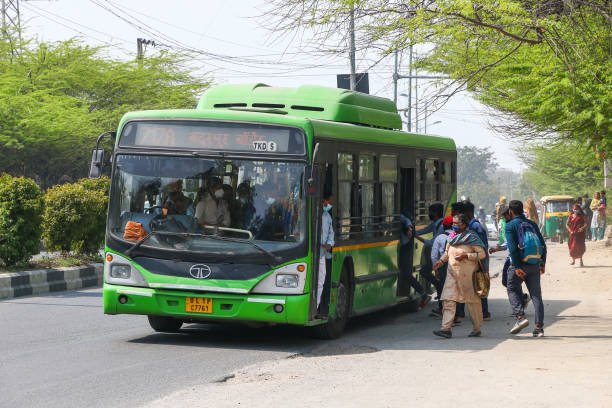
The Delhi Transport Corporation (DTC) — the capital’s primary public bus service provider — is grappling with a severe financial crisis and has come under fire for alleged irregular appointments and consultant hiring practices, according to a local news report.
The latest developments have intensified scrutiny over the management and governance of the public transporter, which continues to incur huge operational losses, remain dependent on government support for salaries, and face accusations of rule violations in appointment procedures.
Certified Cyber Crime Investigator Course Launched by Centre for Police Technology
Massive Losses and Financial Strain
The report highlights that DTC is operating under a heavy financial burden, with liabilities and losses having mounted over the years. A Comptroller and Auditor General (CAG) audit previously revealed that the corporation’s liabilities more than doubled from roughly ₹28,263 crore in 2015-16 to about ₹65,274 crore in 2021-22, driven by operational deficits — an increase that illustrates the depth of the transport body’s financial woes.
The CAG audit also noted continued shortfalls in cost recovery, flawed route planning and outdated buses, which compounded revenue losses.
In light of these longstanding losses, critics argue that DTC’s continued dependence on government subsidies and lack of a clear business plan have made its fiscal predicament increasingly unsustainable.
Irregular Appointments and Rule Violations Alleged
Despite its fragile finances, the DTC has reportedly made consultant appointments and other recruitments in ways that have been criticised as not adhering to established norms. Local reporting suggests that these hirings — including consultants hired on potentially non-standard terms — may have violated internal policies or recruitment rules, raising questions over transparency and governance.
Details about which specific appointments are being questioned, or whether any formal probe has been launched, were not disclosed in the report; however, the allegations have sparked debate about management practices at the embattled corporation.
Critics say that appointing consultants or personnel without transparent, rule-based processes is especially problematic when a public transport entity is already under financial distress and reliant on taxpayer support.
Service Issues and Operational Challenges
The DTC has also faced significant operational challenges alongside its financial issues. Audit findings have underscored problems such as:
- A shrinking and ageing bus fleet, limiting reliability and capacity on many routes.
- Missed scheduled kilometres and frequent breakdowns, affecting revenue and service delivery.
- Inability to independently determine bus fares, restricting the corporation’s capacity to cover operational costs.
These factors, combined with the absence of a strong operational turnaround strategy, have contributed to DTC’s reliance on external support and accentuated criticism from stakeholders and commuters alike.
Political and Public Response
The crisis at DTC has prompted reactions from political quarters and civic observers. Leaders from different parties have used the data on losses and liabilities to question both current and past administrative decisions regarding the transporter’s governance.
Some see the financial strain and appointment concerns as part of broader issues in public sector management and accountability in the capital’s governance structure, while commuters and transport advocacy groups point to the need for improved fleet renewal, route optimisation and cost-management strategies.
About the author – Rehan Khan is a law student and legal journalist with a keen interest in cybercrime, digital fraud, and emerging technology laws. He writes on the intersection of law, cybersecurity, and online safety, focusing on developments that impact individuals and institutions in India.
