

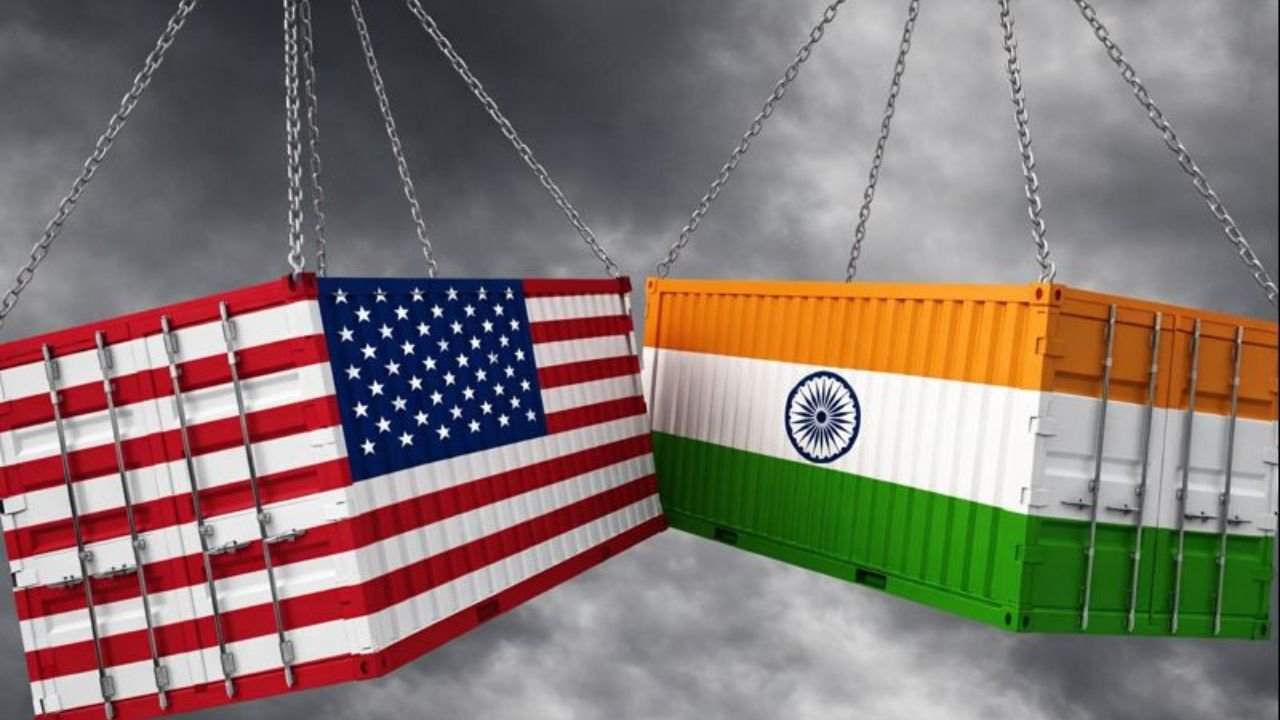

New Delhi: An interim trade agreement framework announced between India and the United States is being positioned as a significant opportunity for Indian exporters, with the government saying the arrangement opens access to the nearly $30 trillion (₹2,490 lakh crore) US market while preserving safeguards for sensitive domestic sectors such as agriculture and dairy.
According to the government, the interim framework marks the first formal step towards a broader bilateral trade agreement, aimed at expanding market access, strengthening supply chains and deepening cooperation in investment and technology. The deal places particular emphasis on micro, small and medium enterprises (MSMEs), farmers, fishermen and labour-intensive sectors, with export growth expected to translate into job creation across multiple segments of the economy.
Certified Cyber Crime Investigator Course Launched by Centre for Police Technology
Phased tariff relief built into framework
Under the interim arrangement, Indian exports will continue to face a reciprocal tariff of 18% for the time being. However, the US has indicated that these duties will be removed across a wide range of product categories once a full-fledged trade agreement is finalised. Separately, the additional 25% punitive tariffs imposed earlier have already been rolled back, providing immediate relief to several export-oriented sectors.
Policy analysts note that the phased approach reflects an attempt by both sides to balance domestic sensitivities with the objective of expanding bilateral trade flows, allowing time for negotiations on complex tariff and non-tariff issues without disrupting existing commerce.
Export opportunities across sectors
The government has said the framework is expected to enhance export competitiveness across a broad spectrum of industries, including textiles and apparel, leather and footwear, plastic and rubber products, organic chemicals, home décor, artisanal goods and select machinery segments. These sectors are seen as well-placed to benefit from improved access to the US market, particularly for MSMEs that form the backbone of India’s export ecosystem.
In addition, higher-value segments such as generic pharmaceuticals, gems and jewellery, and aircraft parts are expected to see tangible gains. Negotiated outcomes and exemptions for aircraft components, auto parts and pharmaceuticals are viewed as especially significant, given their potential to generate sustained export growth and attract investment into manufacturing.
Industry observers point out that easing trade frictions in these areas could also help Indian firms integrate more deeply into global value chains, particularly in technology- and engineering-driven segments.
Agriculture and dairy fully protected
At the same time, the government has underscored that the interim agreement fully safeguards India’s sensitive agricultural and dairy sectors. No duty concessions have been offered on key staples and farm products such as maize, wheat, rice, soya, poultry, milk, cheese, fuel ethanol, tobacco, certain vegetables and meat products.
This stance is being seen as a clear signal that farmer livelihoods and rural economic stability remain central to India’s trade policy, especially at a time when global agricultural markets continue to face price volatility and supply-side disruptions.
Political and strategic messaging
Prime Minister Narendra Modi has described the interim framework as a positive development for both countries, saying it would reinforce the ‘Make in India’ push by opening new opportunities for farmers, entrepreneurs, MSMEs and start-ups. He has also highlighted the agreement as a reflection of growing trust, depth and dynamism in India-US relations.
The role of political engagement at the highest level, including dialogue with US President Donald Trump, is being viewed as a key factor in advancing the framework, particularly amid a complex global trade environment marked by protectionist pressures and supply-chain realignments.
Towards a comprehensive trade deal
The interim framework reiterates the commitment of both sides to work towards a comprehensive bilateral trade agreement in the coming months. Future negotiations are expected to focus on expanding market access, addressing non-tariff barriers, enhancing technology cooperation, protecting investments and ensuring long-term supply-chain resilience.
Economists caution that while the interim pact does not immediately alter tariff structures on a large scale, it sends a strong strategic signal about the intent of both countries to elevate trade and investment ties to a new level.
Overall, the framework is being seen as a calibrated step that seeks to unlock export opportunities for India while keeping domestic economic priorities firmly in focus. Its true impact, however, will depend on how quickly and effectively it is translated into a binding, comprehensive trade agreement.
About the author — Suvedita Nath is a science student with a growing interest in cybercrime and digital safety. She writes on online activity, cyber threats, and technology-driven risks. Her work focuses on clarity, accuracy, and public awareness.
