
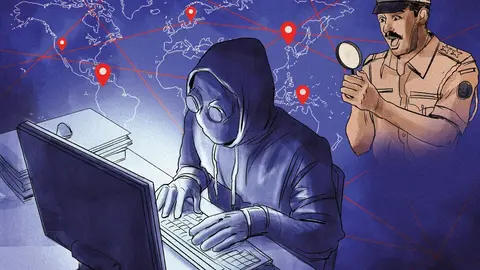
Delhi Police have apprehended more than 500 people in the third phase of Operation Cyber Hawk, a citywide cybercrime offensive aimed at dismantling organised digital fraud networks operating across multiple platforms.
Dubbed Operation Cyber Hawk 3.0, the latest sweep focuses on coordinated cyber syndicates involved in phishing, fake customer-care scams, investment fraud and digital payment thefts. Officials said the operation combines advanced technical analysis, real-time intelligence inputs, financial trail mapping and synchronised field action to identify offenders and cripple their digital infrastructure.
Police said the drive has already led to rapid identification of suspects, disruption of fraudulent online setups and initiation of legal proceedings in multiple cyber-related cases. The enforcement campaign will continue over the coming days with heightened monitoring of suspicious digital activity.
Certified Cyber Crime Investigator Course Launched by Centre for Police Technology
Authorities described Cyber Hawk as part of a broader strategy to strengthen cybersecurity and protect citizens from rising online fraud, which has surged alongside increased digital adoption.
Last month, during a related action in Delhi’s East District, investigators busted a cybercrime ring operating between Delhi and parts of western Uttar Pradesh, including Moradabad and Bareilly. Eight accused were arrested, including Mohd Wasim, who allegedly facilitated mule bank accounts and helped launder cybercrime proceeds. The probe revealed a high-tech pipeline routing Indian funds into international cryptocurrency wallets.
That operation resulted in the seizure of ₹4.7 lakh in cash, seven debit cards, 14 mobile phones and 20 SIM cards. Police also traced at least 85 mule accounts linked to more than 600 complaints registered on the National Cyber Crime Reporting Portal (NCRP), underscoring the scale of the network.
Officials said Cyber Hawk 3.0 builds on earlier phases that yielded significant results. During the second phase in December 2025, police arrested 284 people and initiated legal action against around 2,900 suspects across the capital, citing a sharp uptick in actionable leads generated through digital surveillance and financial analytics.
Earlier, in November 2025, more than 700 suspected cybercriminals were apprehended in a coordinated 48-hour operation involving district police units and the Intelligence Fusion and Strategic Operations wing. That joint action targeted organised fraud groups engaged in cheating, phishing and payment gateway manipulation.
Preliminary investigations from those operations uncovered suspicious transactions totalling approximately ₹1,000 crore, indicating a sprawling ecosystem of cyber offenders operating from multiple locations and exploiting layered banking channels.
Police officials said one of the key achievements of the Cyber Hawk initiative has been the disruption of mule account networks — bank accounts opened or rented for the sole purpose of moving illicit funds. By mapping money trails and freezing suspect accounts early, investigators aim to cut off fraudsters from their financial lifelines.
The campaign also relies heavily on data-driven policing, including call detail record analysis, IP tracking and coordination with banks and digital platforms to flag abnormal transaction patterns in real time.
Authorities urged citizens to remain vigilant, avoid sharing personal or banking information online and promptly report suspicious activity through the national cybercrime helpline or portal. “Public awareness is as critical as enforcement,” an official said, adding that timely reporting often helps prevent further losses.
With cyber fraud becoming increasingly sophisticated and transnational, Delhi Police said Operation Cyber Hawk will remain an ongoing initiative, adapting to emerging threats and focusing on both arrests and preventive disruption.
About the author – Rehan Khan is a law student and legal journalist with a keen interest in cybercrime, digital fraud, and emerging technology laws. He writes on the intersection of law, cybersecurity, and online safety, focusing on developments that impact individuals and institutions in India.
