
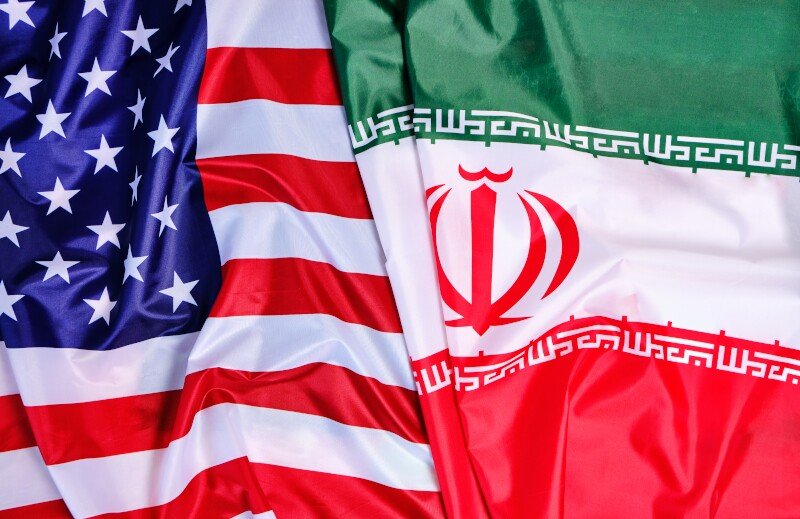
The United States on Friday imposed a new round of oil-related sanctions on Iran, tightening economic pressure just days after nuclear negotiations between the two sides concluded in Oman. The measures come against the backdrop of escalating military signalling by Tehran, which has formally deployed its long-range Khorramshahr-4 ballistic missile at a newly operational military base.
The sanctions target Iran’s crude oil and petrochemical exports, a key revenue stream for the country. Washington said the action reflects a renewed push to curb what it described as unlawful energy trade, even as diplomatic engagement over Iran’s nuclear programme continues.
The move follows high-level nuclear talks held in Muscat, which both sides publicly described as constructive. However, the imposition of fresh sanctions underscores the fragile balance between diplomacy and pressure that continues to define US-Iran relations.
Certified Cyber Crime Investigator Course Launched by Centre for Police Technology
Missile deployment signals shift in defence posture
Separately, Iran confirmed that the Islamic Revolutionary Guard Corps (IRGC) has deployed the Khorramshahr-4 missile at a military installation operated by its aerospace division. The missile was unveiled during the inauguration of a new IRGC-run facility, a development widely interpreted as its formal induction into Iran’s operational defence framework.
The Khorramshahr-4 is assessed to have a range of 2,000 km and the capability to carry a warhead weighing up to 1,500 kg (around 3,300 pounds). Defence analysts view the missile as one of Iran’s most potent strategic assets, designed to strengthen deterrence against regional adversaries and US military presence in West Asia.
Iranian media reports said the deployment reflects a broader doctrine aimed at reinforcing national defence amid what Tehran describes as sustained external pressure and security threats.
Sanctions imposed despite diplomatic engagement
The US decision to announce sanctions shortly after the Oman talks has drawn attention in diplomatic circles. While both sides have indicated willingness to continue negotiations, Washington has maintained that pressure will remain in place until concrete outcomes are achieved.
Officials said the sanctions align with a long-standing strategy aimed at reducing Iran’s energy exports and limiting financial resources available to the state. The measures are expected to complicate Tehran’s efforts to stabilise its economy, which has been under strain from years of international restrictions.
Iran, meanwhile, has repeatedly criticised sanctions as counterproductive, arguing that economic pressure undermines trust and weakens prospects for a negotiated settlement.
Nuclear talks to continue
Iranian authorities said the Muscat talks marked a positive starting point and that both sides had agreed to continue discussions. Tehran has expressed confidence that sustained dialogue could lead to a workable understanding, warning that failure could heighten instability across an already volatile Middle East.
The talks focused on nuclear-related concerns and regional security dynamics, at a time when fears of a broader confrontation have resurfaced due to ongoing conflicts and military posturing in the region.
Global nuclear arms control back in focus
In a related development, Russia and the United States have also held discussions on the future of global nuclear arms control, particularly in light of the impending expiry of the last remaining treaty limiting strategic nuclear weapons between the two countries.
Both sides reportedly acknowledged the need to initiate fresh negotiations to prevent an unregulated arms race, highlighting growing international concern over the erosion of long-standing nuclear restraint frameworks.
Rising uncertainty ahead
The convergence of renewed sanctions, missile deployments and fragile diplomacy reflects an increasingly complex geopolitical environment. While diplomatic channels between Washington and Tehran remain open, parallel military and economic actions continue to fuel uncertainty.
Analysts say the coming months will be critical in determining whether talks can translate into tangible agreements or whether escalating pressure and counter-signals will push the region toward deeper instability.
For now, Iran’s missile deployment and the US sanctions package underline how strategic messaging and diplomacy are unfolding simultaneously — often at cross purposes — in one of the world’s most sensitive geopolitical fault lines.
About the author – Ayesha Aayat is a law student and contributor covering cybercrime, online frauds, and digital safety concerns. Her writing aims to raise awareness about evolving cyber threats and legal responses.
