
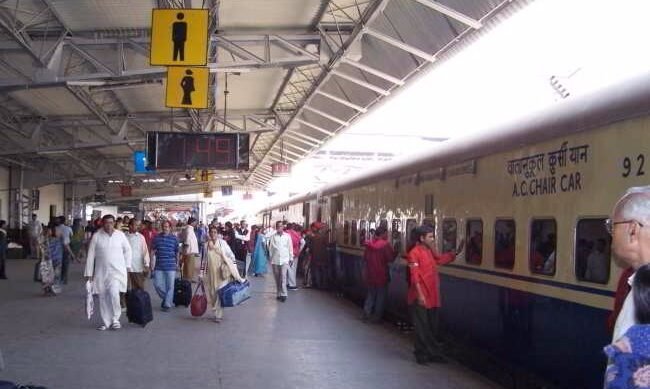
A key parliamentary committee has raised strong objections to the long-standing practice of charging full fare from passengers travelling on RAC (Reservation Against Cancellation) tickets despite not being provided a full berth. The Public Accounts Committee (PAC) has termed the practice unjustified and has recommended that the Railways put in place a clear mechanism for partial fare refunds in such cases.
The observation has been made in the committee’s report titled “Punctuality and Travel Time in Train Operations in Indian Railways”, which was tabled in Parliament on Wednesday. The report critically examines passenger experience, service delivery gaps and fare practices within Indian Railways.
Certified Cyber Crime Investigator Course Launched by Centre for Police Technology
The core issue with RAC travel
Under the RAC category, a passenger is permitted to travel but is not guaranteed an independent sleeping berth. In many instances, even after the final reservation chart is prepared, RAC passengers continue to remain in the same status and are required to share a single berth with another RAC passenger.
Despite this reduced level of comfort and service, the Railways charges full fare from both passengers, identical to the fare charged to passengers holding confirmed berths. The PAC has pointed out that this creates a clear mismatch between the fare paid and the service actually provided.
According to the committee, while RAC passengers contribute revenue equivalent to confirmed ticket holders, they receive a distinctly inferior travel experience — a disparity that raises questions of fairness and consumer rights.
Committee’s firm stance
In unambiguous terms, the PAC has stated that charging full fare from a passenger who does not receive a full berth cannot be justified.
The report notes:
“The Railway Ministry should devise a mechanism to refund partial fare to the customer or traveller who could not get a full berth but had to pay full charges at the time of boarding.”
The committee has warned that continuing with the present system risks eroding passenger trust and undermining service accountability within one of the country’s most critical public transport systems.
Long-standing passenger grievances
The PAC has acknowledged that complaints related to RAC travel are not new. Passengers, especially on long-distance overnight journeys, have consistently raised concerns over physical discomfort, lack of proper rest and the mental strain of sharing berths, even after paying the full ticket price.
The committee observed that while RAC tickets are monetised on par with confirmed tickets from a revenue standpoint, the service differentiation is substantial, making the current fare structure inherently inequitable.
Call for policy reform
Highlighting the need for systemic correction, the PAC has urged the Railways to adopt a dynamic, transparent and passenger-centric refund policy. Such a framework, the committee suggested, should clearly define:
- The circumstances under which an RAC passenger becomes eligible for partial refund
- The method for calculating the refundable amount
- Whether refunds will be processed automatically or require a passenger claim
The committee noted that with widespread digital ticketing, real-time passenger data and automated fare systems already in place, implementing such a mechanism should not pose significant technical challenges.
Pressure mounts on the Railways
Following the tabling of the report, pressure is mounting on the Railway Ministry to re-examine the RAC framework. While no official response has been issued so far, policy analysts believe the recommendation, if accepted, could mark a significant passenger-friendly reform.
Transport experts argue that aligning fare structures with actual service delivery would not only improve passenger satisfaction but also enhance the institutional credibility of Indian Railways.
What lies ahead
Although PAC recommendations are not legally binding, they traditionally carry substantial weight in policy decision-making. In the coming months, it will become clear whether the Railway Ministry chooses to act on the committee’s advice and introduce a partial fare refund system for RAC passengers.
For now, the report has once again brought into focus a fundamental question: does Indian Railways’ fare policy truly reflect the level of service experienced by millions of passengers who travel under the RAC category every year?
About the author – Rehan Khan is a law student and legal journalist with a keen interest in cybercrime, digital fraud, and emerging technology laws. He writes on the intersection of law, cybersecurity, and online safety, focusing on developments that impact individuals and institutions in India.
