
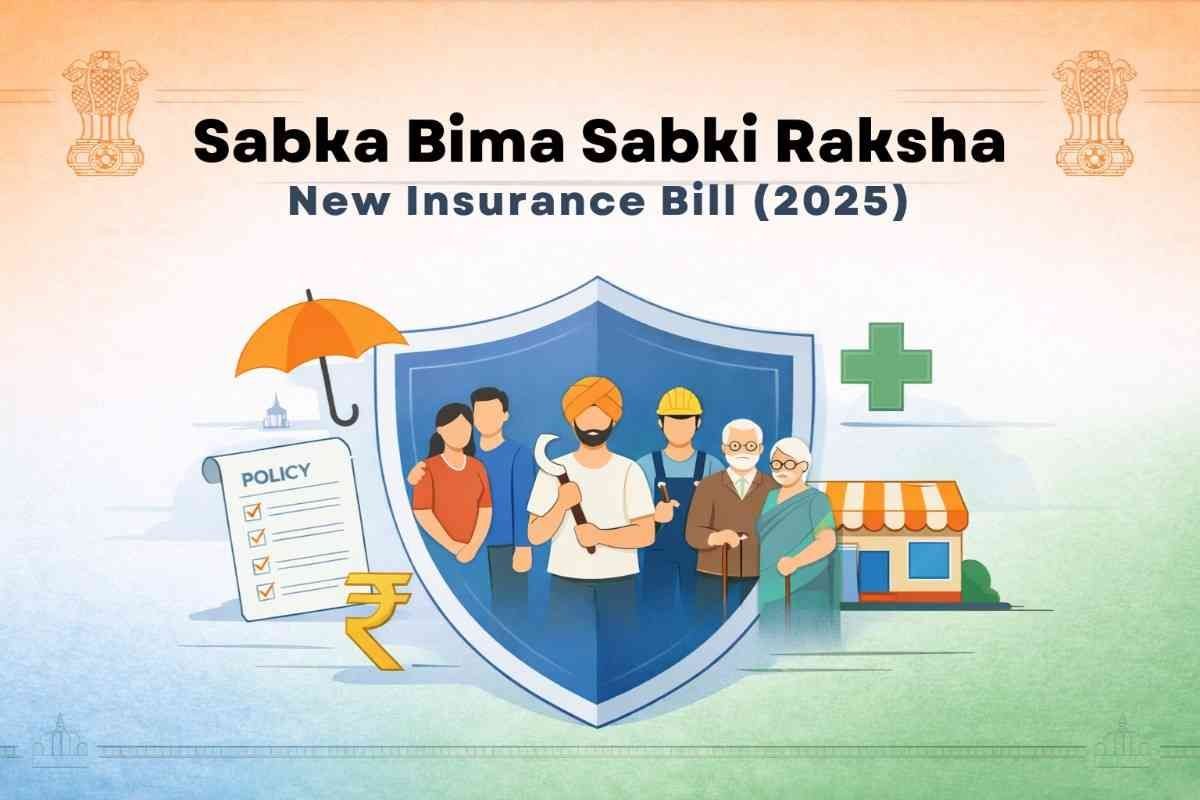
The Lok Sabha on Tuesday passed the ‘Sabka Bima Sabki Raksha (Amendment of Insurance Laws) Bill, 2025’, clearing the decks for a sweeping overhaul of India’s insurance sector. The legislation raises the cap on foreign direct investment (FDI) in insurance from 74% to 100%, a move the government says will significantly boost capital inflows, intensify competition and make insurance products more affordable for policyholders.
Replying to the debate on the Bill, Finance Minister Nirmala Sitharaman said the removal of the FDI ceiling would help attract long-term foreign capital, global technology and advanced risk management practices into the sector. She noted that stronger balance sheets would allow insurers to price products more competitively and offer coverage better aligned with customers’ needs.
The government also underlined that higher investment in the insurance sector is expected to generate employment and expand insurance penetration among segments that remain under-covered. Measures such as recent GST relief on individual life and health insurance premiums, it said, are part of a broader push to improve affordability and access.
Certified Cyber Crime Investigator Course Launched by Centre for Police Technology
What changes for policyholders
With the Bill’s passage, policyholders are likely to see several direct and indirect changes in the coming years. Industry experts believe the entry of more foreign players and global brands will intensify competition, putting downward pressure on premiums and improving value for customers.
Stronger competition: More insurers in the market could lead to sharper pricing and better service standards.
Wider product choice: Life, health and general insurance segments may see more customised plans, add-on covers and flexible offerings.
Improved service quality: Increased capital and technology adoption are expected to strengthen digital claims processing, speed up settlements and enhance customer support.
Tighter regulation: The Bill strengthens the powers of the Insurance Regulatory and Development Authority of India (IRDAI), aimed at bolstering consumer protection and regulatory enforcement.
Other key provisions
The amendments allow mergers between insurance and non-insurance companies, enabling corporate restructuring and improved operational efficiency. Rules governing insurance intermediaries—including agents and brokers—have also been modernised to simplify licensing and compliance requirements.
A significant consumer-focused provision is the creation of a Policyholders’ Education and Protection Fund, to be financed through penalties imposed by the regulator. The fund is intended to promote consumer awareness, strengthen grievance redress mechanisms and curb unfair practices in the sector.
Industry view and the road ahead
Legal and consulting experts describe the legislation as an enabling framework, with several operational details to be spelt out through subsequent rules and regulatory guidelines. Insurers say deeper capitalisation will support investments in digital capabilities, claims management and network expansion. Consulting firms, however, caution that the real gains for consumers will depend on the quality of implementation.
The government maintains that the reform is a critical step towards its vision of “Insurance for All by 2047.” How quickly and how meaningfully policyholders benefit will become clearer in the months ahead, as rules are notified and insurers recalibrate their strategies in response to the new investment regime.
About the author – Rehan Khan is a law student and legal journalist with a keen interest in cybercrime, digital fraud, and emerging technology laws. He writes on the intersection of law, cybersecurity, and online safety, focusing on developments that impact individuals and institutions in India.
