

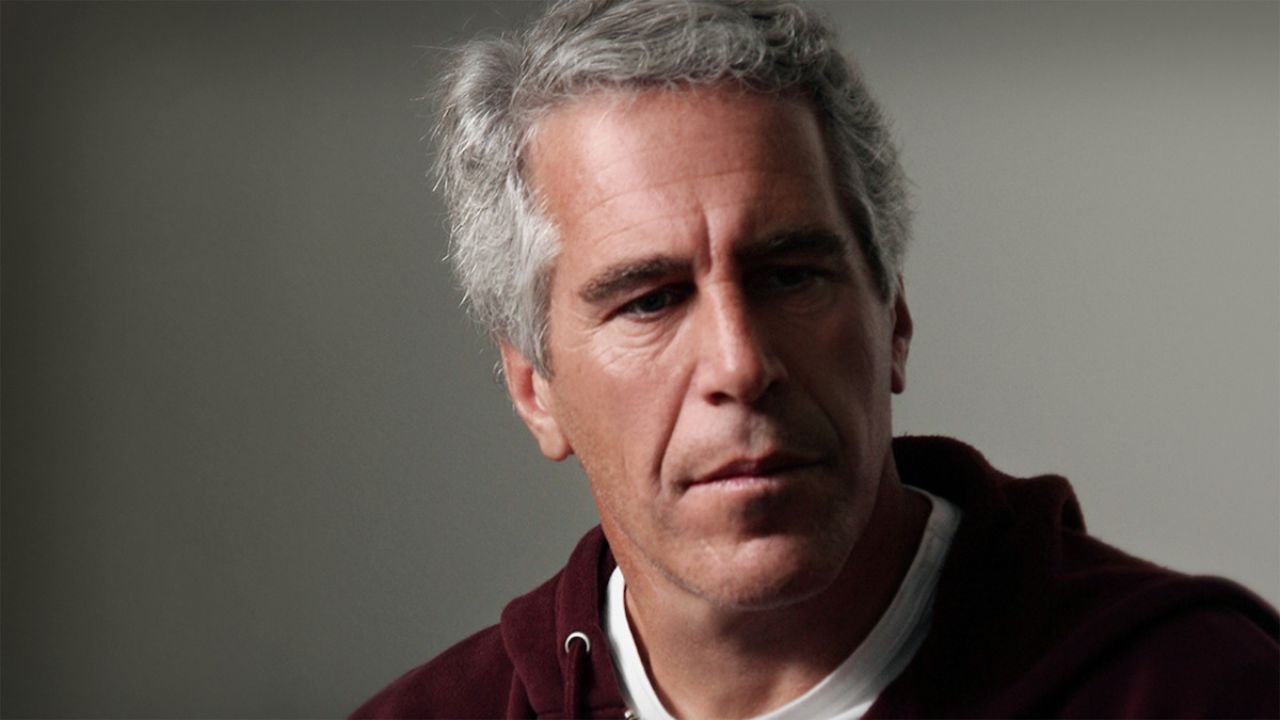

Washington: Six years after the death of American financier and convicted sex offender Jeffrey Epstein, a fresh wave of court documents—collectively referred to as the “Epstein files”—has once again shaken political establishments, corporate circles and public trust across the world.
The documents, released following legislative action in the United States, contain emails, contact lists, flight records and testimonies gathered over years of investigations into Epstein’s activities. While many of the materials were partially known earlier, their renewed release has reignited debate over the extent of Epstein’s connections and whether the full truth about his crimes—and those who may have enabled him—ever emerged.
The controversy has drawn in former US president Donald Trump, who has publicly denied any wrongdoing or involvement, even as his name appears in multiple records linked to Epstein’s social circle. Trump has maintained that references in documents do not imply criminal conduct and has described the renewed focus on the files as politically motivated.
Certified Cyber Crime Investigator Course Launched by Centre for Police Technology
What are the Epstein files?
The “Epstein files” refer to a vast body of material collected during investigations spanning more than a decade. These include victim statements, witness accounts, email exchanges, photographs, flight manifests from Epstein’s private aircraft and items seized during searches of his properties in the United States and abroad.
According to disclosures made by US authorities, federal investigators possess more than 300 gigabytes of digital evidence related to Epstein. Much of this material remains sealed to protect survivors’ identities and to avoid compromising ongoing or related legal proceedings.
The recent releases stem from legislation passed by the US Congress mandating greater transparency in the case, while carving out exemptions for sensitive personal data and explicit material involving minors.
How Epstein’s crimes came to light
Epstein’s legal troubles first surfaced in 2008, when he was accused of sexually abusing a minor at his Florida residence. He later entered a controversial plea deal that allowed him to avoid a lengthy prison sentence, a decision that has since drawn sustained criticism.
In 2019, federal prosecutors again charged Epstein, alleging he ran an organised network that trafficked underage girls for sexual exploitation. While awaiting trial at New York’s Metropolitan Correctional Center, Epstein was found dead in his cell in August 2019. His death was officially ruled a suicide, though it immediately sparked widespread suspicion and conspiracy theories.
Names, networks and denials
Over the years, the files have referenced numerous influential figures from politics, business, royalty and entertainment. Among those named are Britain’s Prince Andrew, former US president Bill Clinton, and several prominent financiers and public intellectuals.
Most individuals named have denied knowledge of Epstein’s criminal activities or any involvement in wrongdoing. Legal experts stress that appearing in contact lists or flight records does not, by itself, establish guilt.
Epstein’s former associate Ghislaine Maxwell was convicted in 2021 for her role in recruiting and grooming minors, reinforcing prosecutors’ claims that Epstein did not operate alone.
Trump and Epstein: a complicated history
Public records and media reports indicate that Trump and Epstein moved in overlapping social circles during the 1990s and early 2000s, appearing at several high-profile events. Trump has stated that he severed ties with Epstein well before the latter’s first arrest and has repeatedly rejected suggestions of closeness or complicity.
Supporters of Trump argue that the renewed focus on the Epstein files is being weaponised politically, while critics insist the documents highlight systemic failures that allowed Epstein to evade accountability for years.
Why the files still matter
The enduring impact of the Epstein case lies not only in the gravity of his crimes but also in what they reveal about power, privilege and institutional blind spots. Survivors and advocacy groups continue to demand full transparency, arguing that partial disclosures risk protecting influential individuals at the expense of justice.
At the same time, authorities caution that complete public release of all materials could retraumatise victims and compromise legal safeguards.
An unresolved chapter
Despite multiple investigations, convictions and document releases, Epstein’s case remains an open wound in public consciousness. Questions persist about how he secured lenient treatment in the past, whether others should have faced charges, and how a man at the centre of such serious allegations was able to operate for so long.
As new files emerge and old ones are re-examined, the Epstein affair continues to serve as a stark reminder of the challenges democracies face in holding the powerful to account—and why, years after his death, Jeffrey Epstein’s shadow still looms large.
About the author — Suvedita Nath is a science student with a growing interest in cybercrime and digital safety. She writes on online activity, cyber threats, and technology-driven risks. Her work focuses on clarity, accuracy, and public awareness.
