

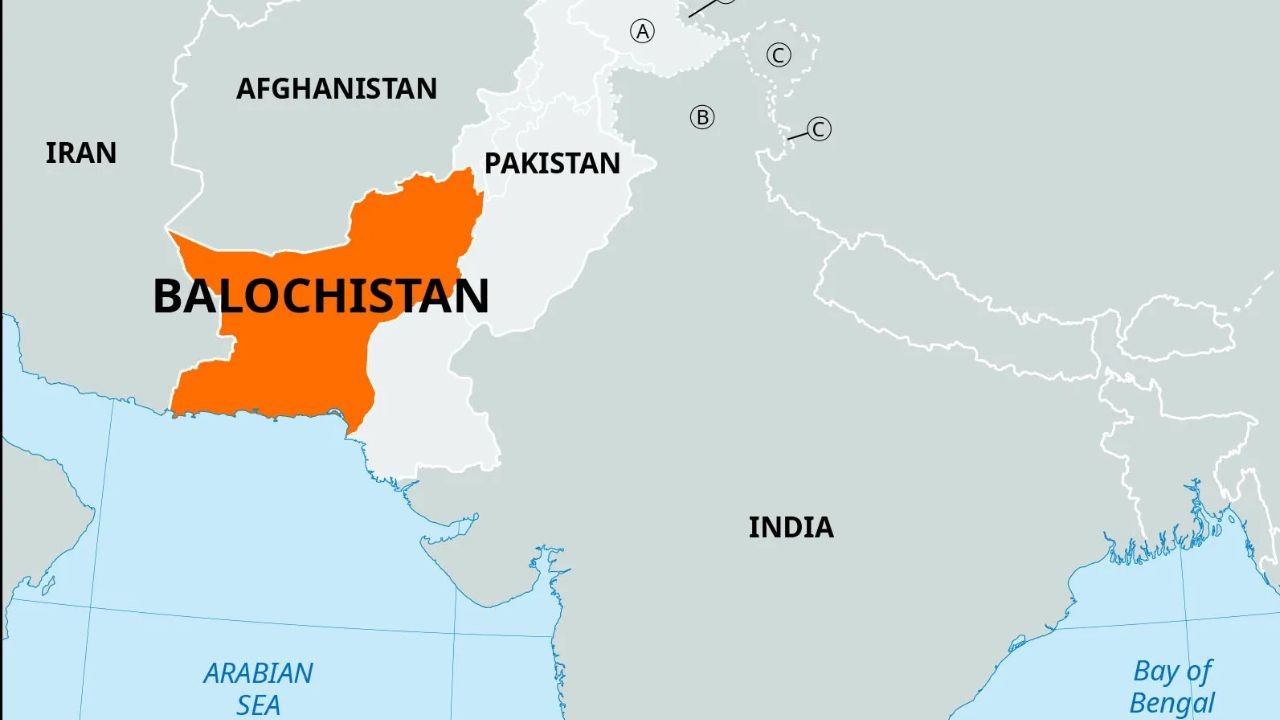

New Delhi: India on Sunday firmly rejected Pakistan’s allegations that New Delhi was involved in attempts to destabilise Balochistan, describing the charges as unfounded and politically motivated. India said the accusations were part of a familiar pattern by Islamabad to divert attention from its own internal challenges and governance failures in the restive province.
The response followed claims from Pakistan’s military establishment that external actors were backing militant elements operating in Balochistan after a spate of violent incidents in the region. New Delhi categorically denied any role, stressing that repeated assertions made without evidence do not alter the realities on the ground.
Certified Cyber Crime Investigator Course Launched by Centre for Police Technology
India underlined that attributing unrest to foreign interference has become Pakistan’s default response whenever violence erupts in Balochistan. Such rhetoric, it said, avoids confronting the deeper political and social issues that have fuelled discontent in the province for decades.
‘Blame-shifting cannot substitute accountability’
India said that instead of “parroting accusations” after every security incident, Pakistan would do better to engage seriously with the long-standing political, economic and social grievances of the Baloch people. Ignoring those grievances while blaming outside forces, New Delhi argued, has neither reduced violence nor built trust with the local population.
The Indian side also pointed to Pakistan’s record in Balochistan, noting that allegations of suppression, heavy-handed security operations and human rights violations are widely documented by international observers. Any durable peace, India said, would require recognising local aspirations and opening channels for dialogue rather than relying solely on force.
Security operations and counter-claims
Pakistan’s military has reported a series of counter-terrorism operations across multiple districts of Balochistan in recent days, including areas near the provincial capital. Islamabad has said these operations followed coordinated attacks by armed ethnic Baloch groups and resulted in significant casualties among militants as well as losses to security personnel.
It was in this context that Pakistan alleged foreign backing for militant activity, claims that India dismissed outright. New Delhi said Pakistan’s own statements about the nature and spread of the violence underscore that the instability is rooted in domestic factors, not in any external conspiracy.
India maintained that attempts to internationalise the issue through allegations against neighbouring countries only complicate prospects for stability and distract from meaningful internal reform.
Broader regional context
Balochistan has long been a flashpoint within Pakistan, marked by insurgency, economic marginalisation and political alienation despite its vast natural resources. The province has seen repeated cycles of violence, followed by large-scale security deployments, with limited progress on reconciliation.
International human rights organisations have periodically raised concerns about enforced disappearances, restrictions on civil liberties and the impact of prolonged security operations on civilians in the region. Analysts say these unresolved issues continue to drive resentment and instability.
India said that in such circumstances, a narrative built around external enemies risks undermining regional confidence and worsening already fragile ties in South Asia. New Delhi reiterated that it does not interfere in the internal affairs of neighbouring states and expects the same principle to be respected.
Diplomatic signalling and its limits
Observers note that public exchanges of this nature add to the strain in already tense India–Pakistan relations, without addressing the underlying causes of unrest. They argue that durable solutions in Balochistan lie in inclusive political processes, economic participation and respect for human rights rather than in attributing blame abroad.
India’s response, analysts said, was calibrated to firmly deny the allegations while placing the focus back on Pakistan’s internal responsibilities.
About the author — Suvedita Nath is a science student with a growing interest in cybercrime and digital safety. She writes on online activity, cyber threats, and technology-driven risks. Her work focuses on clarity, accuracy, and public awareness.
