
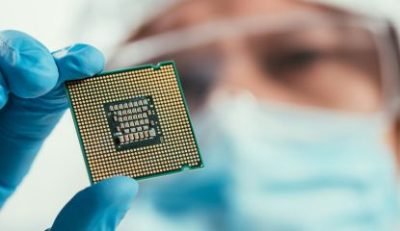
Signalling a sharper and more technology-centric industrial policy pivot, the Union government on Sunday announced the launch of India Semiconductor Mission (ISM) 2.0 with a fresh outlay of ₹40,000 crore, aimed at strengthening domestic capabilities across semiconductor equipment manufacturing, advanced research, and workforce training.
Presenting the Union Budget 2026, Finance Minister Nirmala Sitharaman said the second phase of the flagship mission would build on the foundational gains of ISM 1.0 and move India deeper into the global semiconductor value chain.
“India’s semiconductor mission has expanded the country’s capabilities. Building on this momentum, ISM 2.0 will focus on semiconductor equipment and materials, development of full-stack Indian intellectual property, and strengthening supply chains,” she said in her budget speech.
The renewed push comes amid rising geopolitical competition over chip supply chains and India’s own ambition to reduce dependence on imported semiconductors, a vulnerability exposed during recent global shortages that disrupted automobile, electronics and defence manufacturing.
Certified Cyber Crime Investigator Course Launched by Centre for Police Technology
Industry-led research and skills focus
A key pillar of Semiconductor Mission 2.0 will be the creation of industry-led research and training centres, designed to align academic research with commercial manufacturing needs. These centres will work in collaboration with domestic and global companies to develop new technologies while training engineers, technicians and researchers required for high-precision chip manufacturing.
The emphasis on skills and applied research reflects lessons learned from ISM 1.0, where capacity creation moved faster than the availability of specialised talent. Officials believe the new model will help create a sustainable pipeline of skilled manpower for fabs, assembly units and equipment makers.
Electronics manufacturing outlay doubled
The finance minister also flagged strong investor response to the electronics components manufacturing scheme, launched in April 2025 with an initial outlay of ₹22,919 crore. According to government estimates, investment commitments under the scheme have already crossed double the original targets.
To capitalise on this momentum, the Budget raised the scheme’s outlay to ₹40,000 crore, positioning electronics manufacturing as a parallel growth engine alongside semiconductors. The expanded funding is expected to support component ecosystems critical for consumer electronics, industrial devices and telecom equipment.
Backed by policy continuity
The announcement is underpinned by policy signals highlighted in the Economic Survey 2025–26, released earlier this week. The survey noted that India’s semiconductor and electronics push reflects a long-term, mission-driven strategy rather than a short-term incentive play.
It pointed to industry-linked research, targeted capital support and infrastructure creation as indicators that India is positioning itself among a small group of middle-income economies moving towards complex, high-value manufacturing systems.
Projects pipeline expands
As of January 2026, the government has approved 10 semiconductor projects involving a cumulative investment of ₹1.60 trillion under the flagship India Semiconductor Mission, which carries a total outlay of ₹76,000 crore.
These projects span chip fabrication, assembly, testing and packaging, and are expected to play a central role in building domestic chip-making capacity. Once operational, they are projected to significantly lower import dependence in critical sectors such as consumer electronics, automobiles, renewable energy systems and defence platforms.
Strategic implications
Analysts view ISM 2.0 as a shift from incentive-heavy attraction of fabs to a more balanced ecosystem approach that includes equipment manufacturing, materials, IP creation and skills — areas where India has traditionally lagged.
By prioritising equipment and full-stack IP, the government is seeking to reduce vulnerability to external supply shocks while embedding Indian firms deeper into global semiconductor supply networks.
With semiconductor demand projected to grow sharply over the next decade, driven by artificial intelligence, electric vehicles and digital infrastructure, the Budget 2026 announcement positions chips as a strategic pillar of India’s industrial and economic future rather than a niche manufacturing ambition.
About the author – Ayesha Aayat is a law student and contributor covering cybercrime, online frauds, and digital safety concerns. Her writing aims to raise awareness about evolving cyber threats and legal responses.
