

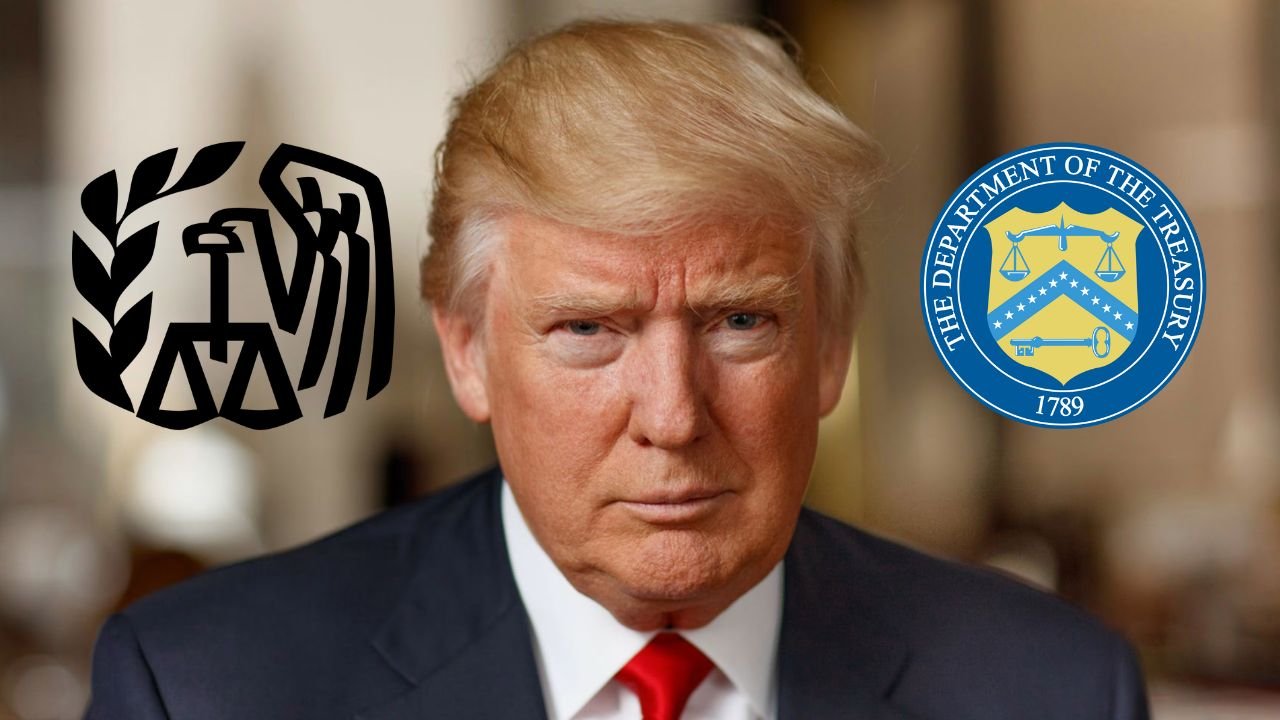

President Donald Trump on Thursday filed a sweeping civil lawsuit against the Internal Revenue Service and the US Treasury Department, alleging that systemic failures within the agencies enabled the unlawful disclosure of his tax returns to news organisations.
The suit, filed in federal court in Miami, seeks $10 billion in damages and names Trump in his personal capacity, alongside his sons Donald Trump Jr. and Eric Trump, and the Trump Organization. The complaint argues that federal authorities failed to implement adequate safeguards to prevent a former contractor from accessing and leaking confidential taxpayer information.
Certified Cyber Crime Investigator Course Launched by Centre for Police Technology
The lawsuit places Trump in the unusual position of litigating against institutions that now fall under his own administration, a dynamic that underscores both the personal nature of the grievance and the broader questions it raises about accountability within federal agencies.
The Leak That Reshaped a Political Narrative
At the centre of the case is Charles Littlejohn, a former IRS contractor who was sentenced in 2024 to five years in prison after pleading guilty to illegally disclosing tax records. Among the materials he stole were Trump’s tax returns, which were later published by The New York Times in 2020.
That reporting revealed that Trump had paid just $750 in federal income taxes in both 2016 and 2017, during the early years of his first presidency. The disclosures fueled intense political debate and scrutiny over Trump’s finances, reinforcing longstanding questions about his business practices and tax strategies.
Trump repeatedly denounced the reporting at the time, calling it “fake news” and insisting the information had been “illegally obtained.” Littlejohn later admitted in court that he had also taken tax data belonging to thousands of other wealthy Americans, including high-profile billionaires such as Jeff Bezos and Elon Musk.
Claims of Harm and Institutional Failure
In its filing, the lawsuit accuses the IRS and Treasury of negligence, arguing that the agencies failed to properly supervise contractors, secure taxpayer data, or respond swiftly enough to internal vulnerabilities.
“Defendants have caused Plaintiffs reputational and financial harm, public embarrassment, [and] unfairly tarnished their business reputations,” the complaint states, adding that the disclosures portrayed Trump and the other plaintiffs “in a false light.”
The IRS has previously acknowledged the seriousness of the breach. In a 2024 statement following Littlejohn’s sentencing, the agency described his actions as “unacceptable” and said it had contacted affected taxpayers. The IRS also said it had taken “aggressive action” to strengthen data security and prevent similar incidents in the future.
Neither the Treasury Department nor the IRS immediately commented on the lawsuit.
A Pattern of High-Stakes Legal Battles
The suit fits into a broader pattern of aggressive litigation pursued by Trump in recent years, often involving eye-catching damage claims. Since returning to office, Trump has filed or pursued multiple lawsuits seeking billions of dollars, including actions against major media organisations and financial institutions.
Last year, he told reporters he was seeking “a lot of money” from the federal government over past investigations, with The New York Times later reporting that he was pursuing roughly $230 million in damages from the Justice Department. Trump publicly acknowledged the unusual optics of such a payout, remarking at the time that he would be “paying myself,” and suggesting any award could be donated to charity or used for White House restoration.
Legal experts note that while the Littlejohn leak was indisputably criminal, successfully holding federal agencies financially liable for the actions of a rogue contractor poses a high legal bar. Still, the case adds to a growing body of litigation that blurs the line between Trump’s personal grievances and the institutions of the state he now leads.
As the lawsuit moves forward, it is likely to reopen debates not only about data security and press freedoms, but also about the extent to which the government can — and should — be held accountable for breaches that reshape public life far beyond the courtroom.
About the author — Suvedita Nath is a science student with a growing interest in cybercrime and digital safety. She writes on online activity, cyber threats, and technology-driven risks. Her work focuses on clarity, accuracy, and public awareness.
