

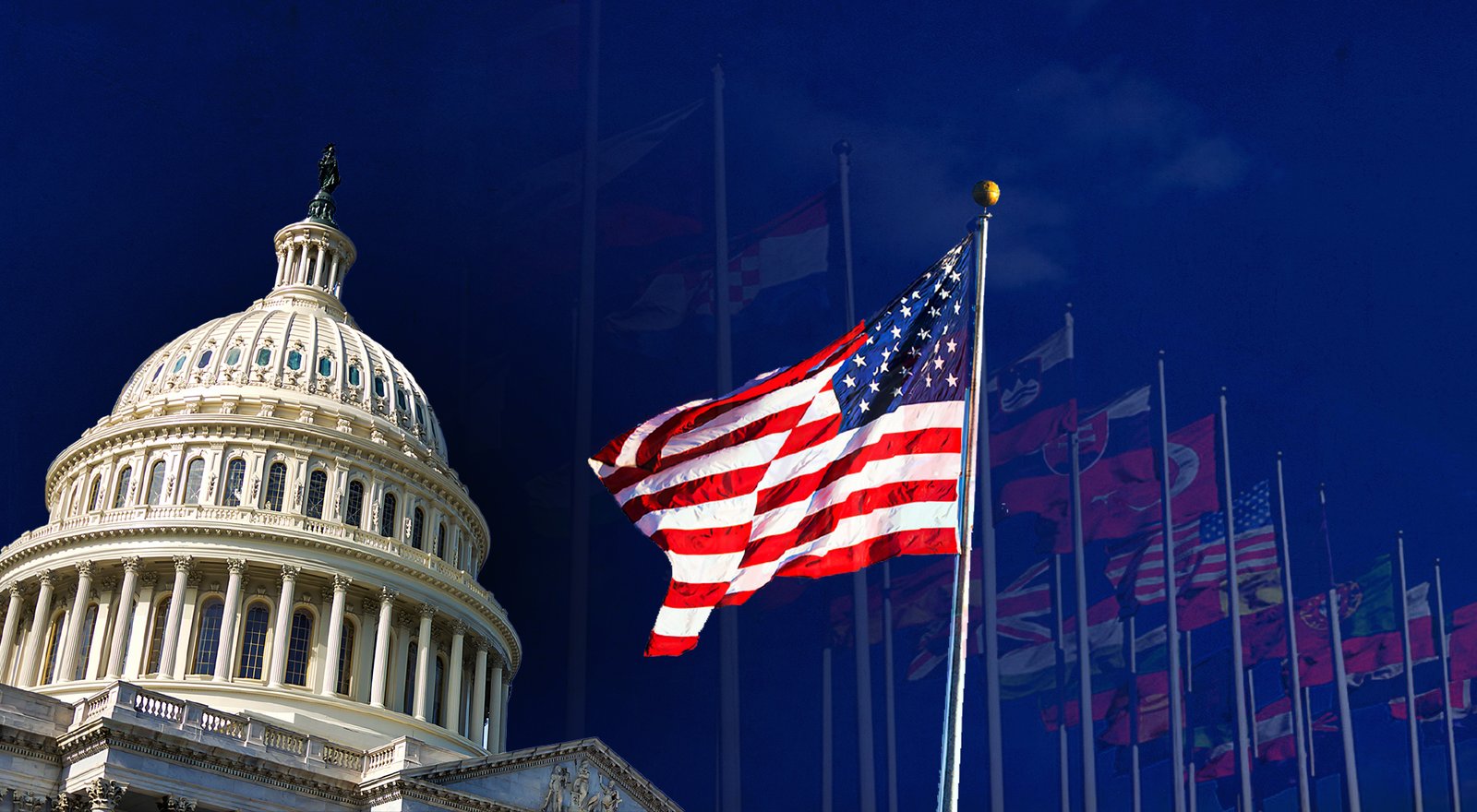

The United States is once again staring at the prospect of a federal government shutdown as lawmakers remain locked in a standoff over funding, raising fears of widespread disruption to public services, government employees and the broader economy.
The latest crisis has emerged as the deadline to approve fresh funding draws close, with no agreement in sight between rival political blocs in the Senate. At the centre of the dispute is budgetary allocation for homeland security operations, an issue that has hardened positions and stalled negotiations. If lawmakers fail to reach a compromise before the deadline expires, large parts of the federal government could be forced to suspend operations.
Certified Cyber Crime Investigator Course Launched by Centre for Police Technology
This looming shutdown comes less than three months after the country emerged from one of the longest funding disruptions in its history, underlining the fragility of fiscal consensus in Washington. The recurrence of such brinkmanship has fuelled concern among economists and businesses about the reliability of government functioning and the long-term impact on economic stability.
A shutdown occurs when Congress does not pass either a full-year budget or a temporary funding extension, leaving federal agencies without legal authority to spend money. In such circumstances, non-essential services are halted, while essential functions continue, often with employees working without pay until funding is restored.
If the current impasse persists, departments spanning defence, education, transportation, treasury, health and human services, and homeland security could be affected. Together, these agencies account for more than three-quarters of discretionary federal spending, meaning even a partial shutdown could have far-reaching consequences.
Federal employees would bear the immediate brunt of the disruption. Hundreds of thousands could be placed on unpaid leave, while others classified as essential would be required to continue working without salaries. Although back pay is typically authorised once funding resumes, delays often impose financial stress on households and local economies that depend on government payrolls.
While certain benefit programmes are shielded in the short term, the impact would not be evenly distributed. Social security, disability payments, Medicare and Medicaid are expected to continue, and unemployment benefits would be paid as long as state funds remain available. However, contractors working with federal agencies face greater uncertainty, as delayed payments are not always guaranteed.
Beyond individual hardship, the economic fallout of a shutdown can be significant. Reduced government spending and lower household consumption weigh on growth, while uncertainty dampens business confidence. During the 2018–19 shutdown, the US economy was estimated to have lost billions of dollars in output, and key economic data releases were delayed, complicating policy planning and market assessments.
Transport and travel services could also be affected. Air traffic controllers and airport security staff would remain on duty, but without pay, increasing the risk of staff shortages. Training programmes and support operations could be suspended, potentially leading to longer queues, flight delays and cancellations.
Public services and civic functions may face disruption as well. In past shutdowns, services such as housing assistance, flood insurance approvals and marriage licensing were suspended in several states. Cultural institutions and national parks have also faced closures in earlier funding lapses, though some facilities may remain open this time due to prior budget allocations.
The repeated threat of shutdowns has prompted growing criticism from business groups and policy experts, who argue that recurring fiscal standoffs undermine economic credibility. They warn that frequent disruptions erode trust in governance, weaken investor sentiment and complicate long-term planning for both domestic and international stakeholders.
With the funding deadline approaching rapidly, attention is now focused on last-minute negotiations. History suggests that agreements are often reached under intense pressure, but the narrowing window leaves little room for error.
As uncertainty hangs over Washington, the broader message is clear: without a durable political consensus on spending priorities, the risk of repeated shutdowns will remain a persistent drag on the world’s largest economy.
About the author — Suvedita Nath is a science student with a growing interest in cybercrime and digital safety. She writes on online activity, cyber threats, and technology-driven risks. Her work focuses on clarity, accuracy, and public awareness.
