

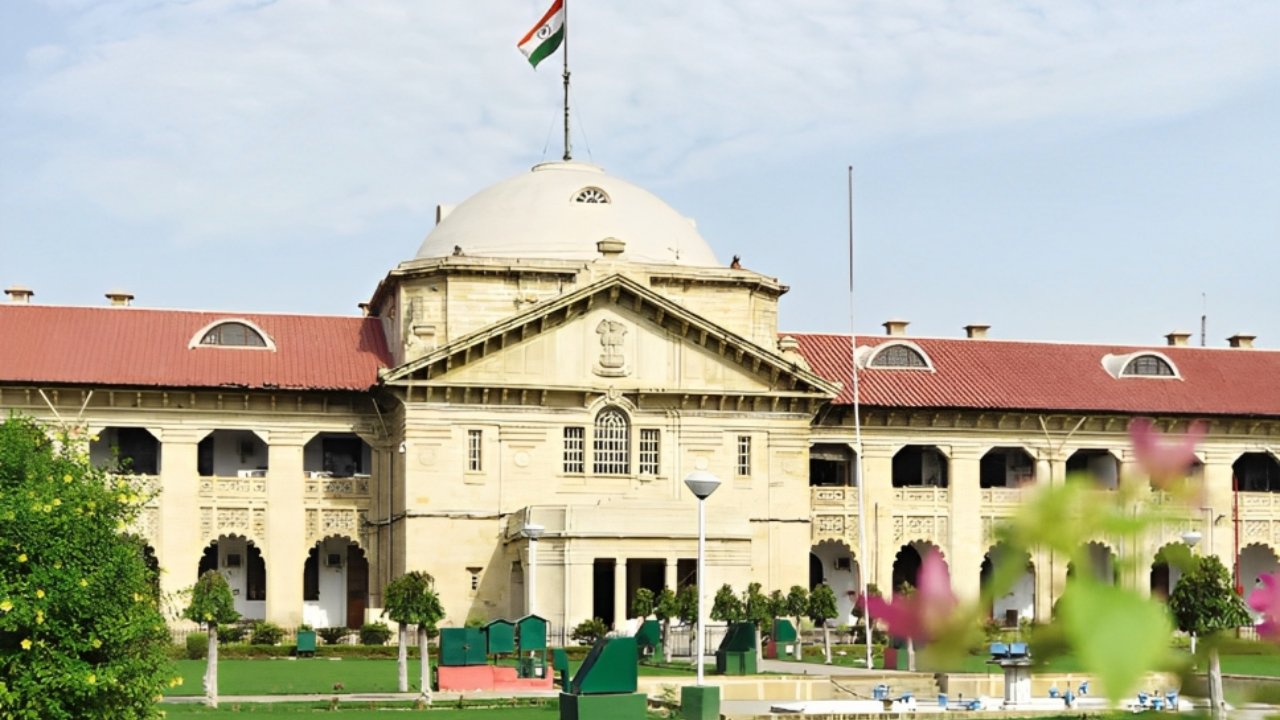

LUCKNOW: In unusually candid courtroom remarks, the Allahabad High Court has laid bare a pattern of friction between the police and the judiciary in Uttar Pradesh, warning that routine pressure on trial judges threatens the authority of law and the everyday functioning of courts.
A Courtroom Exchange That Laid Bare Institutional Strain
The observations came during a hearing before the Allahabad High Court, where the bench was addressing senior state officials over policing practices in Uttar Pradesh. Justice Arun Kumar Singh Deshwal, speaking in open court, made it clear that the issue before him was not confined to a single case or district but reflected a wider and persistent problem.
“This has become a routine feature,” the Court noted, referring to instances where Superintendents of Police allegedly pressure judicial officers to pass particular orders. The judge said he had not come across “a single case where law or direction of the apex court has been followed,” a remark that underscored the seriousness of the concern being raised.
Certified Cyber Crime Investigator Course Launched by Centre for Police Technology
The hearing took place in the presence of the state’s top police leadership, summoned to explain what steps were being taken to address these complaints.
The Boundary Between Police Authority and Judicial Power
At the heart of the Court’s remarks was a repeated emphasis on institutional roles. “The majesty of law is supreme,” the bench observed, cautioning that ego clashes between police officers and judicial officers serve no purpose and ultimately harm the public. The Court underscored that the power to punish rests with the judiciary, not with the police, and that law enforcement must operate strictly within legal boundaries.
Justice Deshwal stressed that mutual respect between the police and the judiciary was not a matter of courtesy but of constitutional necessity. A police officer, the Court said, should not consider himself superior to a judicial officer. Once a judge is seated on the dais—even if he or she is a junior division officer—that authority stands above all others present in the courtroom.
Patterns Reported Across District Courts
The Court’s concern was informed by feedback it said it had received from across the state. According to the judge, district judges had reported that younger police officers, including those from the Indian Police Service, were increasingly inclined to exert pressure on trial court judges, particularly Chief Judicial Magistrates.
When judicial officers question non-compliance with law or procedure, the Court observed, the situation often escalates into a tussle between the district police chief and the judge. In some instances, the judge revealed, the conflict had become so pronounced that administrative transfers were used “just to stop this tussle.”
Bar association leaders, the Court added, had also conveyed complaints about senior police officers entering courtrooms and attempting to influence judicial decision-making.
State Assurances and a Warning Against a ‘Police State’
Addressing Director General of Police Rajiv Krishna and the Additional Chief Secretary (Home), the bench warned that Uttar Pradesh could not be allowed to slide into what it described, in plain terms, as a “police State.” The remark, delivered partly in Hindi, reflected the Court’s unease with what it saw as growing police assertiveness in judicial spaces.
The DGP agreed before the Court that the police are required to work within the four corners of the law and assured the bench that instructions would be issued wherever proper protocol was missing. The Court, however, made it clear that assurances alone would not suffice unless reflected in day-to-day conduct across districts.
The hearing concluded with the Court reiterating that adherence to law and respect for judicial authority were not optional practices but foundational to the justice system—failures that, it warned, would ultimately be borne by ordinary citizens who rely on courts for redress.
