
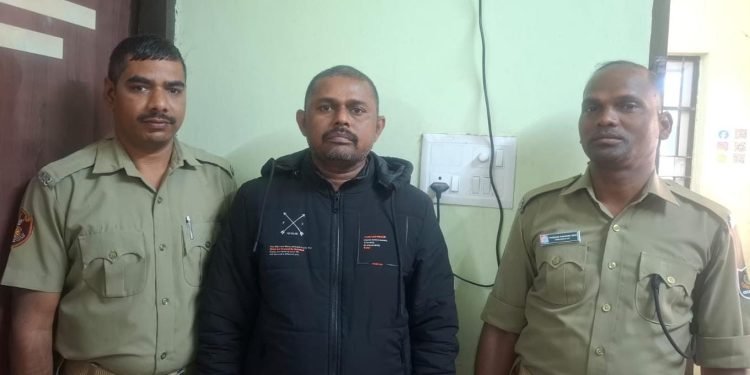
The Cyber Crime and Economic Offences Wing of the Bhubaneswar Police has arrested a 39-year-old man in connection with a sophisticated cyber fraud in which an elderly woman was duped of about ₹30 lakh after being tricked by fraudsters posing as officials of the Telecom Regulatory Authority of India (TRAI) and other law-enforcement agencies. The accused, identified as Gulipagi Chiranjeevi, is believed to be part of a larger interstate fraud ring that uses intimidation and impersonation to extort money from victims.
Digital Arrest Scam Using Fake Government Identity
According to police, the cybercrime began in November 2025 when the 70-year-old victim — a resident of Bhubaneswar’s Old Town area — received a phone call from an unfamiliar number. The caller claimed to be a TRAI official, stating that the victim’s SIM card was being misused in criminal activities.
To make the scam appear more credible, the fraudster transferred the call to another person posing as an officer from the Mumbai Police’s Colaba station, who then sent forged documents and so-called “legal notices”. On a video call, the woman was shown fake arrest warrants and told that her matter would be taken over by the Enforcement Directorate (ED) as part of an alleged money-laundering probe.
These intimidation tactics — a classic example of a “digital arrest” scam, where fraudsters keep victims on continuous calls, bombard them with fake official documents, and block outside contact — created intense fear and confusion.
Certified Cyber Crime Investigator Course Launched by Centre for Police Technology
How the Victim Was Forced to Pay ₹30 Lakh
Terrified by the threats of immediate arrest and alleged legal action, the victim, who lives with her 77-year-old husband, was told that she needed to cooperate and be “audited” by authorities. Under continuous video communication and pressure, the couple transferred money to bank accounts provided by the fraudsters between November 7 and November 15, 2025.
The transfers were made in multiple instalments:
- ₹10 lakh on November 7
- ₹3.5 lakh on November 10
- ₹9.5 lakh on November 14
- ₹7 lakh on November 15
In total, around ₹30 lakh was transferred before the couple realised they had been deceived.
The victim finally reported the matter to the Cyber Police Station in Bhubaneswar on November 18, 2025, after which investigators traced the financial trail, analysed digital evidence, and identified the suspect.
Arrest in Bhubaneswar and Evidence Seized
Gulipagi Chiranjeevi — originally from Tirupati in Andhra Pradesh — was taken into custody on Tuesday following police investigations that used banking data, call logs, and technical intelligence.
During the arrest, officers seized:
- Two mobile phones
- An ATM card
- A cheque book
- A PAN card
- An Aadhaar card
These items are now being examined for further evidence and to trace the movement of stolen funds.
Police said Chiranjeevi is believed to be part of a wider fraud syndicate that operates across state borders, often using “mule accounts” and intermediaries to hide the flow of money and complicate investigations. Efforts are underway to identify and apprehend other members of the network involved in similar scams.
Prosecuting the Fraud and Citizen Warnings
The Bhubaneswar cybercrime team has registered a case against the accused under relevant sections of the Bharatiya Nyaya Sanhita (BNS) and the Information Technology Act, 2000, which cover cyber fraud, cheating, impersonation, and electronic deception. Police continue to investigate bank accounts and communications tied to the stolen funds, and may seek to freeze and recover the defrauded amount.
Officials have repeatedly warned the public about the danger of digital arrest scams, highlighting that no government agency conducts legal or investigative action through unsolicited calls or video calls, and no genuine authority demands money transfers under threat of arrest. Victims of such calls are urged to verify independently with local police and report suspicious communication immediately.
About the author – Rehan Khan is a law student and legal journalist with a keen interest in cybercrime, digital fraud, and emerging technology laws. He writes on the intersection of law, cybersecurity, and online safety, focusing on developments that impact individuals and institutions in India.
