
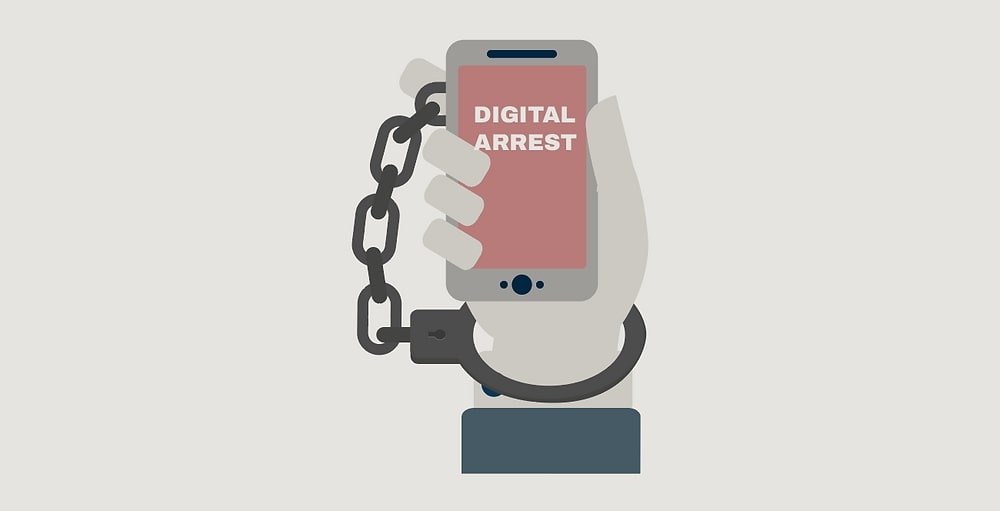
In a major cybercrime breakthrough, the Telangana Cyber Security Bureau (TGCSB) has dismantled a sophisticated interstate fraud syndicate responsible for **multiple high-value scams totalling over ₹16 crore — arresting six individuals linked to the network. What has shocked investigators is that many of the accused were not hardened criminals but educated professionals, including CA aspirants, MBAs, business consultants, and finance experts, police said.
Coordinated Operation in Kerala and Bengaluru
Police carried out a coordinated action by deploying teams to Kerala and Bengaluru to apprehend the key accused involved in three major syndicate-linked cases affecting residents in Hyderabad and other regions. A total of six persons — including five bank account holders and one intermediary agent — were arrested during the operation.
According to TGCSB Director Shikha Goel, the network was linked to multiple fraud cases in which victims were defrauded through “digital arrest” scams and fake investment or trading platforms, resulting in substantial financial losses.
Certified Cyber Crime Investigator Course Launched by Centre for Police Technology
Case 1: Senior Citizen Targeted With Fake ‘Digital Arrest’
In one high-profile instance, a senior citizen woman was contacted by fraudsters impersonating officials from the Telecom Regulatory Authority of India (TRAI), the Central Bureau of Investigation (CBI) and the Reserve Bank of India (RBI). They falsely claimed her Aadhaar-linked phone number was being used in criminal activities, placing her under so-called “digital arrest” via continuous Skype and WhatsApp video calls.
Using forged legal documents, the scammers coerced her into making repeated RTGS transfers, forcing her to part with over ₹5.66 crore before the deception was uncovered. Renju Pathakku Reji (30), a businessman from Kerala, was arrested for providing his company’s bank account as a mule account to route stolen funds on behalf of international operators.
Case 2: Fake Parcel & Police Impersonation Scam
In another case, a man received a WhatsApp call from someone posing as a Blue Dart representative, alleging an illegal parcel was in his name. The caller then handed him off to individuals pretending to be Mumbai Police officers, instructing him to maintain total secrecy while transferring large sums of money over two months for “verification.”
Two of the accused — Arun Sreenivas, a digital marketing professional, and Sanal V Menon, a finance consultant — were arrested from Kerala for knowingly providing their bank accounts for these fraudulent transfers, acting as mule account operators for the syndicate.
Case 3: Fake Trading Platform Scam
A separate investigation revealed a trading fraud in Hyderabad in which a businessman was lured into a bogus trading platform under the pretext of high IPO returns. After seeing fabricated gains, the victim invested around ₹3.40 crore in just 22 days, only to discover his withdrawal requests were blocked when he tried to take out his money.
Three directors and businessmen — V Jayaprakash, Balaraju S, and Harish G — were arrested in Bengaluru for providing company bank accounts and linked mobile numbers to the fraudsters operating the platform, often based overseas. These accounts were used to funnel the defrauded funds.
Unusual Background of the Accused
What makes this case particularly notable is the profile of several accused, who were not stereotypical criminals but professionals with business education or career aspirations. Investigators highlighted that the gang included a CA aspirant and an MBA holder, along with business consultants and finance specialists who knowingly participated in facilitating the syndicate’s operations by providing mule accounts in exchange for commissions.
Police warned that the funds were being siphoned out of India almost instantly, often directed to handlers abroad — with some networks active in regions such as Cambodia and Vietnam — using Indian bank accounts as temporary conduits.
Police Advisory: Beware of ‘Digital Arrest’ Scams
The TGCSB has emphasised that the so-called “digital arrest” is a myth. No genuine Indian law-enforcement agency conducts arrests or demands ransom over video calls or phone calls. Scammers typically use professional-looking forged letterheads and fake communications claiming to be from agencies like the Supreme Court, the CBI or the RBI to intimidate victims.
Authorities have urged victims or potential targets to verify communication through official channels, report suspicious contact immediately to the National Cyber Crime Helpline at 1930, and avoid sharing bank details or transferring funds based on unsolicited calls or messages. Acting quickly can improve the chances of freezing transfers before funds exit the banking system.
About the author – Rehan Khan is a law student and legal journalist with a keen interest in cybercrime, digital fraud, and emerging technology laws. He writes on the intersection of law, cybersecurity, and online safety, focusing on developments that impact individuals and institutions in India.
