

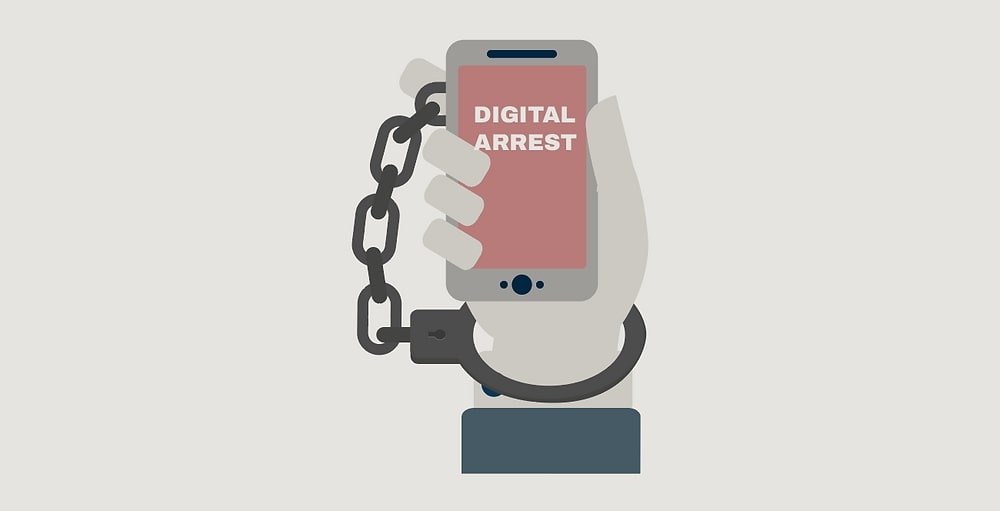
In a major breakthrough in a high-value cyber fraud case involving a so-called “digital arrest”, Rajkot police have arrested two more accused from Karnal in Haryana for their alleged role in extorting over ₹1.1 crore from an elderly city resident. With the latest arrests, the total number of accused held in the case has risen to 16, underlining the scale and coordination of the cybercrime network involved.
The newly arrested accused have been identified as Shankar Rajput (27) and Shubham Raghuvirsinh (30). Investigators said both played a key role in facilitating the movement and withdrawal of money obtained from the victim through a web of bank accounts.
The case first came to light in November after a 76-year-old resident of Rajkot lodged a complaint at the city cybercrime police station. The complainant alleged that cyber fraudsters posing as law enforcement officials coerced him into transferring a total of ₹1.14 crore by placing him under what they described as a “digital arrest”.
Certified Cyber Crime Investigator Course Launched by Centre for Police Technology
According to the complaint, the ordeal began on October 29, when the victim received a phone call from a person claiming to be from a telecom company. The caller falsely accused him of using his mobile number for child pornography, online gambling and cyber terrorism, and threatened to disconnect his phone services unless he cooperated.
When the victim denied the allegations, he was instructed to contact the Mumbai Crime Branch for verification. As he was unable to travel due to his age, the caller arranged for him to speak to another individual over the phone and later via WhatsApp video call. This person introduced himself as a police sub-inspector and appeared on the video call wearing a police uniform.
During the call, the impersonator questioned the victim in an authoritative and professional manner, sought personal details about his family and demanded copies of identity documents, including his Aadhaar card. The victim was told that his Aadhaar credentials had allegedly been used to open multiple bank accounts involved in money laundering and cybercrime.
Police said the fraudsters then escalated the pressure, warning the victim that he could be arrested at any moment and that his daughters, who are settled abroad, could be forcibly brought back to India. The threats, investigators said, were designed to create panic and isolate the victim from seeking outside help.
Under sustained psychological pressure, the elderly man was kept under constant surveillance through repeated phone and video calls for more than a week. He was instructed not to speak to anyone else and to strictly follow the directions given by the callers. During this period, he was made to transfer money in multiple instalments to different bank accounts shared by the accused.
The investigation revealed that Shubham Raghuvirsinh, who had previously worked as a sales manager with a private bank, allegedly assisted in opening a bank account in the name of Shankar Rajput. Nearly ₹1 crore of the defrauded amount was routed through this account before being withdrawn and transferred further to other accounts to obscure the money trail.
Police said these accounts were used as layers to siphon off and distribute the funds, making detection more difficult. Financial transactions, call detail records and digital evidence are now being analysed to trace the complete flow of money and identify remaining links in the network.
Prior to the latest arrests, 14 accused had already been taken into custody in connection with the case. Investigators believe the gang operated across multiple States and specifically targeted elderly individuals by exploiting their fear of legal consequences and unfamiliarity with digital procedures.
Cybercrime experts said “digital arrest” scams rely heavily on intimidation, impersonation and the misuse of official terminology to break victims psychologically. By posing as police or investigative officials, fraudsters create a false sense of urgency and authority that compels victims to comply.
Rajkot police have urged citizens to remain alert and remember that law enforcement agencies never conduct arrests or investigations over phone or video calls. People have been advised not to share personal or financial information with unknown callers and to immediately report suspicious communications to the cybercrime police or the national cyber helpline.
Police said timely reporting not only improves the chances of tracing money but also helps dismantle organised cybercrime networks operating across regions.
About the author – Rehan Khan is a law student and legal journalist with a keen interest in cybercrime, digital fraud, and emerging technology laws. He writes on the intersection of law, cybersecurity, and online safety, focusing on developments that impact individuals and institutions in India.
