

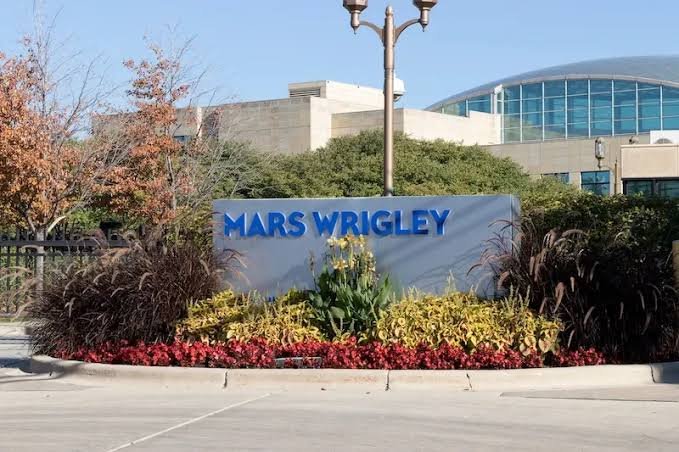

For more than a decade, a senior executive at one of the world’s largest confectionery companies quietly redirected millions of dollars meant for agricultural trade incentives and corporate dividends into accounts he controlled. The scheme, prosecutors said, blended forged documents, shell companies and misuse of a federal export program, before unraveling under a multi-agency investigation that traced money across borders and back through years of unpaid taxes.
A Trusted Role Inside a Global Company
Between roughly 2011 and 2023, Paul R. Steed, a Connecticut-based executive, was employed by Mars Wrigley as a Global Price Risk Manager within its Global Cocoa Enterprise. Working largely from home, Steed oversaw aspects of the company’s exposure to volatile cocoa markets and managed its participation in a key federal initiative — the U.S. Department of Agriculture’s Sugar-Containing Products Re-Export Program, designed to help American exporters compete abroad.
Certified Cyber Crime Investigator Course Launched by Centre for Police Technology
According to court filings, that position placed Steed at the intersection of commodity pricing, export credits and dividend flows linked to Mars’s ownership stake in Intercontinental Exchange, commonly known as ICE. The role required coordination with external service providers, including Computershare, which handled dividend payments related to those holdings.
Prosecutors said Steed used the access and trust associated with this role to construct a parallel financial channel that appeared legitimate on its face but ultimately diverted company assets for his personal use.
Shell Companies, Forged Letters and Diverted Funds
Beginning in 2016, Steed created a company called MCNA LLC, a name that closely resembled Mars Chocolate North America. Investigators said the similarity was intentional. Through MCNA, Steed directed sugar refineries purchasing Mars’s USDA re-export credits to send payments not to Mars, but to the MCNA account, as if it were an authorized corporate entity.
Over time, more than $15 million in Mars assets were routed this way, according to the Department of Justice. In parallel, Steed also owned another company, Ibera LLC, which he used between 2013 and 2020 to invoice Mars for services that were never provided. Mars paid Ibera more than $700,000, prosecutors said.
The scheme expanded in 2017, when Steed instructed Computershare to pay quarterly dividends tied to Mars’s ICE ownership directly to MCNA. In 2023, authorities said, he escalated further by presenting Computershare with a fraudulent letter purportedly from Mars’s treasurer authorizing him to trade ICE shares. Acting on that letter, Computershare sold Mars’s ICE shares in full and issued a check exceeding $11.3 million, which Steed deposited into the MCNA account.
In total, prosecutors said more than $700,000 in dividend payments and tens of millions of dollars in asset sales and re-export credits were diverted through these mechanisms
Following the Money Across Borders
As investigators traced the flow of funds, they identified transfers that extended beyond the United States. Steed, a dual citizen with family ties in Argentina, sent approximately $2 million to that country, where authorities said he maintained a family ranch.
Domestically, the government seized more than $18 million from bank accounts controlled by Steed and sought forfeiture of a Greenwich, Connecticut home purchased with nearly $2.3 million in stolen funds. Prosecutors said the use of forfeiture statutes, court-authorized search warrants and forensic accounting techniques allowed agents to reconstruct the movement of money over nearly a decade.
According to court records, Steed also failed to report the illicit income on his federal tax returns from 2014 through 2023. That omission, authorities said, added a significant tax component to the criminal case, ultimately tying the fraud investigation to years of unpaid federal taxes.
Arrest, Guilty Plea and Sentencing
Steed was arrested on March 26, 2025. On September 11, 2025, he pleaded guilty to two counts of wire fraud and was released on a $5 million bond pending sentencing. He is scheduled to report to prison on March 5. In Bridgeport, U.S. District Judge Kari A. Dooley sentenced Steed to 63 months in prison. The court also ordered restitution of $28,410,489 to Mars and $10,310,680 in back taxes to the Internal Revenue Service.
Federal officials credited the investigation to coordinated work by the Federal Bureau of Investigation, the IRS Criminal Investigation, and the USDA Office of Inspector General, operating under the oversight of the US Department of Justice. Prosecutors said millions of dollars seized in the case would be returned to the victim company.
