
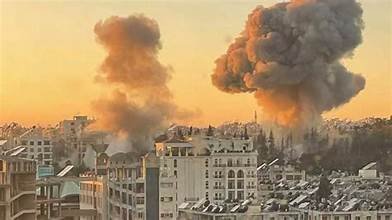
The world appears to be standing at another dangerous crossroads, where regional conflicts risk snowballing into a global confrontation. With diplomacy weakening, international norms eroding and mistrust deepening among major powers, the possibility of World War III can no longer be dismissed outright. According to prominent US defence and foreign policy expert Dr Robert Farley, 2026 could emerge as a year when the risk of a global war becomes alarmingly real.
In an article titled “5 Places World War III Could Break Out in 2026”, published on the strategic affairs website 19fortyfive.com, Dr Farley argues that the post-World War II global order is steadily losing its ability to contain conflicts. The US-led system that once acted as a stabilising force is now increasingly fragmented and reactive, leaving room for regional flashpoints to spiral out of control.
Certified Cyber Crime Investigator Course Launched by Centre for Police Technology
1. Greenland: From strategic backwater to geopolitical hotspot
Greenland was long considered far removed from the possibility of military confrontation, but recent developments have altered that perception. While the United States and Denmark have historically been close allies, former US President Donald Trump’s remarks about asserting American control over Greenland — including references to military options — unsettled Europe. In response, several European nations have increased coordinated security measures in the region. Analysts warn that even limited friction between the US and Europe over Greenland could severely strain transatlantic relations and destabilise the Arctic security environment.
2. Ukraine: A prolonged war with escalating stakes
The Russia-Ukraine war is now approaching its fifth year, with no clear end in sight. Moscow has continued to make incremental territorial gains, while Kyiv remains reliant on Western military and financial support. Peace talks in 2025 failed to produce a breakthrough, and mounting economic pressure on Russia could prompt more aggressive actions. Experts caution that direct military involvement by European countries — already under discussion in some capitals — would dramatically raise the risk of a broader Russia-Europe confrontation.
3. Taiwan: The most volatile flashpoint in the Indo-Pacific
Tensions over Taiwan remain one of the most explosive risks to global stability. China considers Taiwan an integral part of its territory and has repeatedly refused to rule out the use of force. Meanwhile, the United States’ security commitment to Taiwan appears increasingly ambiguous. Strategic analysts argue that if Washington is distracted by crises in Europe or the Arctic, Beijing could view this as a window of opportunity to act. Any conflict over Taiwan would almost certainly draw in regional and global powers, triggering a major war in the Asia-Pacific.
4. Iran: Weakened, yet capable of regional disruption
Iran has been weakened by internal unrest, economic sanctions and recent regional confrontations, but it retains significant retaliatory capabilities. The United States has signalled that it would not rule out military action if tensions escalate further. Experts warn that a strike on Iran could ignite widespread instability across the Middle East, potentially pulling in Russia and China through strategic alignments and indirect involvement, further complicating the global security landscape.
5. India-Pakistan: A nuclear-armed rivalry on edge
South Asia remains one of the most dangerous theatres due to the long-standing hostility between India and Pakistan. Following Operation Sindoor in 2025, relations between the two nuclear-armed neighbours deteriorated further. Ongoing tensions over Kashmir, cross-border incidents and terrorism allegations continue to keep the region on edge. Defence analysts stress that even a limited military exchange carries the risk of rapid escalation, with global consequences that extend far beyond the subcontinent.
A warning, not a prediction
Dr Farley has emphasised that his assessment is not a prediction, but a realistic evaluation of emerging risks. He argues that unless diplomacy regains strength and communication channels between major powers are restored, 2026 could become one of the most dangerous years in recent history.
Experts agree that restraint, dialogue and balanced policymaking across these five flashpoints remain the only viable path to preventing the world from sliding into another catastrophic global war.
About the author – Ayesha Aayat is a law student and contributor covering cybercrime, online frauds, and digital safety concerns. Her writing aims to raise awareness about evolving cyber threats and legal responses.
