
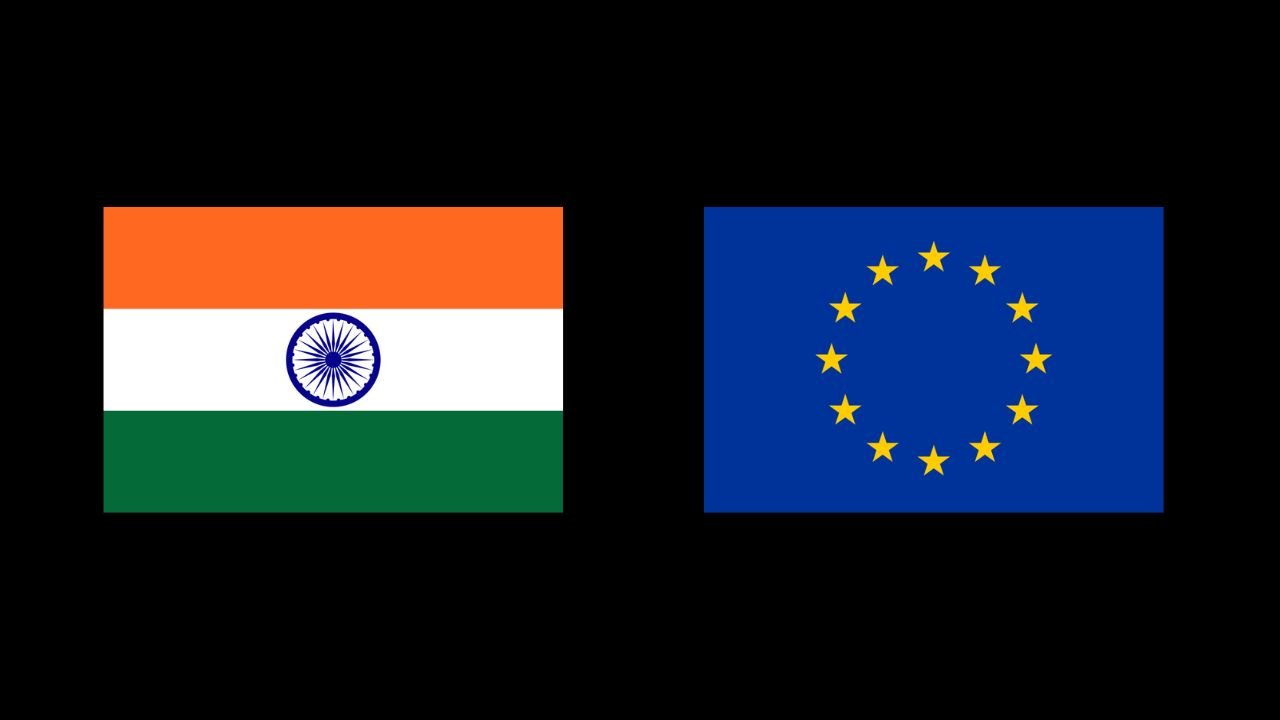

New Delhi: India and the European Union (EU) appear close to concluding negotiations on a long-pending Free Trade Agreement (FTA), with an official announcement likely on January 27 during the India–EU summit, according to government and diplomatic sources. If finalised, the agreement would rank among India’s most comprehensive and strategically significant trade deals to date.
Sources said the proposed summit will feature high-level discussions between Prime Minister Narendra Modi and senior EU leadership, with a joint statement expected on trade, investment and broader strategic cooperation.
Certified Cyber Crime Investigator Course Launched by Centre for Police Technology
Announcement Likely in Presence of EU Leadership
The summit is expected to be attended by Ursula von der Leyen, President of the European Commission, and António Costa, President of the European Council. Officials said the proposed agreement aims to facilitate trade in goods and services, expand market access and provide for phased tariff reductions on select products.
Two Decades of Talks Near the Finish Line
Negotiations on a broad-based FTA between India and the EU began over 18 years ago, but remained stalled for long periods due to differences over tariff structures, agriculture, services market access, data protection norms and environmental standards. In recent years, however, changing global supply chains, geopolitical uncertainties and the need for trade diversification have lent fresh momentum to the talks.
In FY 2024–25, bilateral trade between India and the EU stood at approximately $136.5 billion, making the EU one of India’s largest trading partners. The proposed FTA is expected to offer preferential market access to businesses on both sides.
Key Sectors That May Benefit
According to sources, the agreement may include gradual tariff reductions on European exports such as automobiles, wines and spirits. In return, Indian exporters could gain improved access for products including textiles, chemicals, electronics, pharmaceuticals and engineering goods.
However, negotiations remain sensitive on agricultural products and regulatory concerns such as the EU’s Carbon Border Adjustment Mechanism (CBAM). Indian exporters have expressed concerns that stricter environmental compliance norms could increase costs and impact competitiveness.
Beyond Trade: Strategic Signals
Experts believe the FTA is not limited to economic gains alone but signals a broader strategic deepening of India–EU relations. As countries seek to reduce over-dependence on single markets and strengthen supply-chain resilience, the agreement is being viewed as a key pillar of long-term cooperation.
Ahead of the summit, External Affairs Minister S. Jaishankar had engaged with EU diplomats, emphasising collaboration beyond trade, including economic stability, technology partnerships and global risk mitigation.
Implementation Still a Challenge
While a political announcement is expected on January 27, full implementation of the FTA may take time. The agreement will need approval from the European Parliament and completion of legal processes across EU member states, a process that could take up to a year.
Meanwhile, India’s exporters are already facing pressure following the EU’s suspension of certain benefits under the Generalised Scheme of Preferences (GSP). Industry representatives have warned that delays in implementing the FTA could further affect competitiveness in key export sectors.
The Road Ahead
As the summit approaches, officials on both sides are working to finalise the agreement text and prepare coordinated announcements. Industry bodies and investors are watching closely to see how quickly the pact moves from declaration to execution — and whether it marks the beginning of a new phase in India–Europe economic relations.
About the author — Suvedita Nath is a science student with a growing interest in cybercrime and digital safety. She writes on online activity, cyber threats, and technology-driven risks. Her work focuses on clarity, accuracy, and public awareness.
