
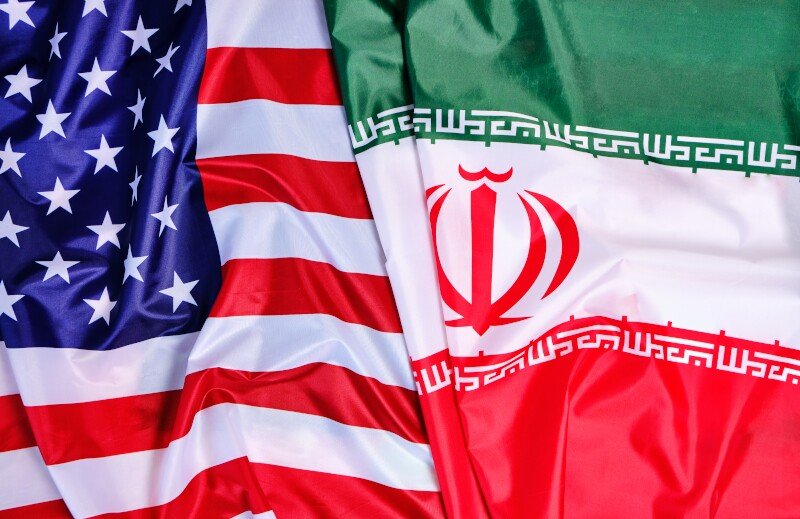
Tensions between the United States and Iran appear to be heading toward another dangerous phase after US President Donald Trump said Washington is moving a “massive military fleet” in the direction of Iran. The remarks come amid sustained internal unrest in Iran, a harsh security crackdown on protesters, and renewed international concerns over Tehran’s nuclear programme.
Speaking to reporters aboard Air Force One while returning from the World Economic Forum in Davos, Switzerland, Trump said the United States was increasing its military presence in West Asia as a precautionary step to deter potential threats. He stressed that the move was not intended to trigger a conflict but to prevent one.
“We have a lot of ships going in that direction, just in case,” Trump said. “I don’t want to see anything happen, but we’re watching Iran very closely.”
Certified Cyber Crime Investigator Course Launched by Centre for Police Technology
US naval and air defence deployment
US officials, speaking on condition of anonymity to Reuters, said the aircraft carrier USS Abraham Lincoln along with several guided-missile destroyers is expected to arrive in the West Asian region in the coming days. Officials added that additional air defence systems are also under consideration to strengthen the protection of US forces and military installations across the region.
According to US defence officials, the deployment forms part of a broader deterrence strategy amid heightened instability. While Washington has not disclosed the full scale or duration of the military movement, analysts note that the presence of a carrier strike group significantly enhances American operational capability in the region.
Trump reiterated that the United States hoped the deployment would not need to be used. “Maybe we won’t have to use it. We’ll see,” he said, adding that the administration was keen to avoid escalation.
Hard line on Iran’s nuclear programme
The US President also renewed warnings over Iran’s nuclear activities, saying Washington would not allow Tehran to restart uranium enrichment that could lead to the development of nuclear weapons.
“If they try to do it again, they’ll have to go somewhere else,” Trump said. “And we’ll hit them there too, just as easily.”
Trump further repeated his claim that earlier US threats had compelled Iranian authorities to halt hundreds of planned executions of protesters. These assertions, however, have not been independently verified.
“I told them if you hang those people, you’re going to be hit harder than you’ve ever been hit,” Trump said, referring to previous US actions against Iran’s nuclear infrastructure.
Iran’s sharp response
Iran reacted strongly to the US statements. General Mohammad Pakpour, commander of Iran’s Islamic Revolutionary Guard Corps (IRGC), warned the United States and Israel against what he described as “miscalculations”.
In a statement broadcast on Iranian state television, Pakpour said Iranian forces were fully prepared to respond to any threat. “The Islamic Revolutionary Guard Corps and Iran have their finger on the trigger. We are more prepared than ever,” he said.
Another senior Iranian military official, General Ali Abdollahi Aliabadi, who heads Iran’s joint military command headquarters, warned that if the United States launched an attack, American interests across the region would become legitimate targets. “US bases, assets and centres of influence in the region will be considered valid targets,” he said, according to Iranian media.
Unrest and disputed death toll
The exchange of warnings comes as Iran continues to grapple with nationwide protests that erupted in late December over economic hardship and political grievances. Iranian authorities this week released their first official casualty figures, stating that 3,117 people had been killed during the unrest and subsequent security operations.
According to Iran’s foundation for martyrs and veterans, a majority of those killed were members of the security forces or civilians described as “innocent bystanders”, while others were labelled as foreign-backed rioters.
Human rights organisations, however, have disputed the official numbers. Iran Human Rights (IHR) said it has verified at least 3,428 deaths, while US-based Human Rights Activists News Agency (HRANA) has reported 4,902 fatalities and more than 26,500 arrests.
Independent verification has been severely hampered by a nationwide internet shutdown that has lasted for over two weeks, according to internet monitoring group Netblocks.
Rising global concern
International analysts say the sharpening rhetoric and visible military posturing underline the fragile security environment in West Asia. While both Washington and Tehran appear focused on projecting strength, experts warn that miscalculations could quickly spiral into open confrontation.
“The language on both sides has hardened significantly,” said a regional security analyst. “Even if deterrence is the stated goal, the movement of major US naval assets inevitably raises the stakes.”
What lies ahead
For now, the United States says it is closely monitoring Iranian actions while seeking to avoid a direct conflict. Iran, meanwhile, has made it clear that it will respond forcefully to any attack. Diplomatic channels remain strained, with no immediate signs of de-escalation.
The coming days are likely to be closely watched for further military movements or signals of renewed diplomatic engagement, as the region braces for the next phase of a standoff that has once again brought West Asia to the edge of uncertainty.
About the author – Ayesha Aayat is a law student and contributor covering cybercrime, online frauds, and digital safety concerns. Her writing aims to raise awareness about evolving cyber threats and legal responses.
