

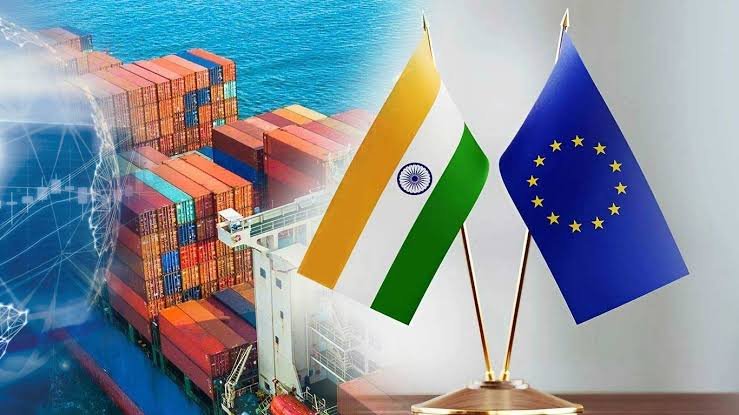

New Delhi: As negotiations for the long-awaited India–European Union Free Trade Agreement (FTA) enter a decisive phase, Indian exporters have received a significant setback. The European Union has decided to suspend key tariff concessions under the Generalised Scheme of Preferences (GSP) for India with effect from January 1, 2026, a move that will subject nearly 87 per cent of Indian exports to higher import duties in the European market.
The suspension will remain in force until December 31, 2028. Under the EU’s trade framework, GSP benefits are extended to developing countries to provide preferential market access. However, the EU’s “graduation rules” mandate that once exports of specific product groups from a beneficiary country exceed prescribed thresholds, preferential tariffs are withdrawn. Applying this provision, the EU has rolled back GSP benefits on a vast majority of India’s industrial exports.
As a result, only around 13 per cent of Indian exports, largely comprising agricultural products and leather goods, will continue to enjoy preferential access under the GSP regime.
Certified Cyber Crime Investigator Course Launched by Centre for Police Technology
Direct impact on key export sectors
The withdrawal of GSP benefits is expected to have an immediate impact on several of India’s core export sectors, including textiles, plastics, chemicals, machinery, gems and jewellery, and electrical goods. In addition, industrial segments such as minerals, rubber, stone and ceramic products, precious metals, iron and steel will now face the full tariff structure applicable to non-preferential imports.
Tariff impact: Ready-made garments that earlier attracted a 9.6 per cent duty under GSP will now be subject to the full 12 per cent import tariff.
Margin pressure: Exporters are likely to face shrinking margins, forcing them either to absorb higher costs or cut prices to remain competitive.
Industry bodies estimate that Indian exporters earlier enjoyed an average tariff advantage of nearly 20 per cent under the GSP framework, a benefit that has now been completely withdrawn.
Competition from Bangladesh and Vietnam
Trade experts warn that the decision could weaken India’s competitive position in the European market. Countries such as Bangladesh and Vietnam continue to enjoy duty-free or significantly lower tariff access to the EU. This could prompt European buyers, particularly in price-sensitive segments such as garments, to shift sourcing away from India.
With apparel and textile exports being highly cost-driven, even a marginal increase in duties could result in order diversions, raising concerns over India’s market share in key EU destinations.
Double challenge ahead of FTA
The timing of the GSP suspension has added to exporter concerns, coming just as India and the EU are aiming to conclude FTA negotiations. While an agreement may be announced soon, implementation is expected to take at least a year, leaving exporters exposed to higher tariffs in the interim.
CBAM pressure: Alongside the GSP rollback, the EU has also begun rolling out its Carbon Border Adjustment Mechanism (CBAM), which will impose additional compliance requirements and costs on carbon-intensive products such as steel and aluminium.
Compliance burden: Mandatory reporting, certification and carbon-emission disclosures are expected to push up overall export costs, particularly for small and medium exporters.
Broader trade implications
The European Union is India’s largest trading partner in goods. Bilateral trade stood at $136.53 billion in 2024–25, underscoring the scale of economic interdependence. At a time when global demand remains fragile and geopolitical uncertainties persist, the withdrawal of GSP benefits could place Indian exports under sustained pressure.
Industry stakeholders caution that unless the FTA is implemented swiftly or interim relief measures are considered, Indian exporters may face a challenging 12–18 month period marked by rising costs and weaker competitiveness.
For now, both the government and industry are closely watching the final contours of the FTA, particularly the timeline for tariff reductions and possible flexibilities under CBAM, as India seeks to safeguard its position in the strategically important European market.
