

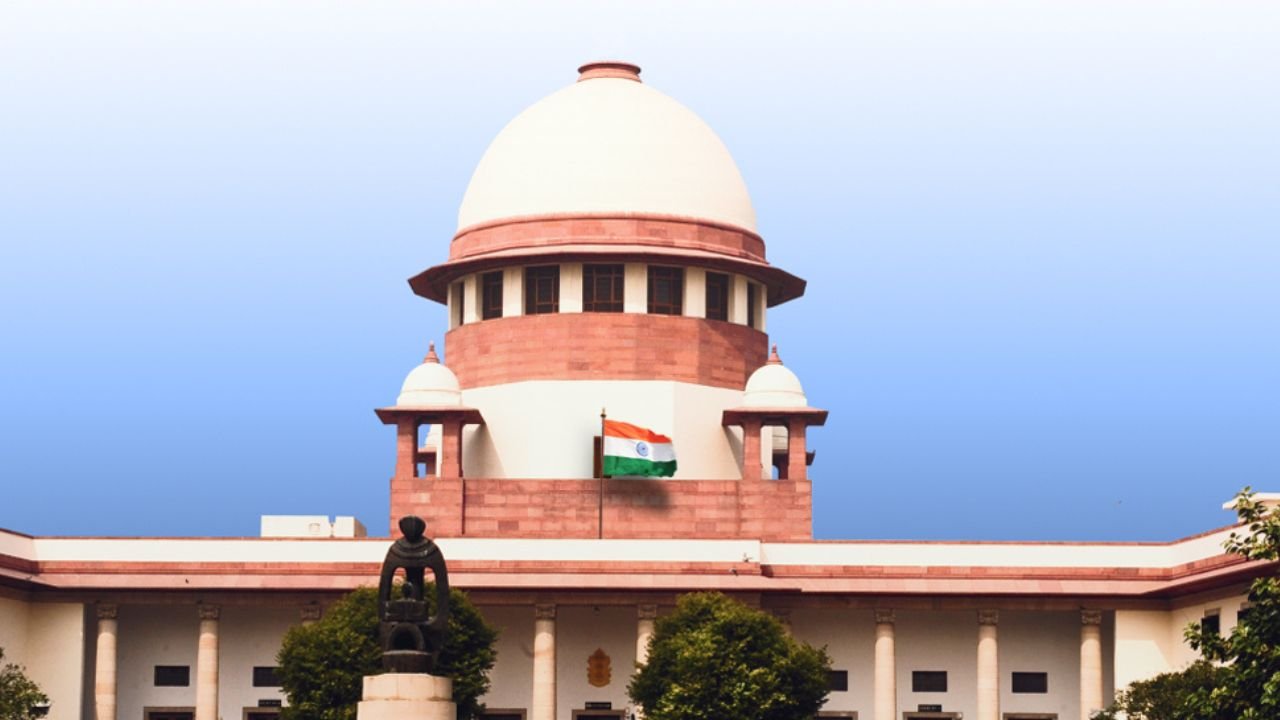

A group of retired officers from India’s Central Armed Police Forces has filed a contempt petition in the Supreme Court of India, alleging that the Union Home Ministry has failed to implement a binding judgment intended to curb the dominance of Indian Police Service officers in paramilitary leadership roles.
The petition, filed against Union Home Secretary Govind Mohan, was submitted in early December by four retired officers — Mahender Singh Deo, Radha Mohan Meena, Vikesh Kumar and Sanjay Prakash — all of whom have long argued that the current deputation system blocks career progression within the forces.
Certified Cyber Crime Investigator Course Launched by Centre for Police Technology
At the heart of the dispute is a May 23, 2025 ruling that sought to redraw the balance of authority between the Indian Police Service and the Central Armed Police Forces, which include the CRPF, BSF, ITBP, CISF, SSB and Assam Rifles.
The Supreme Court’s 2025 Ruling and Its Intent
In its 2025 judgment, the court held that Group A executive cadre officers of the CAPFs are Organised Group A Services for all purposes — a designation that carries implications for pay, status and promotion. Crucially, the bench directed the government to progressively reduce IPS deputation to CAPFs at senior levels, up to Inspector General, over a two-year period.
The ruling also mandated a time-bound review of cadre and service rules within six months, a step meant to align the internal structures of CAPFs with their newly affirmed status. At present, IPS officers occupy 20 percent of Deputy Inspector General posts and as many as 50 percent of Inspector General posts in the forces.
The Union Home Ministry challenged the judgment, but the Supreme Court dismissed the review petition in October 2025, rendering the decision final.
Administrative Action, or Administrative Delay?
In late December, the Home Ministry wrote to the directors general of all CAPFs, asking them to undertake a comprehensive cadre review and submit proposals. Similar correspondence in November sought assessments of the judgment’s impact, including financial and administrative implications.
Yet petitioners argue that these steps fall short of compliance. According to officials familiar with the process, while internal committees have been formed — often including IPS officers themselves — there has been no concrete move to amend service rules or to reduce IPS deputation as ordered.
Cadre reviews, typically conducted every five years, are designed to anticipate staffing needs and prevent stagnation. The last such review for CAPFs was carried out in 2016, leaving nearly a decade-long gap that critics say has exacerbated promotional bottlenecks.
Stakes for the Forces — and for Governance
For roughly 13,000 serving CAPF officers, the outcome of the case carries tangible consequences. Supporters of the court’s ruling say meaningful implementation would speed up promotions, reduce stagnation and strengthen institutional morale by recognising the forces as professional services in their own right.
More broadly, the dispute touches on a sensitive fault line in India’s security governance: the long-standing reliance on IPS officers to lead paramilitary forces that now play a central role in border management, counterinsurgency and internal security.
The contempt petition places the Supreme Court once again at the centre of this debate, forcing it to weigh not just legal compliance, but the limits of bureaucratic discretion in reshaping entrenched power structures. Whether the court chooses to press the Home Ministry harder — or accept incremental progress — may determine how quickly, and how fully, its 2025 judgment reshapes the leadership of India’s paramilitary forces.
About the author — Suvedita Nath is a science student with a growing interest in cybercrime and digital safety. She writes on online activity, cyber threats, and technology-driven risks. Her work focuses on clarity, accuracy, and public awareness.
