

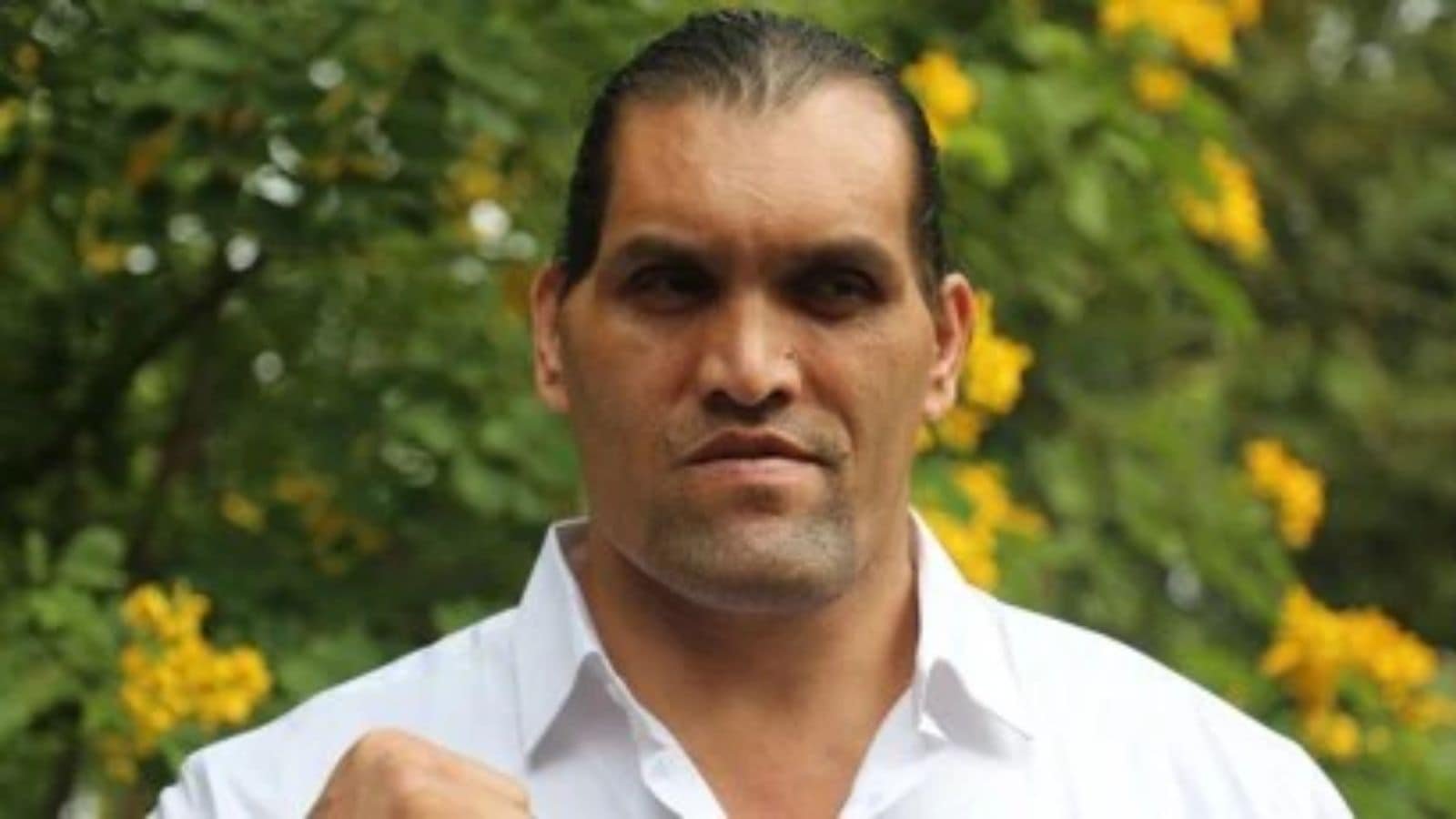

SIRMAUR: A land dispute in the Himalayan foothills has drawn a global sports celebrity into the quiet machinery of India’s revenue administration, triggering allegations of document tampering, official collusion and the misuse of state power — and placing the Himachal Pradesh government under an uncomfortable spotlight.
A Celebrity Steps Into a Local Dispute
In the hill district of Sirmaur, where land records often date back generations and boundaries are marked as much by memory as by maps, a property dispute has taken an unusually public turn. Dalip Singh Rana, the India-born professional wrestler internationally known as The Great Khali, has accused local revenue officials of manipulating land records to dispossess him of property his family says it legally purchased more than a decade ago.
Mr. Rana has sought time with the state’s chief minister, Sukhvinder Singh Sukhu, urging an independent investigation into what he describes as a pattern of corruption within the Paonta Sahib revenue office. He has called for strict action against officials he accuses of abusing their authority, while state revenue officers insist that they have acted strictly according to established rules.
Certified Cyber Crime Investigator Course Launched by Centre for Police Technology
The case has unsettled the state’s political and administrative corridors, in part because of Mr. Rana’s international profile, but also because it touches on long-standing anxieties over land governance in rural Himachal Pradesh.
The Origins of the Land Claim
According to Mr. Rana, the dispute centers on 16 bighas of land in Surajpur village near Paonta Sahib, which his father purchased in 2013 from a woman resident. Mr. Rana says his family possesses all legally valid documents relating to the purchase.
The conflict surfaced recently when Mr. Rana began constructing a boundary wall on the land. Another claimant, identified as Virendra Singh, asserted ownership, prompting intervention by the local tehsildar, or revenue officer. Mr. Rana alleges that the tehsildar rejected his documents and declared the land to belong to someone else.
Revenue officials counter that the land occupied by Mr. Rana is distinct from the parcel described in his original records and lies near a drainage channel, separate from the land reflected in the family’s registered documents. This technical distinction common in land disputes across India — has become the central point of contention.
Allegations Against Revenue Officials
At a press conference in Shimla, Mr. Rana escalated his claims, accusing the tehsildar, Shresh Sharma, of tampering with land records to benefit property dealers. He alleged that documents were altered deliberately to facilitate the transfer of land away from rightful owners.
Mr. Rana also accused the local Sub-Divisional Magistrate of collusion, extending his allegations beyond a single official. He claimed that the issue was not isolated, asserting that more than 100 people in the area had suffered under what he described as a “revenue syndicate” operating with impunity.
According to Mr. Rana, officials have been issuing unilateral decisions without informing affected parties and have, over the years, forcibly displaced lawful occupants. He further demanded an inquiry into the assets of the tehsildar, alleging that the official had amassed illegal wealth worth crores of rupees in a short period.
Political Ripples in Himachal Pradesh
The allegations have injected fresh tension into Himachal Pradesh’s governance landscape, where land disputes are both politically sensitive and socially charged. While the government has not publicly committed to an independent probe, the matter has gained traction due to Mr. Rana’s stature and the specificity of his claims.
For now, the administration maintains that due process has been followed and that land demarcation and ownership decisions are grounded in official records. But the case has underscored broader concerns about transparency, accountability and trust in local revenue systems — concerns that resonate far beyond Surajpur village.
Follow for daily updates on cybercrime, corporate fraud, DFIR, hacking, investigations, and digital forensics
