

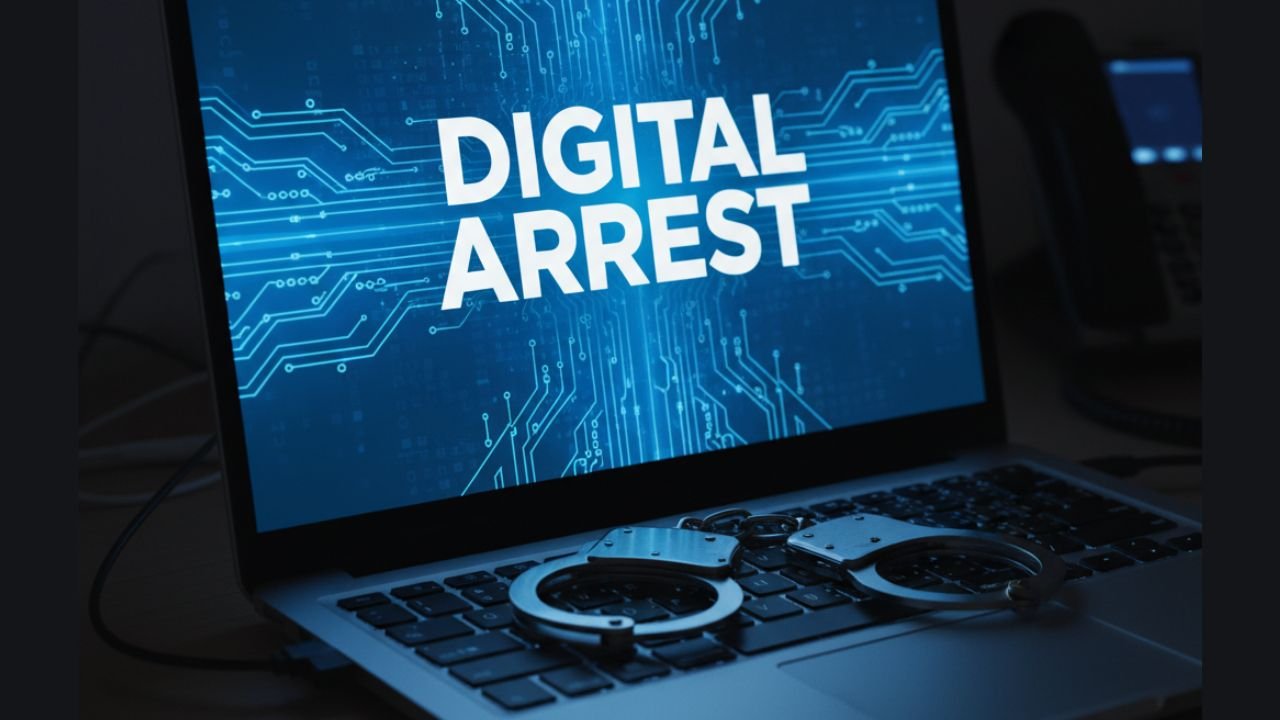

New Delhi | The rise of so-called “digital arrest” scams has redefined the nature of cybercrime in India, exposing deep vulnerabilities in the country’s rapidly expanding digital ecosystem. Using video calls, counterfeit uniforms, forged court notices and intimidation tactics, fraudsters convince unsuspecting citizens that they are implicated in serious crimes—offering immediate payment as the only way to avoid “digital custody”. The outcome has been widespread financial losses and a growing erosion of public trust in digital systems.
Official data show that India lost more than ₹22,842 crore to cyber fraud in 2024, a figure several times higher than the previous year. Analysts say the surge reflects not only increasingly sophisticated criminal methods, but also persistent weaknesses in digital literacy, system integration and real-time response mechanisms.
Certified Cyber Crime Investigator Course Launched by Centre for Police Technology
What Is a ‘Digital Arrest’—and Why the Confusion Persists
There is no formal legal definition of “digital arrest” under Indian law. While online fraud, identity theft and criminal intimidation are punishable under the Information Technology Act, 2000 and the Bharatiya Nyaya Sanhita (BNS), 2023, the absence of a specific term has allowed fraudsters to exploit public misunderstanding.
The Bharatiya Nagarik Suraksha Sanhita (BNSS), 2023 makes it clear that arrest is a physical process, requiring officer identification, an arrest memo and adherence to due procedure. Despite this, scammers rely on fake summons, fabricated case numbers and even deepfake videos to create the illusion of “digital detention”, with elderly citizens and those with limited digital awareness particularly vulnerable.
Laws in Place, Enforcement Under Strain
Experts argue that the challenge lies less in legislative gaps and more in capacity and coordination deficits. The Digital Personal Data Protection Act, 2023 strengthens safeguards against data misuse, but its enforcement architecture is still evolving. In addition, disparities in cyber policing capabilities across states—in terms of skills, infrastructure and staffing—continue to be exploited by organised fraud networks.
Multi-Layered Defences: What the State Has Done
The central government has strengthened its response through the Indian Cyber Crime Coordination Centre (I4C), which anchors a national cybercrime response framework. In 2024 alone, authorities blocked thousands of Skype IDs, lakhs of SIM cards and thousands of IMEI numbers linked to fraudulent activity. The 1930 cybercrime helpline and the National Cyber Crime Reporting Portal have been integrated to enable rapid freezing of suspicious transactions.
On the financial front, the Reserve Bank of India (RBI) is advancing alternative authentication systems and AI-driven monitoring tools to identify and disrupt “mule accounts”—bank accounts used to route and launder proceeds of fraud.
Judicial Pushback
Taking serious note of digital arrest scams, the Supreme Court of India has described them as a direct assault on public trust and the rule of law. The court has directed the Central Bureau of Investigation (CBI) to accord priority to such cases and to seek international assistance through INTERPOL to track overseas criminal networks. It has also underlined the need for tighter oversight across telecom and banking channels.
Global Lessons and the Road Ahead
International experience suggests that responsibility cannot rest solely on users. The European Union’s Digital Services Act places clear accountability on platforms, while several jurisdictions have expanded the liability of payment intermediaries—requiring them to halt suspicious transfers and compensate victims where safeguards fail. Experts believe India must move in a similar direction, strengthening platform and service-provider responsibility.
About the author — Suvedita Nath is a science student with a growing interest in cybercrime and digital safety. She writes on online activity, cyber threats, and technology-driven risks. Her work focuses on clarity, accuracy, and public awareness.
