
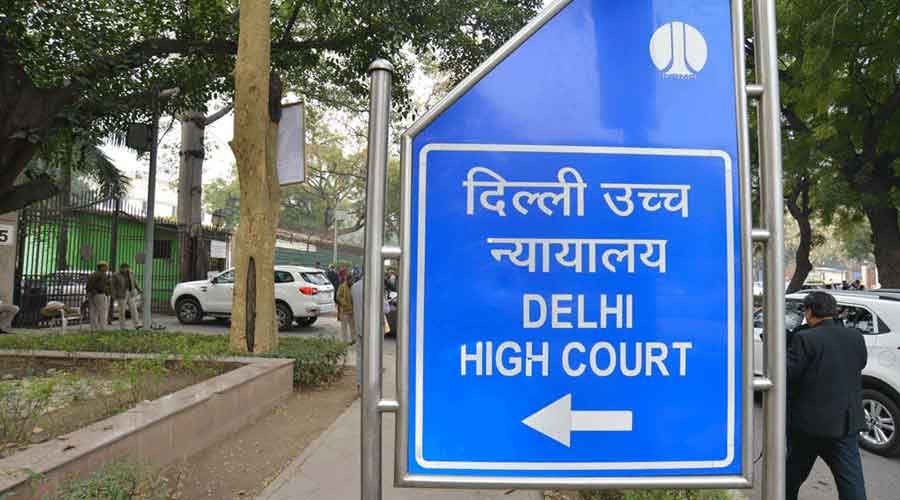
In a major legal victory for veteran media figures, the Delhi High Court on Monday quashed the 2016 income-tax reassessment notices issued to Prannoy Roy and Radhika Roy, the founders of New Delhi Television Ltd (NDTV), and imposed a token cost of ₹2 lakh on the Income Tax Department (ITD) for its conduct. The order marks the end of a decade-long dispute over alleged tax issues arising from interest-free loans extended by the Roys’ promoter company — a matter that had been repeatedly reopened by tax authorities despite earlier inquiry.
Certified Cyber Crime Investigator Course Launched by Centre for Police Technology
What the Delhi High Court Ruled
A Division Bench of the Delhi High Court, comprising Justices Dinesh Mehta and Vinod Kumar, held that the tax notices issued on 31 March 2016 to the Roys for reassessment pertaining to the financial year 2009–10 were “arbitrary and without jurisdiction” because they represented a second reassessment of essentially the same issue that had already been examined and concluded during an earlier round of proceedings. The bench observed that subjecting taxpayers to reassessment for the same transactions without any fresh material or evidence violated basic principles of fair adjudication under the Income Tax Act.
The court quashed not only the notices but also all consequential orders and proceedings that followed from them. While noting that “no amount of cost can be treated as enough for these cases,” the judges nonetheless imposed a token cost of ₹1 lakh each against the Income Tax Department to be paid to both Prannoy Roy and Radhika Roy.
Background of the Tax Dispute
The reassessment notices dated March 2016 were issued in connection with allegations related to interest-free loans received by the Roys from RRPR Holding Private Limited, the promoter entity of NDTV in which both Prannoy and Radhika Roy were shareholders and directors at the relevant time. RRPR had advanced interest-free funds to the Roys’ companies, and the department alleged that these may have had tax implications.
However, the court noted that the first round of reassessment began in July 2011, when the Income Tax Department reopened the assessment for the same year. The books of accounts of RRPR were summoned, explanations were sought, and the reassessment proceedings concluded with an order in March 2013, during which the very same transactions were examined and no additions were made.
In the 2016 notices, officials attempted to revisit the issue on the basis of a complaint, but the High Court found no new tangible material that had emerged since the earlier assessment to justify a fresh reopening under Section 147/148 of the Income Tax Act. Tax law principles in India require that a reassessment can ordinarily be reopened only if there is new information showing income that has escaped assessment, and mere dissatisfaction of the department with the earlier outcome is not a permissible ground.
Court’s Observations on Harassment and Law
The Delhi High Court strongly criticised the Income Tax Department’s conduct, describing the repeated reopening of the same issue as an impermissible second reassessment, which not only lacked jurisdiction but also ran contrary to established statutory safeguards. The bench observed that once a matter has been validly examined on reassessment, it cannot be reopened simply because the department may have a different view — a practice often referred to in legal terms as “change of opinion,” which courts have consistently frowned upon.
The bench further held that initiating a second reassessment without fresh material leads to unnecessary uncertainty and harassment of taxpayers, undermining the very principles of fair adjudication, and cautioned the department against such practices in future proceedings.
Legal and Broader Implications
Legal experts say this verdict holds broader significance for taxpayers and corporate entities across India. It reaffirms that tax authorities cannot repeatedly revisit the same issues in reassessment proceedings without tangible new evidence. Taxpayers operating in complex corporate structures — where inter-company loans and promoter funding are common — may now have stronger grounds to challenge reopenings that are based purely on revisiting earlier conclusions.
The case also underscores the role of judicial scrutiny in ensuring that revenue collection powers are exercised within the framework of law, and that fundamental rights — including Article 14 (equality before law) and principles of natural justice — are preserved even in high-stakes tax litigation.
About the author – Rehan Khan is a law student and legal journalist with a keen interest in cybercrime, digital fraud, and emerging technology laws. He writes on the intersection of law, cybersecurity, and online safety, focusing on developments that impact individuals and institutions in India.
